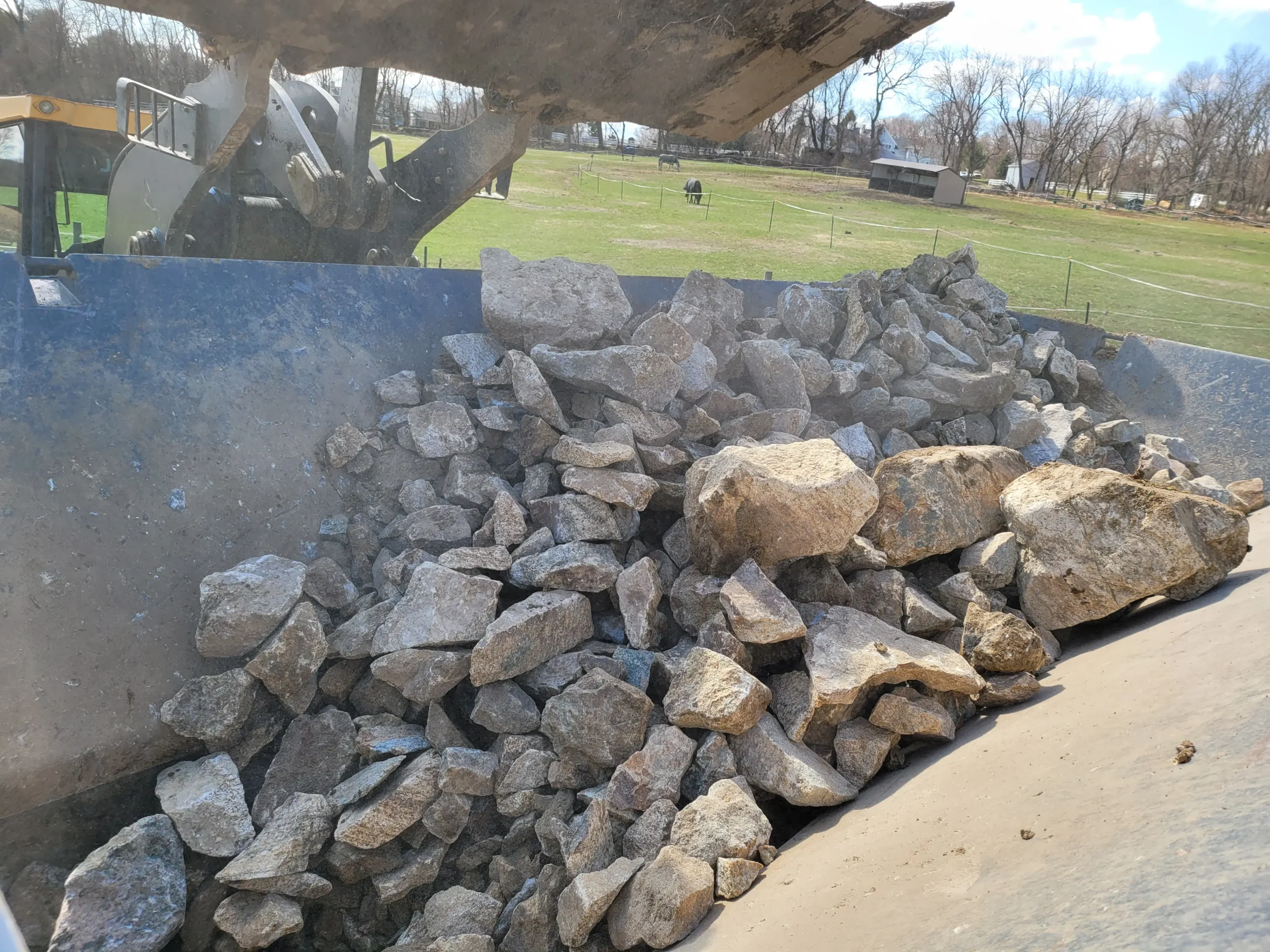

Gravel is one of the most economically important construction materials in North America. Concrete batch plants, asphalt mix plants, road builders, drainage contractors, septic installers, landscape supply yards, and rural property owners all rely on a steady supply of spec-sized gravel. Producing it efficiently — turning raw pit-run, river gravel, or quarry stone into clean, screened, sized aggregate — comes down to the right combination of equipment.
This guide walks through the practical workflow of gravel processing — what equipment handles each step, how to size machines to your throughput, what the major customer markets actually want, and how Komplet America’s compact mobile lineup fits into a contractor or aggregate-producer operation. Whether you’re an aggregate producer scaling up, an excavation contractor adding on-site gravel production, or a developer needing manufactured gravel for project sites, the answers are here.
What Is Gravel Processing?
Gravel processing converts raw, unsorted natural gravel or crushed stone into spec-sized aggregate that meets construction industry standards. The output is sold by gradation — different sizes for different applications:
- Pea gravel (typically 1/4″ to 3/8″) — landscaping, drainage, decorative applications
- #57 stone (3/4″ to 1″) — concrete mix aggregate, drainage rock, septic systems
- #67 stone (1/2″ to 3/4″) — concrete and asphalt mix aggregate
- Crusher run / 3/4″ minus — road and parking lot base, driveway base
- DOT base / 1-1/2″ minus — heavy-duty road base under asphalt or concrete
- Riprap (4″ to 12″+) — erosion control, shoreline armor, drainage
Each size has its own market price (typically $15-$35 per ton depending on size, region, and demand) and its own customer base. The economic value of a gravel operation comes from producing multiple spec sizes from a single feed — turning raw pit-run worth $5/ton into multiple finished products averaging $20+/ton.
The Three Common Gravel Feed Sources
Not all gravel comes from the same source, and the right equipment depends on what you’re processing.
Pit Run / Bank Run Gravel
Raw gravel excavated from a gravel pit or natural deposit. Already small enough for direct screening — the rocks are the right size, but mixed in with sand, silt, oversize boulders, and topsoil contamination. Processing focus: screening into spec sizes, sometimes with light crushing of oversize material.
River Gravel
Naturally rounded stone from riverbeds and floodplains. Like pit run, the size is generally appropriate but the material needs cleaning, screening, and sometimes light crushing. Rounded particles produce attractive landscape gravel but lack the angularity needed for some structural applications — for those, manufactured (crushed) gravel from quarry stone is preferred.
Quarry Run / Manufactured Gravel
Larger quarried stone or oversized cobbles broken down into gravel sizes. Requires primary jaw crushing followed by screening. Produces angular, locking aggregate ideal for road base, concrete mix, and any application requiring high stability. Many gravel operations use a combination — running pit-run/river gravel alongside crushed quarry material to produce a full spec-size lineup.
The Gravel Processing Workflow
A complete gravel processing operation has 5 main steps. The equipment you need depends on which steps your specific operation actually performs.
Step 1: Excavation and Loading
Raw gravel is excavated using a track or wheeled excavator and loaded into trucks or directly into the processing equipment using wheel loaders. For most contractor-scale operations, this equipment is already on hand — same machinery used for site work and demolition.
Step 2: Primary Crushing (When Needed)
If your feed is oversized cobbles, large rocks, or quarry stone larger than your target gradation, you need a primary jaw crusher to reduce the feed to a manageable size before screening. For pit-run or river gravel where the stones are already small enough, you can skip this step and feed directly to the screener.
Komplet’s compact mobile jaw crushers handle the primary crushing step:
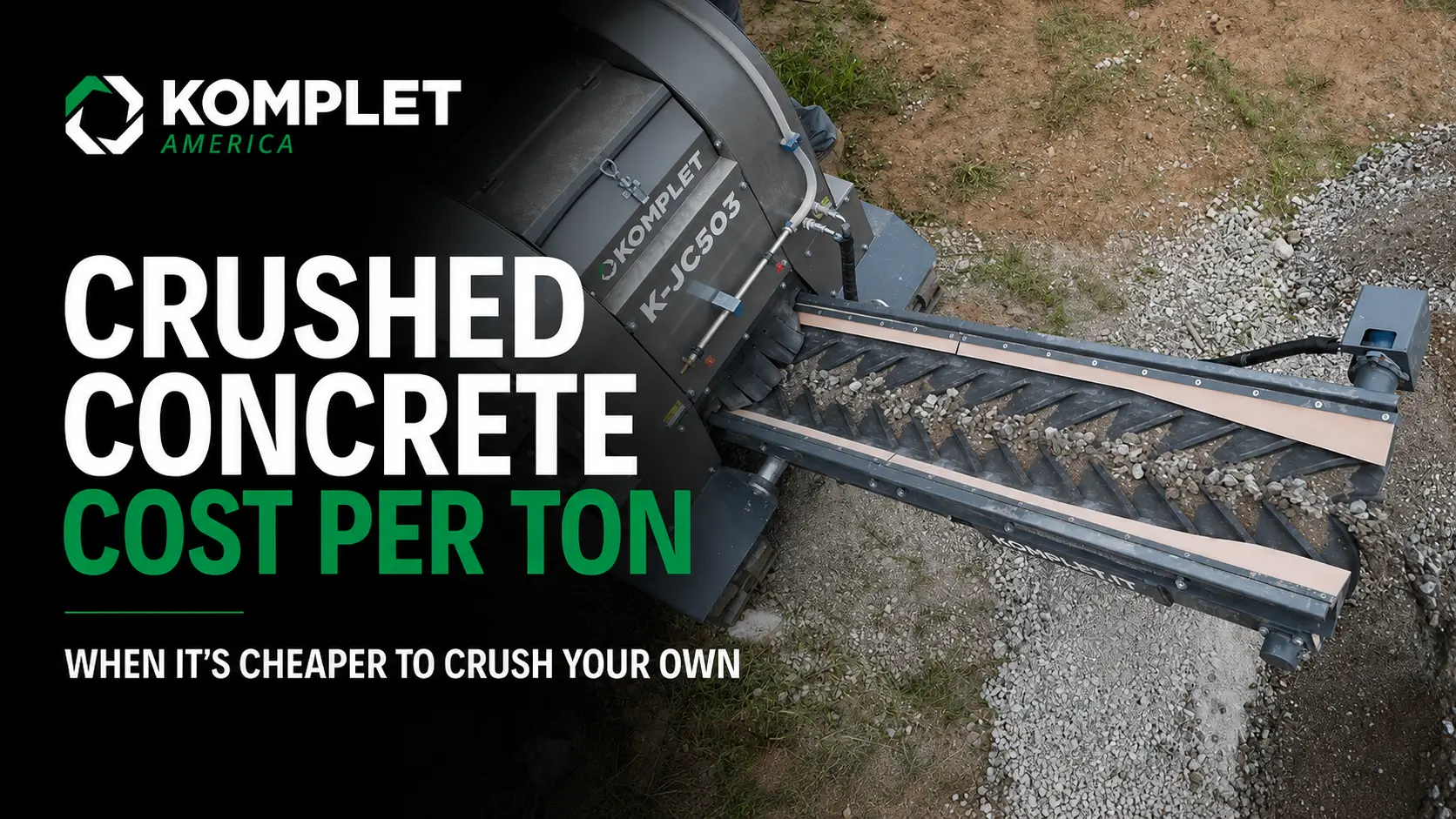
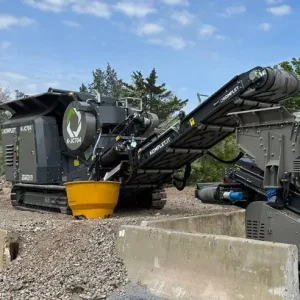
- K-JC 503 — up to 34 US tph, 19″ x 12″ jaw, 25 HP. Compact tracked machine for smaller gravel operations and tight-access sites.
- K-JC 604 — up to 55 US tph, 23″ x 16″ jaw, 55 HP. Mid-size operations and growing aggregate producers.
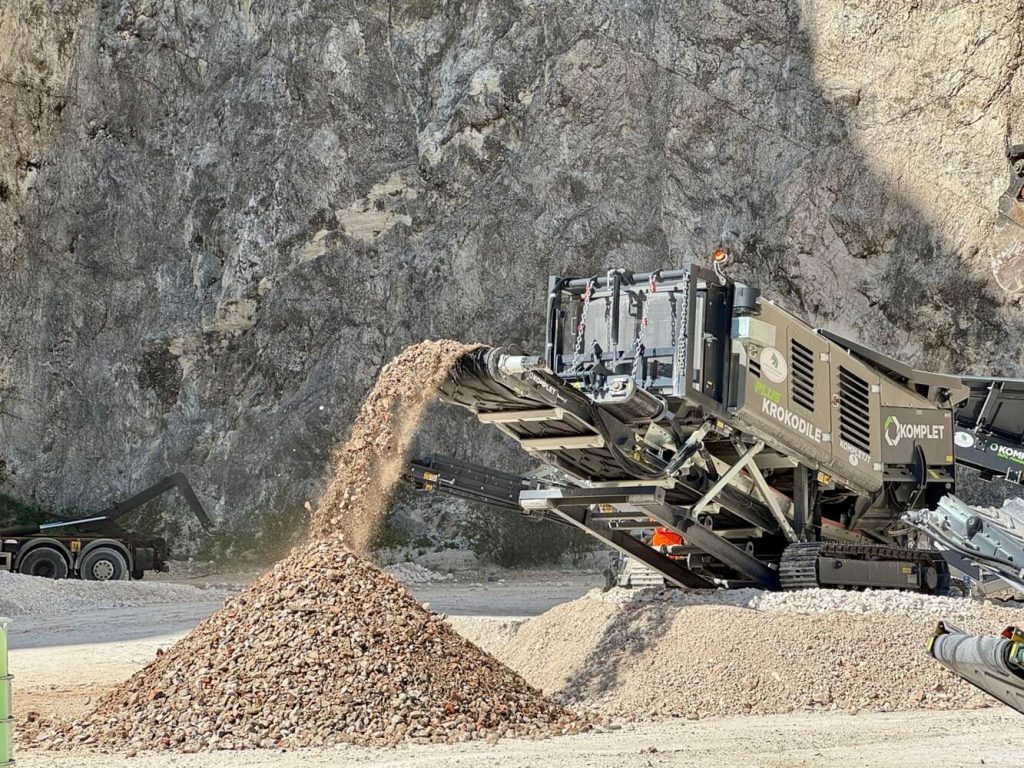
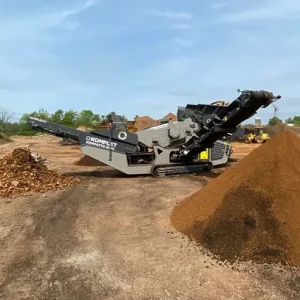
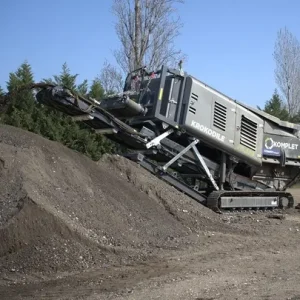
- K-JC 704 PLUS — up to 90 US tph, 27″ x 16″ jaw, 74 HP. Komplet’s best-selling crusher and the workhorse for typical gravel-and-aggregate operations.
- K-JC 805 — up to 160 US tph, 31″ x 21″ jaw, 130 HP. Quarry-scale operations and high-volume aggregate producers.
Step 3: Secondary Crushing for Cubical Output (Optional)
For applications requiring cubical aggregate shape (concrete mix, asphalt mix, premium spec stone), output from a primary jaw can feed an impact crusher for secondary shaping. The K-IC 70 compact impact crusher — up to 90 US tph, 100 HP, launched at WOC 2024 — delivers the cubical output that jaw crushers cannot. Gravel operations producing for concrete and asphalt mix designs often run a K-JC 704 PLUS for primary plus a K-IC 70 for secondary shaping.
Step 4: Screening Into Spec Sizes
Screening is where gravel becomes saleable product. A vibrating scalping screen separates the material into multiple gradations simultaneously — fines, mid-sizes, oversize. Each output stream goes to its own stockpile.
Komplet’s Kompatto vibrating scalping screens:
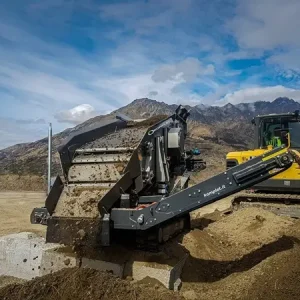
- Kompatto 221 — up to 90 US tph, 7′ x 3.5′ two-deck. Compact and tracked, ideal for smaller gravel operations or tight-access sites paired with the K-JC 503 or K-JC 604.
- Kompatto 5030 — Komplet’s best-selling screener, up to 280 US tph. Heavy-duty double-deck with fast hydraulic conversion between 2-way and 3-way split. The natural pair for the K-JC 704 PLUS in gravel-and-aggregate work. Screens 1/4″ topsoil fines up to 5″ oversize.
- Kompatto 124 — Komplet America’s largest mobile scalping screen, up to 350 tph. For high-volume aggregate producers and rental fleets needing serious daily throughput.
Step 5: Stockpile Management
Finished spec-sized gravel needs to be stockpiled for delivery. A K-TC 460 tracked conveyor — up to 132 US tph, 25″ x 393″ Chevron 3-ply belt — extends material reach from the screener to multiple stockpiles, builds higher cleaner piles, and dramatically reduces loader labor needed to organize finished product.
Typical Gravel Processing Equipment Setups
Small Pit-Run Operation (50-100 tph)
If you’re processing pit-run or river gravel that doesn’t need primary crushing, the right setup is a compact tracked screener fed directly by an excavator or loader. The Kompatto 221 (up to 90 US tph) handles this perfectly. No crusher needed.
Mid-Size Aggregate Producer (100-200 tph)
A K-JC 704 PLUS jaw crusher (up to 90 US tph) paired with a Kompatto 5030 vibrating scalping screen (up to 280 US tph) covers most contractor-scale and mid-size gravel operations. The screener oversizes and capacity exceeds the crusher’s output, which gives flexibility to feed the screener directly with pit-run when no crushing is needed and through the crusher when manufactured gravel is being produced.
Cubical-Output Specialty (Concrete/Asphalt Aggregate)
For producing high-quality cubical aggregate for concrete or asphalt mix designs, add a K-IC 70 impact crusher between the jaw and the screener. The flow becomes: pit/quarry feed → K-JC 704 PLUS (primary jaw crushing) → K-IC 70 (cubical secondary shaping) → Kompatto 5030 (sizing into spec).
Quarry-Scale Production (200+ tph)
A K-JC 805 jaw crusher (up to 160 US tph) paired with a Kompatto 124 (up to 350 tph) handles serious daily aggregate production. For very high volumes, multiple machines can run in parallel feeding the same stockpile system.
Choosing the Right Gravel Processing Equipment
Match the equipment to your real operation. The questions to answer:
- What’s your feed material? Pit-run/river gravel = screener only. Quarry stone or oversize cobbles = jaw crusher + screener. Mixed feed = both, with the crusher used selectively.
- How much volume? Under 100 tph = compact lineup (Kompatto 221, K-JC 503/604). 100-200 tph = mid-range (K-JC 704 PLUS + Kompatto 5030). Over 200 tph = quarry-scale (K-JC 805 + Kompatto 124).
- How many spec sizes? If you sell two sizes (base + drainage), a 2-way split screener works. If you sell three or more, prioritize a 3-way split machine like the Kompatto 5030 or 124.
- What’s your end market? Road base + drainage applications: jaw + screener fits. Concrete and asphalt mix aggregate: add the K-IC 70 impact crusher for cubical output.
- How mobile do you need to be? Single-pit operation: stationary or semi-mobile setup works. Multiple sites: tracked self-propelled is essential, which is exactly what Komplet America’s lineup delivers.
- What’s your capital position? Komplet Capital offers 24-hour approval, 100% financing, and 3-6 year terms. New equipment qualifies for Section 179 tax deduction.
Where Does Processed Gravel Get Sold?
Knowing your customers helps you spec the right equipment. The major gravel markets:
- Concrete batch plants — buy #57 stone, #67 stone, and other concrete-mix gradations. Cubical shape and clean gradation matter — this market favors operations running an impact crusher behind a jaw.
- Asphalt mix plants — buy specific gradations for hot-mix asphalt designs. Cubical particle shape critical.
- Road builders and DOT contractors — buy crusher run, DOT-spec base material, and shoulder rock. Volume customers, often on long-term contracts.
- Excavation and site contractors — buy fill, drainage, and base material in moderate volumes for individual project sites.
- Septic and drainage installers — buy specific drainage gradations (#57, #67, #4 stone). Steady recurring demand.
- Landscape supply yards — buy decorative gravel, pea gravel, river rock for resale to landscape contractors and homeowners.
- Rural and agricultural property owners — buy crusher run for driveways and farm road base. Smaller individual orders, large total market.
- Municipalities — public works projects, road maintenance, parks, drainage systems. Often through DOT or competitive bid processes.
Frequently Asked Questions
What’s the best crusher for gravel processing?
For most gravel operations, a compact mobile jaw crusher is the right primary crushing tool. Jaw crushers handle the variable feed sizes typical of pit and quarry operations, produce consistent output, and are mechanically simpler and more reliable than alternatives. Komplet’s K-JC 704 PLUS is the best-seller for typical contractor-scale and mid-size aggregate operations. For higher cubical-shape requirements (concrete or asphalt mix aggregate), pair the jaw with a K-IC 70 impact crusher for secondary shaping.
Do I need a crusher to process pit-run gravel?
Often no. If your pit-run material is already in the size range you want to sell (typically 4″ minus or smaller), you can feed it directly to a vibrating scalping screen and produce multiple spec sizes without ever crushing. The exception is oversize material — boulders or large cobbles in your pit-run that exceed your target gradation. For those, a small jaw crusher running occasionally to break down oversize is more economical than rejecting the material.
What’s the difference between gravel and crushed stone?
Gravel typically refers to naturally occurring small stones — pit-run, river gravel, glacial deposits — that are rounded by water action. Crushed stone (or manufactured gravel) refers to larger rock that’s been broken down through crushing, producing angular, locking particles. Both are sold as “gravel” in some markets, but engineers often specify one or the other based on application: rounded gravel for landscape and decorative use; crushed angular for road base and structural use where particle interlocking matters.
How much capacity do I need for a small gravel operation?
For a small landscape supply or rural aggregate operation, 50-100 US tph of screening capacity is usually sufficient — that’s roughly 200-400 tons per 6-hour shift, or 4,000-8,000 tons per month at moderate utilization. The Kompatto 221 (up to 90 US tph) covers this range. For mid-size operations targeting commercial customers, step up to 150-280 tph capacity (Kompatto 5030 with a K-JC 704 PLUS feeding it).
Can the same machine handle pit-run gravel and crushed concrete?
Yes — Komplet’s compact lineup is built for multi-material operations. The same K-JC 704 PLUS that crushes oversize cobble and quarry stone also handles concrete demolition debris with rebar (the integrated magnetic belt separates rebar). The same Kompatto 5030 that screens gravel into spec sizes also screens crushed concrete (RCA) into spec sizes for resale. Many contractors use a single equipment setup for both pit-run gravel processing AND C&D recycling — capturing two markets with the same capital investment.
How big a feed can a mobile jaw crusher handle?
Maximum feed size is roughly 80% of the jaw inlet opening. For Komplet’s lineup: K-JC 503 = ~9-1/2″; K-JC 604 = ~12-3/4″; K-JC 704 PLUS = ~12-3/4″; K-JC 805 = ~16-3/4″. Cobbles or quarry stone larger than these limits should be pre-broken with an excavator-mounted hydraulic breaker before feeding the crusher.
What spec sizes does a Kompatto screener produce?
The Kompatto 5030 screens from 1/4″ topsoil fines up to 5″ oversize, with fast hydraulic conversion between 2-way and 3-way split configurations. With three output streams from a single pass, you can produce, for example, fines + 3/4″ base + 1-1/2″ drainage simultaneously. Mesh changes for different spec sizes are accomplished during scheduled service.
Can I finance gravel processing equipment?
Yes. Komplet Capital — Komplet America’s in-house financing arm — offers 24-hour credit approval, 100% financing, and 3-6 year terms. Bad credit is not an automatic disqualifier. Many gravel producers structure equipment financing so monthly payments are covered by gravel sales revenue from the first month of production. New equipment also qualifies for Section 179 tax deduction (up to $1.22M deductible in the year of purchase, 2024 limit).
Final Thoughts
Gravel processing is one of the most predictable revenue streams in heavy construction — stable demand, established markets, and clear customer segments. The economics work when you match the right equipment to your feed material, throughput target, and end-market spec sizes. For pit-run and river gravel that’s already in the right size range, screening alone produces saleable product. For quarry stone or oversize feed, a jaw crusher feeds the screener. For premium concrete and asphalt mix aggregate, add an impact crusher for cubical output.
Komplet America’s compact mobile lineup — from the K-JC 503 for tight-access work up to the K-JC 805 for quarry-scale production, plus the K-IC 70 impact crusher and the Kompatto 221, 5030, and 124 vibrating scalping screens — covers the full range of contractor and aggregate-producer gravel operations. Browse the full crusher lineup and screener lineup to compare specs, or call us and we’ll help you spec the right combination for your feed material and throughput goals.
Ready to Talk Gravel Processing?
- Call (908) 369-3340
- Email [email protected]
- Schedule a demo or request a quote
- Ask about our 1-year / 1,000-hour warranty and equipment financing options
Never enough — that’s how we approach service, support, and helping you turn raw gravel into multiple spec sizes that customers actually buy.
Disclaimer: All cost, pricing, capacity, and revenue figures in this article are illustrative examples based on sample assumptions about volume, regional pricing, material specifications, and market conditions. Actual results vary significantly by region, market, material type, equipment utilization, operator skill, financing terms, and many other factors. Gravel pricing, aggregate pricing, fuel costs, and interest rates all change over time and by location. Komplet America makes no guarantee, warranty, or representation of specific financial performance, payback timelines, gravel sales prices, or business outcomes for any particular operation. For pricing and a payback estimate based on your specific volume, material, and local market, contact us at (908) 369-3340 to speak with our team.