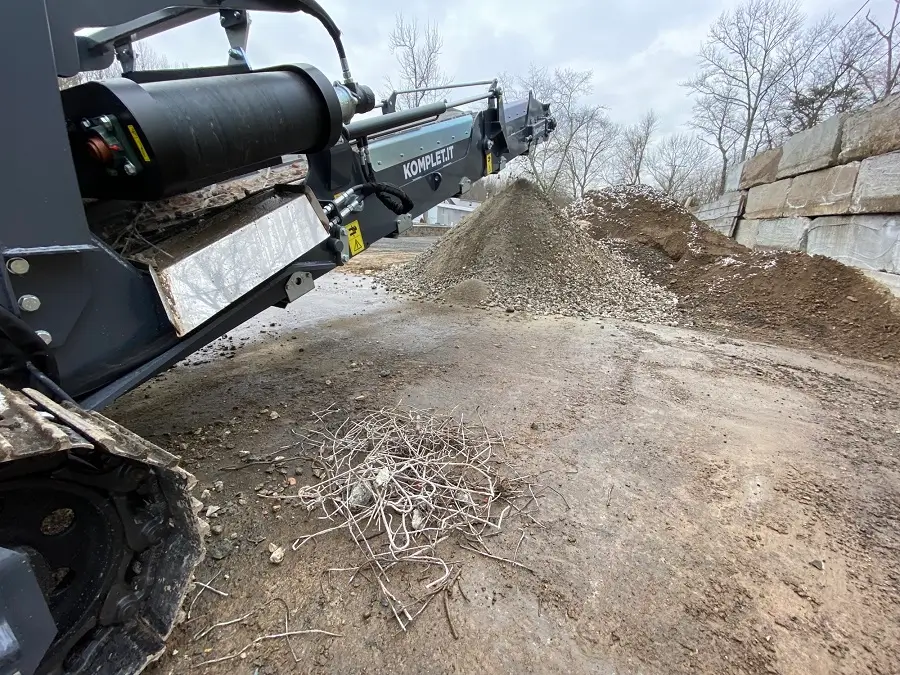

Construction and demolition (C&D) waste accounts for a substantial share of the North American solid waste stream — industry sources commonly report C&D waste at 30%+ of the total US solid waste stream by tonnage. For demolition contractors, recyclers, excavators, and general contractors managing C&D waste streams, the economic decision between off-site disposal vs. on-site processing comes down to specific dollar-per-ton numbers: regional tipping fees ($30-$200+/ton in major US metros), hauling costs ($5-$30+/ton depending on distance), recovered material revenues ($5-$40+/ton for various recycled products), and equipment costs (capital plus operating). Operations that run these numbers and execute on-site processing typically deliver materially better project economics than operations defaulting to disposal.
This basic guide walks through the economic case for on-site C&D waste processing — the cost components, revenue components, regulatory considerations, equipment selection by waste stream type, and how Komplet America’s compact mobile equipment lineup supports both hard mineral C&D processing (concrete, asphalt, brick, masonry) and mixed/soft C&D processing (wood, drywall, plastics, light metals).
Two Distinct C&D Waste Streams Need Different Equipment
The single most important framing for C&D waste processing economics: hard mineral C&D and mixed/soft C&D require fundamentally different equipment. Operations attempting to process all C&D waste with a single equipment type produce poor economics in either direction. Match equipment to waste stream.
Stream 1: Hard Mineral C&D
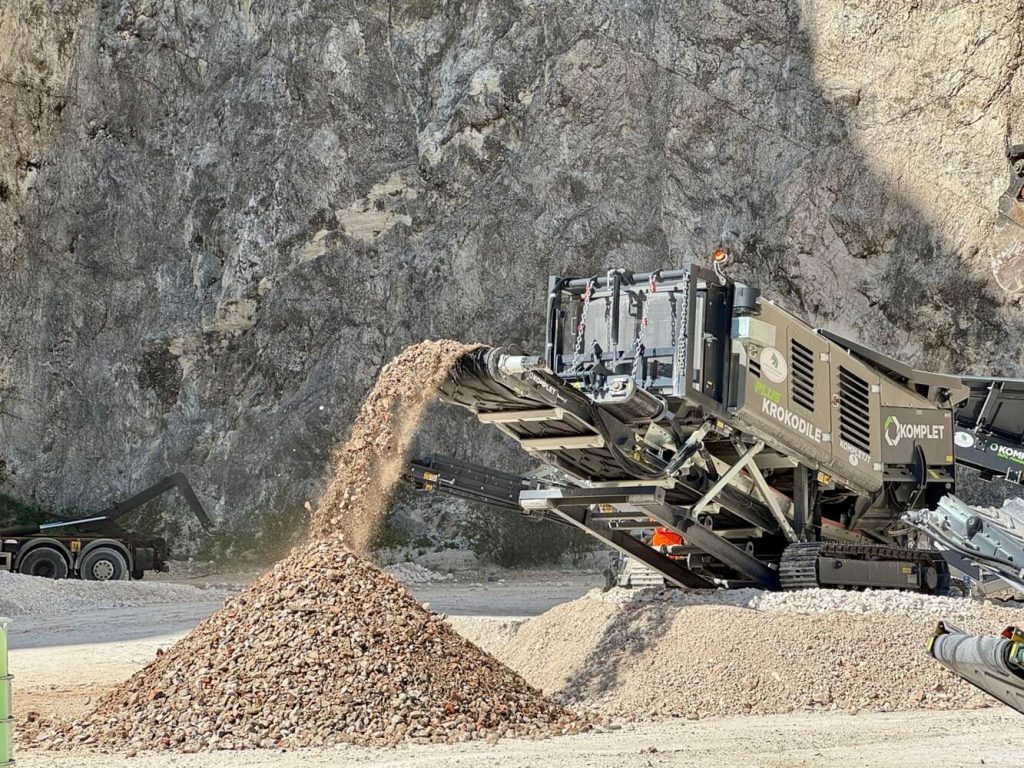
Concrete, asphalt, brick, masonry, natural rock — all hard mineral materials handled by compression-based crushing equipment. Output produces RCA (recycled concrete aggregate), RAP (reclaimed asphalt pavement), or crushed mineral aggregate suitable for road base, structural fill, drainage stone, parking lot base, and similar applications. Recovered rebar from reinforced concrete adds scrap metal revenue.
Stream 2: Mixed and Soft C&D
Wood, drywall, plastics, insulation, light metals, mixed C&D debris — all soft and mixed materials handled by slow-speed shredding equipment. Output produces volume-reduced material for biomass markets, recovered scrap metals for resale, recovered wood for fuel or mulch, and mixed material with significantly reduced disposal cost compared to unprocessed mixed waste.
Why the Equipment Matters Economically
Putting hard mineral material through a slow-speed shredder destroys the shredder; putting mixed C&D through a jaw crusher wraps soft material around moving parts and produces unusable output. The right equipment for each stream produces premium output with strong economics; the wrong equipment produces equipment damage and operational disruption with weak economics. Operations handling both streams need both equipment types — not one piece of equipment doing both jobs.
Cost Avoidance: The Largest Economic Component
On-site processing economics typically dominate from cost AVOIDANCE rather than revenue generation. The dollars saved by NOT paying disposal and hauling costs typically exceed the dollars earned from selling recovered materials in most markets.
Tipping Fee Avoidance
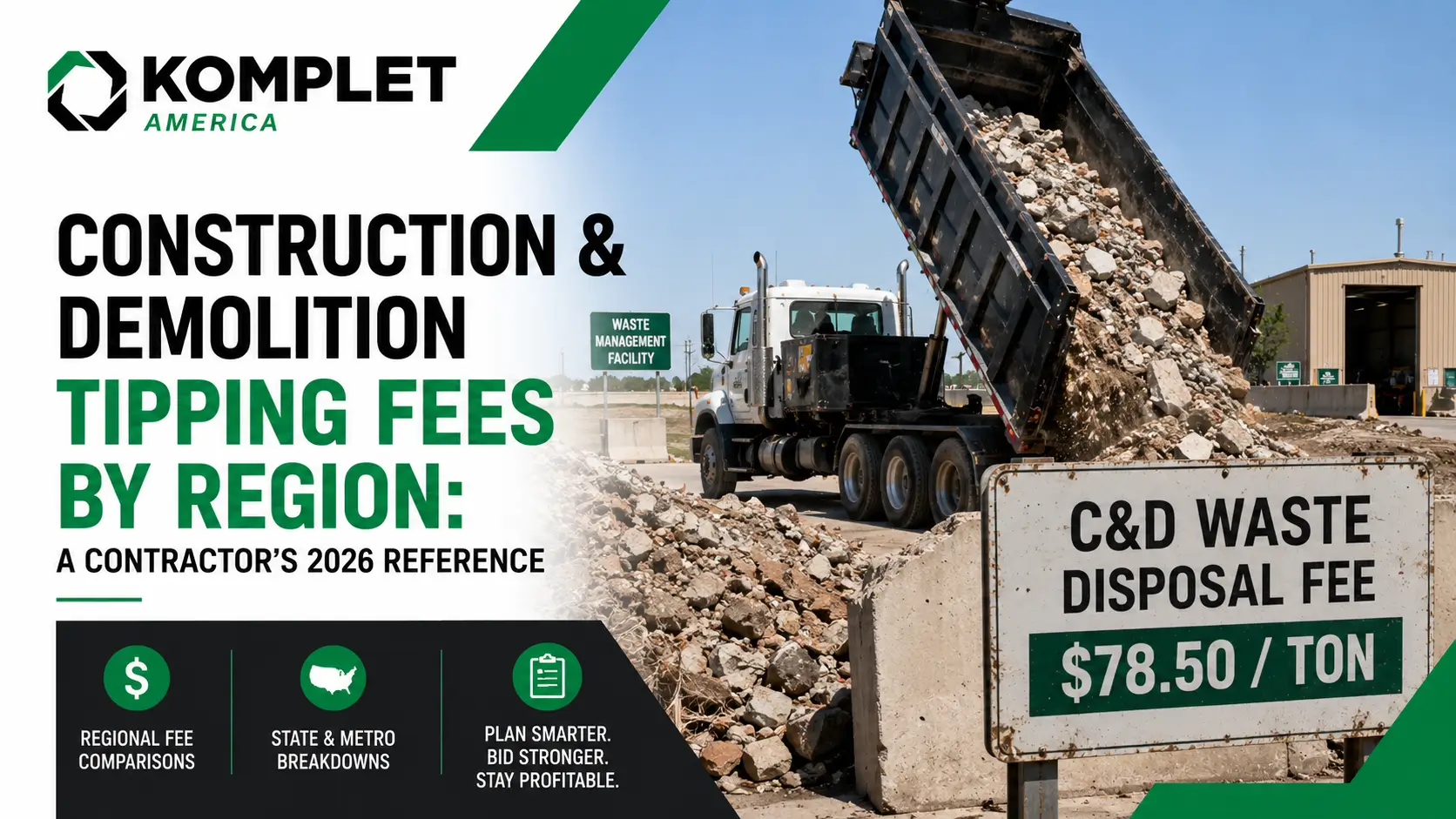
Tipping fees vary dramatically by region — the largest economic factor in C&D processing decisions. Approximate ranges to calibrate analysis:
- Northeast major metros (NYC, Boston, Philadelphia): typically $80-$200+/ton for C&D
- West Coast major metros (LA, San Francisco, Seattle): typically $60-$150+/ton for C&D
- Midwest urban markets: typically $40-$80+/ton
- Rural and lower-cost regions: typically $30-$60/ton
Mixed C&D typically faces higher tipping fees than clean concrete or clean wood; some facilities accept clean concrete at lower rates or even free in exchange for the recovered RCA value. Verify specific regional rates with local disposal facilities.
Hauling Cost Avoidance
Hauling demolished material to disposal facilities adds significant per-ton cost — $5-$15/ton typical for short hauls, $15-$30+/ton for distant hauls. On-site processing eliminates these hauling cycles for material that gets reused on the project; operations selling RCA or RAP off-site still face some hauling but typically over shorter distances to nearby aggregate buyers.
Avoided Aggregate Purchase
Project base material can come from the project’s own crushed concrete or asphalt rather than purchased and hauled aggregate. Virgin aggregate commonly runs $15-$40+/ton depending on market and specifications; producing project base material from on-site demolition eliminates this purchase cost. The same ton of demolished concrete that would have been disposed at $80/ton becomes project base material avoiding $25/ton aggregate purchase — total economic swing of $105/ton just on cost avoidance, before any revenue generation.
Schedule Compression Value
Eliminating disposal hauling cycles compresses project schedule. Excavators don’t sit idle waiting for haul trucks to return; project mobilization and demobilization timelines shrink. Schedule value varies by project but routinely adds material economic benefit beyond the direct dollar savings.
Revenue Generation from Recovered Materials
Beyond cost avoidance, on-site processing generates revenue from recovered materials. Revenue per ton is typically smaller than tipping fee avoidance per ton, but cumulative across high-volume operations the revenue contribution becomes meaningful.
Recycled Concrete Aggregate (RCA)
- RCA base material: $10-$25+/ton typical pricing for road base, structural fill, parking lot base, drainage stone
- Recovered rebar from reinforced concrete: $100-$300+/ton scrap metal pricing depending on market
- Premium spec aggregate (after secondary crushing through K-IC 70 impact crusher): higher pricing for cubical-shape aggregate suitable for premium applications
Reclaimed Asphalt Pavement (RAP)
- RAP feedstock for HMA plants: $5-$15+/ton typical depending on plant specifications and regional demand
- Crush-and-run base material from RAP: $10-$25+/ton for direct customer sales
Mixed C&D Recovery
- Recovered scrap metals from mixed C&D shredding: $50-$300/ton depending on metal type and grade
- Recovered wood for biomass: $5-$25/ton depending on regional biomass markets and wood quality
- Recovered wood mulch: $10-$30/yard for landscape applications (where wood is clean enough)
- Reduced-volume mixed waste disposal: the residual unrecovered material costs less to dispose at lower volume
Equipment Selection by C&D Waste Stream
For Hard Mineral C&D: Komplet Jaw Crushers
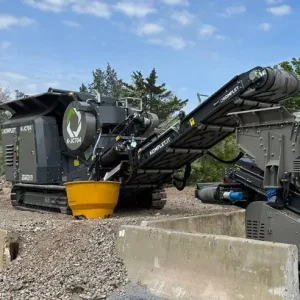
Komplet America’s compact mobile jaw crushers handle hard mineral C&D processing (concrete, asphalt, brick, masonry, natural rock):
- K-JC 503 — up to 34 US tph, 19″ x 12″ jaw, 25 HP Tier 4 Final, ~7,496 lb. Tight-access urban work. Approximately $108,695.
- K-JC 604 — up to 55 US tph, 23″ x 16″ jaw, 55 HP, ~19,400 lb. Mid-range demolition. Approximately $205,030.
- K-JC 704 PLUS — up to 90 US tph, 27″ x 16″ jaw, 74 HP, ~26,455 lb. Komplet’s best-selling crusher. Approximately $241,255.
- K-JC 805 — up to 160 US tph, 31″ x 21″ jaw, 130 HP, ~49,600 lb. Largest jaw crusher in the lineup.
For Mixed/Soft C&D: Krokodile PLUS Slow-Speed Shredder
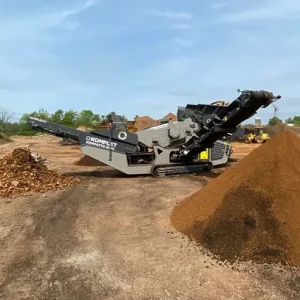
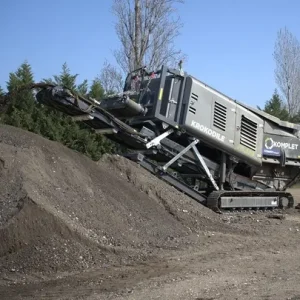
Krokodile PLUS — 60″ single-shaft slow-speed shredder, 220 HP Volvo Penta, up to 175 US tph C&D / up to 18 US tph waste, ~34,000 lb. Handles wood, drywall, plastics, light metals, mixed C&D debris. Slow-speed teeth (NOT sharp blades) tear soft material into volume-reduced output for biomass markets, scrap recovery, and reduced-volume disposal.
Important: Krokodile PLUS does NOT shred concrete, brick, masonry, or other hard mineral material. It’s specifically designed for soft and mixed C&D streams. Operations handling both hard mineral and mixed C&D need both equipment types.
For Spec-Sized Output: Kompatto Vibrating Scalping Screeners
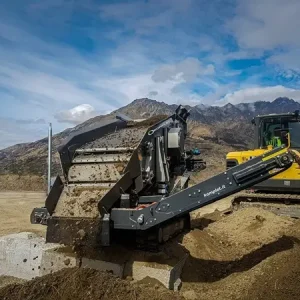
Operations producing spec-sized RCA or RAP (e.g., for commercial customer sales or HMA plant feedstock) pair jaw crushing with Kompatto vibrating scalping screening for size separation:
- Kompatto 221 — up to 90 US tph. Approximately $104,935.
- Kompatto 5030 — up to 280 US tph, hydraulic 2-way / 3-way conversion. Best-selling screener. Approximately $209,061.
For Premium Cubical Aggregate: K-IC 70 Impact Crusher
Operations producing premium cubical-shape aggregate for concrete batch plants, hot-mix asphalt plants, or premium specification applications add the K-IC 70 impact crusher as a secondary stage after primary jaw crushing — up to 90 US tph, 25″ x 20″ feed, 100 HP, ~28,600 lb.
For Material Handling: K-TC 460 Mobile Conveyor
K-TC 460 — up to 132 US tph, 25″ Chevron 3-ply belt, 25 HP Tier 4 Final, ~7,000 lb. Material transfer between processing stages and to stockpiles for workflow integration.
Regulatory and Project Documentation Considerations
LEED Construction Waste Management Credits
LEED-certified projects (commercial buildings, public buildings, institutional facilities) commonly include construction waste management credits requiring documented diversion percentages. C&D recycling supports LEED documentation through measurable diversion through weight tickets, transfer documentation, and material flow records. Specific LEED credit requirements vary by version and project type — verify current requirements for specific projects.
Federal Contract Requirements
Federal construction projects increasingly include C&D recycling and diversion requirements through Buy Clean policies, sustainability requirements, and Federal Acquisition Regulation provisions. Specific requirements vary by agency, project type, and contract specifications — verify before bidding.
State and Local Diversion Mandates
Several states (California, Massachusetts, Vermont, Washington, others) and many municipalities mandate specific C&D diversion percentages or prohibit specific materials from disposal. Operations bidding work in these jurisdictions need to verify compliance pathways. Specific requirements vary by jurisdiction — verify current requirements for project locations.
Documentation and Reporting
On-site processing supports compliance documentation through measurable material flow records — weight tickets, transfer documentation, processing records all provide third-party verifiable diversion documentation. Off-site disposal-only operations have less granular documentation available, complicating compliance verification.
On-Site Processing Decision Framework
Volume Threshold Analysis
On-site processing economics depend on project volume. As a general framework:
- Projects under 500 tons of C&D waste: typically default to disposal pathway; rental crushing for individual projects may not pencil
- Projects 500-2,000 tons of C&D waste: rental crushing typically pencils, particularly in high-tipping-fee markets
- Projects 2,000-10,000 tons of C&D waste: rental crushing typically delivers strong economics; ownership begins to make sense for operations with recurring project pipeline
- Operations 10,000+ tons annually: ownership economics typically justify equipment purchase
Project-Specific Calculation
Run the specific project economics: tons of material × (avoided tipping fee per ton + avoided hauling per ton + recovered material revenue per ton) vs. equipment rental or ownership cost. For ownership analysis, include capital, financing, fuel, wear parts, maintenance per OEM specifications, operator labor, and projected utilization across your project pipeline.
Operational Pipeline Analysis
Operations with continuous project pipeline (demolition contractors, recyclers, excavators with regular C&D volumes) typically benefit from equipment ownership over rental. Operations with sporadic project demand typically benefit from rental over ownership. Hybrid approaches (own primary equipment, rent supplemental capacity for project peaks) can deliver strong economics for some operations.
Komplet Capital Financing
Komplet Capital offers 24-hour approval, 100% financing, 3-6 year terms on Komplet equipment. New equipment qualifies for Section 179 tax deduction up to $1.22M (2024 limit). For C&D processing operations evaluating equipment investment, financing structures matter — talk to the team about options that fit operational economics.
Frequently Asked Questions
What’s the typical payback on C&D processing equipment?
Highly variable based on regional tipping fees, project volume, and material mix. Some operations report payback in 12 months or less in high-tipping-fee markets with consistent project pipeline; others see longer payback periods in lower-tipping-fee markets or sporadic project demand. Run the specific economics for your operation rather than relying on generic payback claims.
Can one machine handle all C&D waste?
No. Hard mineral C&D (concrete, asphalt, brick, masonry) requires compression-based crushing equipment like jaw crushers; mixed/soft C&D (wood, drywall, plastics, light metals) requires slow-speed shredders. Operations handling both streams need both equipment types. Putting wrong material through wrong equipment produces equipment damage and operational disruption.
Does Komplet make equipment for both hard mineral and mixed C&D?
Yes. Komplet jaw crushers (K-JC 503 through K-JC 805) handle hard mineral C&D; the Krokodile PLUS slow-speed shredder handles mixed/soft C&D. Operations handling both streams typically operate both equipment types in parallel or sequence based on project material composition. Browse the full lineup to match equipment to your specific waste streams.
How do I calculate project-specific C&D processing economics?
Project economics = tons of material × (avoided tipping fee per ton + avoided hauling per ton + recovered material revenue per ton) – (equipment rental or operating cost) – (operator labor and overhead). The largest variable is regional tipping fee — this dominates the math in high-tipping-fee markets. Get specific tipping fees from local disposal facilities for accurate project calculation.
What about LEED documentation for on-site processing?
On-site processing supports LEED documentation through measurable material flow records (weight tickets, transfer documentation, processing records). Specific LEED credit requirements vary by version and project type — verify current requirements for specific projects with the project’s sustainability consultant or LEED accredited professional.
Should I rent or buy equipment for C&D processing?
Renting is typically the right starting point for first-time operations and single-project work. For operations with recurring project pipeline (multiple projects per year with significant C&D volumes), ownership economics typically justify purchase. Find your local Komplet dealer or call 908-369-3340 to discuss rental availability and operational economics.
Can recovered RCA be used in structural concrete?
Recovered RCA is commonly used in road base, structural fill, parking lot base, drainage stone, and similar non-structural applications. Use of RCA as aggregate in new structural concrete production requires specific testing and qualification per applicable specifications and is more limited. Most operations focus on the broad non-structural applications where RCA acceptance is well established.
How does on-site processing affect project insurance and liability?
Insurance and liability considerations vary by jurisdiction, operation, and equipment. Work with your project’s insurance broker, liability counsel, and equipment supplier to verify coverage. Komplet equipment includes standard safety features (wireless remote control, emergency stops, dust suppression) that support safe operation. Specific insurance and liability questions should go to qualified professionals.
Final Thoughts
On-site C&D waste processing economics are dominated by cost avoidance — tipping fees ($30-$200+/ton in major US metros), hauling costs ($5-$30+/ton), and avoided aggregate purchase ($15-$40+/ton) typically combine to swing project economics by $50-$200+/ton vs. disposal-only pathways. Recovered material revenue (RCA, RAP, scrap metals, recovered wood) adds further economic contribution. The right equipment for the right waste stream produces these economics — Komplet jaw crushers handle hard mineral C&D (concrete, asphalt, brick, masonry); Komplet’s Krokodile PLUS slow-speed shredder handles mixed/soft C&D (wood, drywall, plastics, light metals); Kompatto vibrating scalping screening produces spec-sized output where required; K-IC 70 impact crushing produces premium cubical aggregate. Operations matching equipment to waste streams across their project pipeline deliver materially better project economics than operations defaulting to disposal pathways.
Browse Komplet America’s compact mobile equipment lineup or call us to discuss equipment selection for your specific C&D processing operation.
Ready to Talk C&D Processing Economics?
- Call 908-369-3340
- Email [email protected]
- Schedule a demo or request a quote
- Find your local Komplet dealer for rental availability
- Ask about our 1-year / 1,000-hour warranty and equipment financing options
Never enough — that’s how we approach service, support, and helping operations execute on-site C&D processing pathways that deliver strong project economics.
Disclaimer: All cost, ROI, payback, pricing, tipping fee, and revenue figures in this article are illustrative examples based on sample assumptions about volume, regional pricing, material specifications, and market conditions. Actual results vary significantly by region, market, material type, equipment utilization, operator skill, financing terms, regulatory environment, and many other factors. Tipping fees, hauling costs, RCA pricing, RAP pricing, scrap metal pricing, fuel costs, and labor rates all change over time and by location. Komplet America makes no guarantee, warranty, or representation of specific financial performance, payback timelines, or business outcomes for any particular operation. LEED credit requirements, federal contract requirements, and state/local diversion mandates are jurisdiction-specific and subject to change; consult applicable regulatory authorities, project sustainability consultants, and qualified compliance professionals for current requirements specific to your projects. For current pricing and a payback estimate based on your specific volume, material, and local market, contact us at 908-369-3340 to speak with our team.