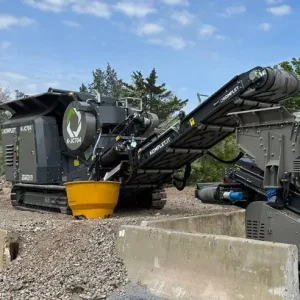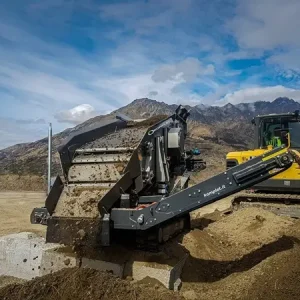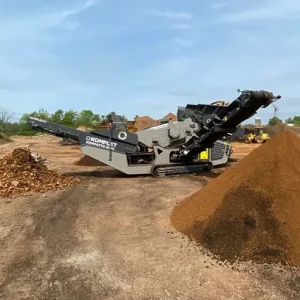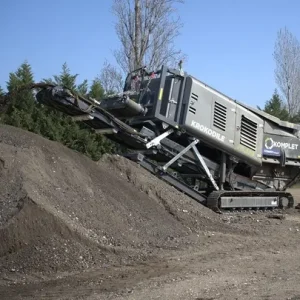

Section 179 is one of the most consequential lines in the U.S. tax code for any business that buys equipment. For contractors, demolition firms, recyclers, aggregate producers, and equipment dealers evaluating compact crushing, screening, shredding, or conveying machinery, it can mean the difference between deducting a major piece of equipment over five to seven years and deducting it entirely in the year it is placed in service. The cash-flow consequences of that timing are significant — and as of tax year 2026, the limits are higher than they have ever been.
This guide explains what Section 179 is, what changed under the One Big Beautiful Bill Act of 2025, the current 2026 dollar limits, how the deduction interacts with bonus depreciation, what kinds of equipment qualify, common mistakes to avoid, and how it can apply to a Komplet equipment purchase. Specific tax outcomes always depend on your situation. Before any purchase decision is made on the basis of tax treatment, the right next step is a conversation with your CPA or qualified tax advisor.
What Is Section 179?
Section 179 of the U.S. Internal Revenue Code allows businesses to deduct the full purchase price of qualifying equipment and certain other property in the tax year the property is placed in service, rather than depreciating it across the IRS-prescribed useful life of the asset. In plain terms: instead of writing off a mobile jaw crusher in pieces over five years, an eligible business can write off the full cost in the year the crusher is delivered, set up, and put to work.
The deduction was created to encourage capital investment by small and mid-sized businesses, and Congress has periodically expanded both the dollar limits and the categories of qualifying property. The most recent expansion came in 2025, when the One Big Beautiful Bill Act (OBBBA) raised the base Section 179 deduction limit substantially. Combined with the restoration of 100% bonus depreciation, the result is the most favorable equipment-expensing environment U.S. businesses have seen in years.
Section 179 applies to both new and used equipment, as long as the property is new to your business. A previously owned crusher purchased from another contractor or from a Komplet pre-owned inventory listing can qualify exactly the same as a brand-new unit, provided the other Section 179 requirements are met.
2026 Section 179 Limits at a Glance
For tax years beginning in 2026, the IRS-published inflation-adjusted Section 179 limits, as supported by the One Big Beautiful Bill Act and confirmed by industry tax-planning sources:
Provision | 2026 Figure |
Maximum Section 179 deduction | $2,560,000 |
Phase-out begins at total qualifying purchases of | $4,090,000 |
Deduction fully phased out at | $6,650,000 |
Heavy SUV (6,001–14,000 lb GVWR) cap | $32,000 |
Bonus depreciation rate (property after Jan 19, 2025) | 100% |
These figures are current as of tax year 2026. Section 179 limits adjust annually for inflation. Always confirm the current year’s authoritative numbers in IRS Revenue Procedure publications or with your tax advisor before making purchase decisions on this basis. For historical context, the 2024 maximum deduction was $1,220,000 and the 2024 phase-out threshold was $3,050,000 — meaning the 2026 limits are roughly twice what they were two tax years earlier. The expansion under OBBBA was significant.
How the Phase-Out Works
The phase-out provision is one of the most commonly misunderstood elements of Section 179. Once your total qualifying property purchases for the year exceed $4,090,000, the maximum deduction reduces dollar-for-dollar with each additional dollar spent. By the time total qualifying purchases reach $6,650,000, the Section 179 deduction is fully phased out.
A worked example: a business purchases $4,590,000 of qualifying equipment in tax year 2026. That is $500,000 above the $4,090,000 phase-out threshold. The maximum Section 179 deduction is therefore reduced from $2,560,000 by that $500,000, leaving a maximum allowable Section 179 deduction of $2,060,000. The remaining cost basis of the equipment can still potentially be recovered through bonus depreciation or standard MACRS depreciation.
For most compact crushing, screening, and shredding equipment buyers, the phase-out is not a near-term concern. Single-unit and small-fleet purchases sit comfortably below the threshold. The phase-out matters most for larger equipment dealers, rental-house operators, and aggregate producers acquiring multiple pieces of equipment in the same tax year. If you are in that category, the phase-out becomes a planning factor that may affect how purchases are timed across two or more tax years.
Section 179 and Bonus Depreciation: How They Work Together
Section 179 is not the only first-year expensing tool available to equipment buyers. Bonus depreciation is a separate provision that allows a percentage of the cost of qualifying property to be deducted in the first year. The OBBBA restored bonus depreciation to 100% for qualifying property acquired and placed in service after January 19, 2025 — a meaningful change, since bonus depreciation had been in a phase-down trajectory before that date.
There are three important practical differences between Section 179 and bonus depreciation that affect how they should be used together:
- Section 179 cannot exceed business taxable income. The Section 179 deduction cannot create a net operating loss. If a business has $200,000 in taxable income and tries to claim a $300,000 Section 179 deduction, only $200,000 will reduce current-year income; the remaining $100,000 carries forward indefinitely. Bonus depreciation, by contrast, has no taxable-income limitation and can create or extend a loss.
- Section 179 must be elected first. IRS rules require the Section 179 election to be made before bonus depreciation. The standard planning move: apply Section 179 first to bring taxable income near zero (without exceeding it), then apply bonus depreciation to any remaining qualifying basis.
- Section 179 is elective on an asset-by-asset basis. You can apply Section 179 to part of the cost of a single piece of equipment, all of it, or none of it. Bonus depreciation is generally applied to all qualifying property of the same recovery period within the year — opt-in or opt-out by class.
In a high-income year with multiple equipment purchases, a typical pattern is to elect Section 179 on the assets that produce the cleanest tax result and bring taxable income to a target level, then claim 100% bonus depreciation on the remaining qualifying property. In a low-income year, the calculus shifts: bonus depreciation may be more useful because of its ability to create or extend a loss.
This is precisely the kind of multi-variable optimization that benefits from working through the numbers with a tax professional. The two deductions are powerful tools, but the right combination is specific to each business’s income profile, entity structure, and capital plans.
What Equipment Qualifies for Section 179
Section 179 applies to a broad category of business property, including:
- Tangible personal property used in a trade or business — this is where compact crushing, screening, shredding, and conveying equipment falls
- Machinery and equipment with a useful life greater than one year
- Computers and off-the-shelf software
- Office furniture and office equipment
- Qualified business vehicles (subject to specific weight-based caps)
- Certain qualified improvement property — interior, non-structural improvements to nonresidential real property
- Some building improvements such as roofs, HVAC, fire protection, and security systems on nonresidential real property
The key qualifications are that the property must be (1) acquired by purchase rather than gift or inheritance, (2) used more than 50% for business purposes, and (3) placed in service — not just ordered, but actually delivered, installed, and ready for use — during the tax year for which the deduction is claimed.
Note especially the placed-in-service requirement. A crusher ordered in November 2026 but not delivered, set up, and operationally ready until January 2027 cannot be deducted in the 2026 tax year. The deduction follows the placed-in-service date, not the order date or the contract date. For year-end purchases, build delivery, installation, and commissioning lead time into the planning.
Critical Section 179 Requirements
The Placed-in-Service Deadline
For a calendar-year taxpayer, qualifying property must be placed in service no later than December 31 of the tax year in which Section 179 is claimed. “Placed in service” means the equipment is operational and available for its intended business use — not just delivered to your yard. This is a frequent source of failed deductions: equipment ordered in late November, delivered late December, but not commissioned until January cannot be deducted on the prior tax year’s return. For Komplet equipment specifically, plan for delivery and commissioning lead time of two to six weeks depending on dealer and equipment availability. Year-end purchases should be initiated by mid-October at the latest.
The 50% Business-Use Threshold
Equipment must be used more than 50% for qualifying business purposes during the tax year of the deduction. For most compact crushing, screening, and shredding equipment owned by contractors and recyclers, this is easily satisfied — the equipment exists for business use and is not realistically usable for personal purposes. The threshold matters more for vehicles and dual-use property where the personal-versus-business mix is less obvious.
The Taxable-Income Limitation
The Section 179 deduction cannot exceed your aggregate net taxable income from all active trades or businesses for the year. If your business has a $400,000 taxable-income year and you claim $500,000 in Section 179 deductions, the current-year deduction is capped at $400,000. The remaining $100,000 carries forward indefinitely and is available in future years subject to that year’s income limitation. This is a critical interaction with year-end purchase planning. If your business is having a low-income year, bonus depreciation may produce a better current-year result than Section 179.
The Recapture Rule
If business use of property previously expensed under Section 179 drops below 50% during the property’s recovery period (generally five years for most equipment), a portion of the previously claimed deduction may need to be recaptured — added back to taxable income in the year business use falls below the threshold. For dedicated business equipment like a compact crusher, this is rarely an issue. It is more likely to come up with vehicles whose business use can vary year to year.
State Tax Conformity
Federal Section 179 rules apply nationwide for federal income tax purposes. State income tax conformity, however, varies considerably. Many states fully conform to federal Section 179 limits. Others — including New Jersey, where Komplet America is headquartered — have historically had different state-level limits or required addback for state purposes. If your business is in a non-conforming state, your federal and state Section 179 deductions may differ, and your CPA may need to track separate basis for federal and state purposes. This is an important reason not to plan a major equipment purchase around Section 179 without first confirming the state-level treatment.
Common Section 179 Mistakes to Avoid
Five mistakes come up repeatedly in Section 179 conversations with equipment buyers. Avoiding them is more valuable than any single planning trick.
- Confusing order date with placed-in-service date. The deduction follows when the equipment is delivered, installed, and operational — not when the contract was signed or the deposit was paid. A late-year purchase that does not commission until January is a deduction for the next tax year, not the current one.
- Assuming Section 179 always beats bonus depreciation. In a low-income year, bonus depreciation’s ability to create or extend a loss may produce a better tax result than Section 179, which cannot exceed taxable income.
- Ignoring state conformity. A federal deduction that is fully phased back at the state level may be smaller than expected on a combined-tax basis. This is particularly relevant for businesses in states like New Jersey, California, and others that decouple from federal Section 179.
- Failing to maintain documentation. Section 179 deductions are claimed on IRS Form 4562 and require documentation of the purchase, the placed-in-service date, the business-use percentage, and the cost basis. Audit-quality records — invoices, delivery receipts, photographs of the equipment in operation, fuel and operating logs — should be retained for at least five years.
- Treating tax savings as the reason to buy. Section 179 is a useful enhancement to a sound equipment purchase, not a substitute for one. A crusher that does not produce revenue is not a good purchase regardless of how favorably it can be expensed. Buy because the operating economics work; let the tax treatment improve the timing of the cash-flow benefit.
How Section 179 Can Apply to a Komplet Equipment Purchase
The following are illustrative examples only. Actual tax outcomes depend on your specific income, entity type, state, prior depreciation positions, and other factors. These examples assume eligible business use, sufficient taxable income, full conformity, and other simplifying assumptions. They are intended to illustrate the mechanics of Section 179, not to predict your specific result. Confirm any planning decision with your CPA or tax advisor.
Example A: A Single K-JC 503 Mini Jaw Crusher
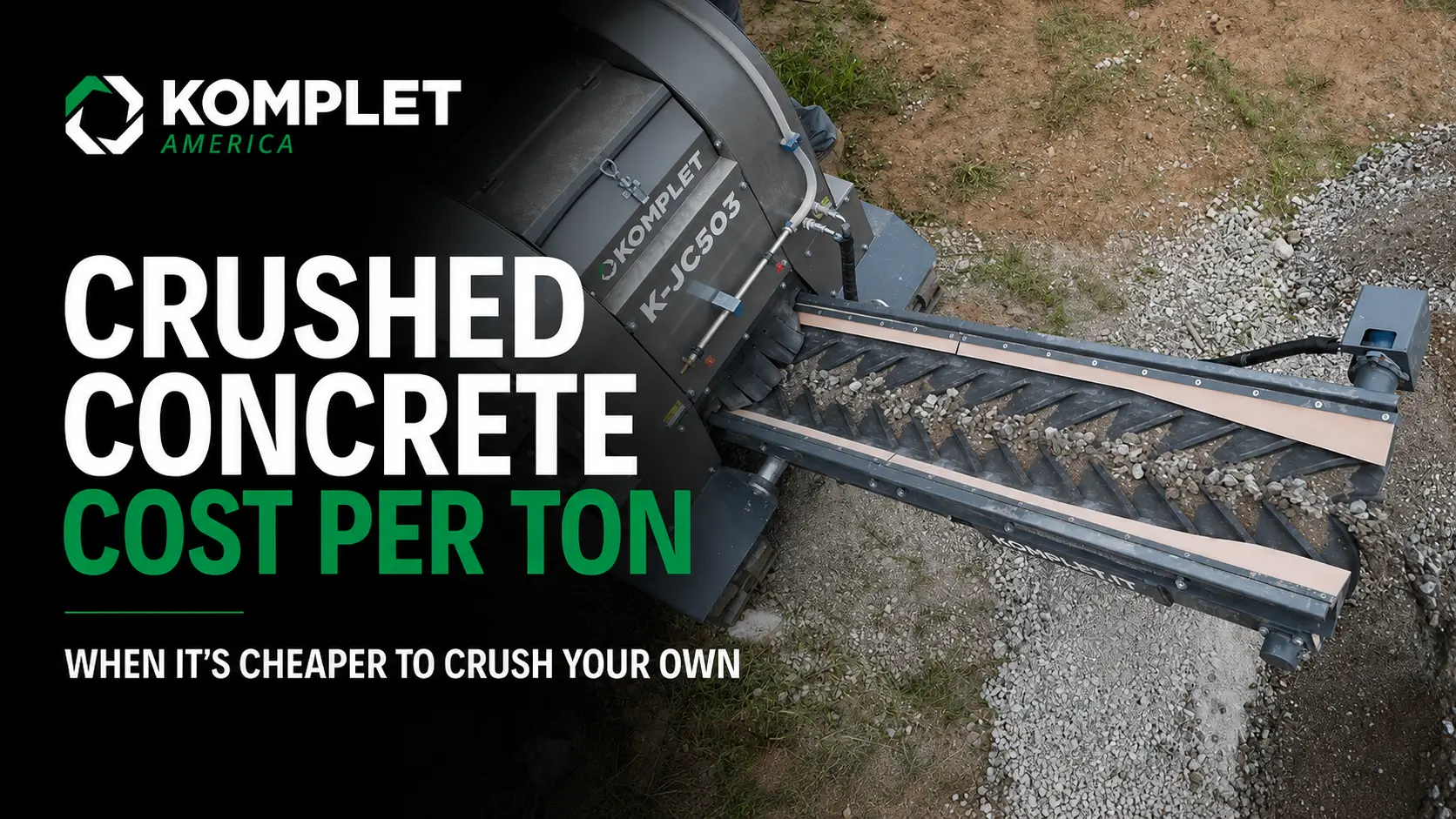
A small contractor purchases a new K-JC 503 mini jaw crusher with magnetic separator. The equipment is delivered, set up, and put to use processing concrete from demolition projects in October. The contractor’s business has $400,000 in taxable income for the year, and total qualifying property purchases are well below the $4,090,000 phase-out threshold. In this case, the full purchase price may be deductible under Section 179 in the year placed in service, subject to all the qualifications above. Because the full purchase was elected under Section 179, there is no remaining basis for bonus depreciation.
Example B: A K-JC 704 PLUS Crusher with a K-TC 460 Conveyor
A regional demolition firm purchases the best-selling K-JC 704 PLUS portable jaw crusher with magnetic separator, paired with a K-TC 460 tracked mobile conveyor for combined-system on-site recycling. The firm has $1,200,000 in taxable income for the year. The full combined cost is well within the $2,560,000 Section 179 maximum and well below the phase-out threshold, and the placed-in-service requirement is satisfied. The full cost may potentially be deductible under Section 179 in the year of purchase, subject to all qualifications. The improvement in current-year cash flow versus deducting the same amount over five years is significant — and frees capital for additional investment, working capital, or operational reserves.
Example C: A Krokodile PLUS Slow-Speed Shredder
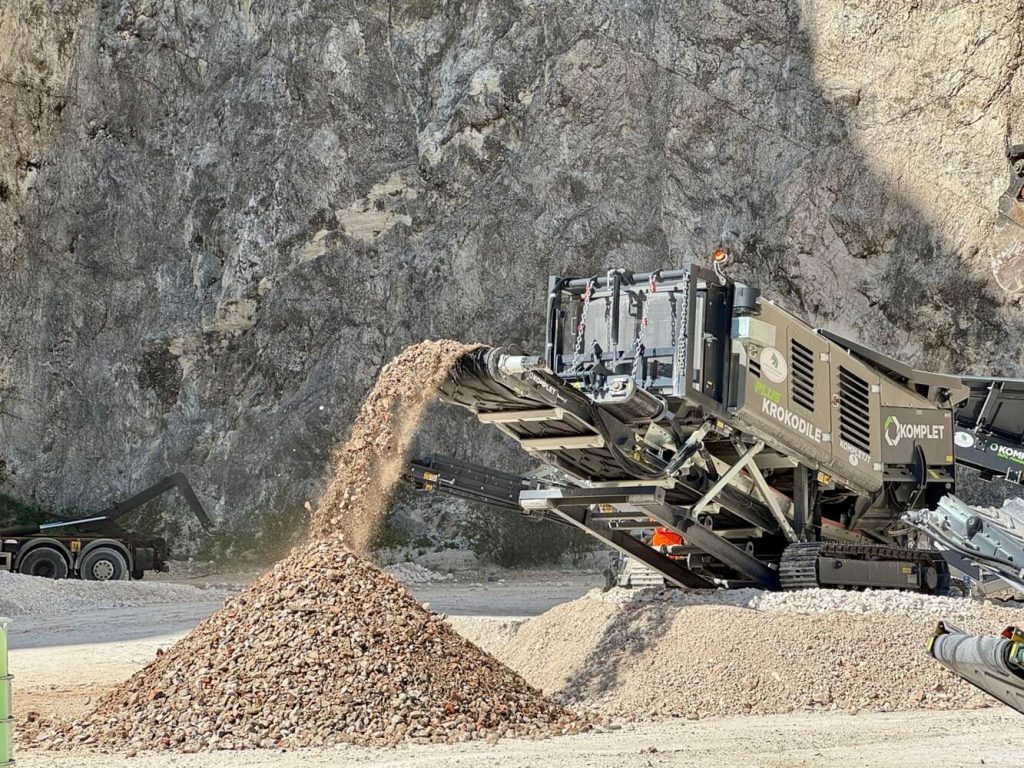
A C&D recycling operation purchases the Krokodile PLUS slow-speed shredder with magnetic separator and hydraulic hopper, configured initially with the C&D and asphalt teeth-and-shaft setup. The equipment is placed in service in August and processes mixed concrete, asphalt, and brick rubble for the remainder of the year. The operation has $600,000 in taxable income. Again, the full purchase price is within the Section 179 maximum and below the phase-out threshold; subject to qualifications, the full cost may be deductible in the year placed in service.
In each example, the deduction does not change the cost of the equipment. What it changes is the timing of the tax benefit — moving the full benefit forward to the year of purchase rather than spreading it across five or seven years. The economic effect on cash flow is meaningful, especially for businesses planning multiple equipment investments.
Steps to Claim Section 179
The mechanical process is straightforward, though every step interacts with broader tax planning that benefits from professional support:
- Identify the qualifying property and confirm the placed-in-service date for the tax year.
- Confirm with your tax advisor that taxable income for the year supports the intended deduction.
- Confirm state conformity if your state decouples from federal Section 179 limits.
- File IRS Form 4562 (Depreciation and Amortization), Part I, with your timely-filed return (including extensions).
- Document everything: purchase invoices, delivery receipts, placed-in-service evidence, business-use records, financing terms.
- Coordinate with bonus depreciation for any remaining qualifying basis after Section 179 is elected.
- Retain documentation for at least five years to support the deduction in case of audit.
Section 179 with Equipment Financing
Financed equipment qualifies for Section 179 the same as cash purchases. The deduction is based on the equipment’s cost — not on the cash outlay in the year of purchase. This produces one of Section 179’s most attractive applications: a financed equipment purchase can sometimes generate a current-year tax savings that substantially offsets the down payment and early loan or lease payments. The full mechanics depend on the financing structure (purchase versus capital lease versus operating lease versus fair-market-value lease versus dollar-buyout lease), and treatment varies. Komplet America’s financing partner network can structure transactions in different ways to support different tax-planning preferences. The equipment financing page outlines the available structures.
Frequently Asked Questions
Does Section 179 apply to used equipment?
Yes — provided the equipment is new to your business, was acquired by purchase, and meets the other Section 179 requirements (more than 50% business use, placed in service during the tax year, and so on). Pre-owned compact crushers, screeners, and shredders can qualify for Section 179 the same as new equipment, subject to your tax advisor’s review.
What is the 2026 Section 179 maximum deduction?
For tax years beginning in 2026, the maximum Section 179 deduction is $2,560,000, with the phase-out beginning at $4,090,000 in total qualifying purchases and full phase-out at $6,650,000. These figures are inflation-adjusted annually. Always confirm the current year’s authoritative figures with your tax advisor or via current IRS Revenue Procedure publications.
Can I claim Section 179 on a financed crusher purchase?
Yes. Section 179 applies based on the cost of the qualifying equipment, not the cash payment in the year of purchase. Financed equipment qualifies the same as cash purchases, provided all other requirements are met. The combination of equipment financing and Section 179 is one of the most common reasons buyers favor Section 179 — it can produce immediate tax benefit substantially exceeding the first-year cash outlay.
What is the difference between Section 179 and bonus depreciation?
Section 179 is an elective deduction limited to taxable business income, with annual dollar caps and phase-outs. Bonus depreciation is generally automatic on qualifying property within the same recovery class, has no taxable-income limit, and is currently 100% for qualifying property placed in service after January 19, 2025. Most equipment buyers use both, applying Section 179 first and bonus depreciation to any remaining qualifying basis.
Does my state recognize Section 179 the same as the federal government?
State conformity varies. Many states match federal Section 179 limits exactly. Others — including New Jersey — have historically decoupled at various points and may require an addback or impose lower state-level limits. Always confirm state conformity with your CPA, especially if the federal Section 179 deduction would be substantial. The federal deduction is what it is regardless of state treatment, but the combined federal-and-state result is what matters for your business.
Can Section 179 create a tax loss?
No. Section 179 is limited by taxable business income for the year and cannot reduce taxable income below zero. Any unused Section 179 deduction carries forward indefinitely and is available in future years subject to that year’s income limitation. Bonus depreciation, by contrast, can create or extend a loss — which is one reason a low-income year sometimes favors bonus depreciation over Section 179.
What documentation does the IRS expect for a Section 179 deduction?
File IRS Form 4562, Depreciation and Amortization, Part I, with your timely-filed tax return. Maintain underlying records including the purchase invoice, evidence of the placed-in-service date (delivery receipt, commissioning records, photographs), business-use documentation, and any relevant financing agreements. Retain documentation for at least five years.
What is the deadline to claim Section 179 for a 2026 equipment purchase?
For calendar-year taxpayers, equipment must be placed in service by December 31, 2026 to qualify for the 2026 deduction. The deduction itself is claimed on the 2026 return, generally due by April 15, 2027 (or October 15, 2027 with a timely-filed extension). Plan delivery, installation, and commissioning to be completed comfortably before December 31 — late-year purchases that fail to commission in time become next-year deductions instead.
Final Thoughts
For equipment buyers, Section 179 is one of the most consequential tools in the U.S. tax code. The 2026 limits — a $2,560,000 maximum deduction and a $4,090,000 phase-out threshold, combined with 100% bonus depreciation — represent the most favorable equipment-expensing environment in years. For Komplet America buyers in particular, the implication is that a well-timed, well-financed equipment purchase can produce both an operational benefit and a significant first-year tax benefit, turning the timing of capital investment into a strategic decision rather than just a financial one.
That said: Section 179 is a tax provision, not a sales pitch. It belongs in a conversation with your CPA, not just in a pre-purchase comparison spreadsheet. Confirm the figures, confirm state conformity, confirm your taxable-income position, confirm placed-in-service timing — and then make the equipment decision on the merits of the equipment itself. The Conti family principle that has guided Komplet America’s heritage since 1906 applies to capital decisions as well as to construction work: done once, done right.
To learn more about Komplet equipment that may qualify for Section 179, see the full equipment lineup. Equipment financing options are on the financing page, and pre-owned equipment can also qualify. To find a Komplet dealer in your territory, visit Find Your Komplet Dealer, or contact Komplet America directly.
Ready to Plan Your Year-End Equipment Purchase?
- Talk to your CPA or qualified tax advisor first. Confirm taxable income, state conformity, and how Section 179 fits with your broader tax position before committing to a purchase based on the deduction.
- Call Komplet America at 908-369-3340 to discuss equipment availability and delivery lead times — particularly important for late-year purchases that need to be placed in service before December 31.
- Review the full equipment lineup to identify the model that fits your operation.
- Discuss financing structures — Section 179 applies to financed purchases the same as cash purchases, and the right structure may improve the combined operational and tax outcome.
- Find your local Komplet dealer if traveling to the New Jersey yard is not practical for your evaluation or purchase.
Never enough.
Tax Disclaimer: This article provides general information about Section 179 of the Internal Revenue Code and is not tax advice. Komplet America is an equipment distributor, not a tax advisor or accounting firm. Tax laws are complex and change frequently. Federal Section 179 limits, bonus depreciation rates, qualifying property categories, vehicle caps, state conformity rules, and other provisions discussed here are subject to change. The figures cited reflect tax year 2026 limits and reasonable industry sources as of publication; the IRS publishes authoritative inflation-adjusted figures annually in Revenue Procedure publications. Specific tax outcomes depend entirely on your individual circumstances, business income, entity structure, prior depreciation positions, state of operations, and other factors that only a qualified tax professional reviewing your full situation can evaluate. Always consult a CPA, tax attorney, or qualified tax advisor before making purchase or planning decisions on the basis of Section 179 or any other tax provision. Komplet America makes no representation about your specific tax outcome and is not liable for tax-planning decisions made on the basis of this article.
Pricing Disclaimer: Any dollar amounts, ROI figures, or savings examples shown above are illustrative only. Actual results depend on jobsite material composition, local hauling and tipping rates, fuel and labor costs, equipment utilization, financing terms, regional regulatory requirements, operator efficiency, your specific tax situation, and other factors. Equipment prices are subject to change based on dealer location, availability, configuration, and additional features or customizations, and do not include taxes, shipping, or installation fees, which may apply depending on your region. Komplet America makes no guarantee of specific financial returns or tax outcomes. Customers should perform their own analysis based on local market conditions and a review with their CPA or tax advisor before making purchase decisions. Contact Komplet America at 908-369-3340 or visit kompletamerica.com for current pricing.