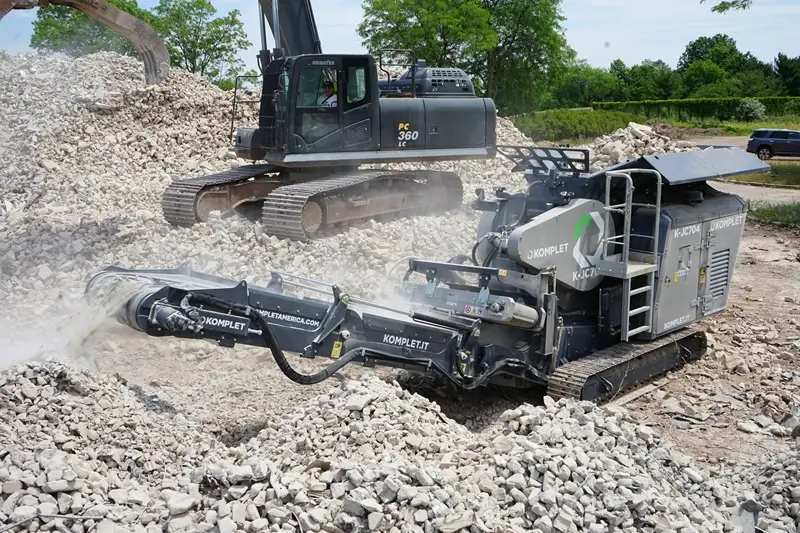

Demolition projects generate enormous volumes of concrete, brick, asphalt, and mixed C&D debris. Hauling that material off-site costs significant tipping fees, hauling charges, and dump waiting time — costs that compound across every project. On-site processing with the right combination of jaw crushers (for primary reduction of demolition material) and impact crushers (for premium cubical secondary output where the market commands it) transforms the demolition cost stream into a recovery revenue stream while compressing project schedules. Done right, the integrated workflow delivers operational economics that the haul-out alternative simply can’t match.
This basic guide walks through how demolition contractors maximize efficiency with jaw and impact crushers — the proper roles each technology plays, when single-stage jaw crushing is sufficient and when adding impact crushing makes economic sense, the standard productivity features that handle real demolition feed, screening integration for spec-size production, and how Komplet America’s K-JC jaw crusher and K-IC 70 impact crusher lineup supports the integrated workflow.
Jaw Crushers: The Primary Reduction Workhorse
Jaw crushers reduce material through compression between fixed and moving jaw plates. The moving jaw approaches the fixed jaw, compressing material against the fixed surface until the material fractures along its weak planes. This compression-based approach is ideally suited to demolition feed for several specific reasons.
Why Jaw Crushers Handle Demolition Feed Well
- Wide jaw opening accepts irregular demolition pieces — Komplet jaw openings range from 19″ x 12″ (K-JC 503) to 31″ x 21″ (K-JC 805)
- Compression action breaks concrete around embedded rebar without wrapping steel through moving parts
- Reverse jaw function clears uncrushable obstructions via wireless remote without chamber entry
- Hydraulically adjustable jaw setting supports flexible output spec from primary reduction
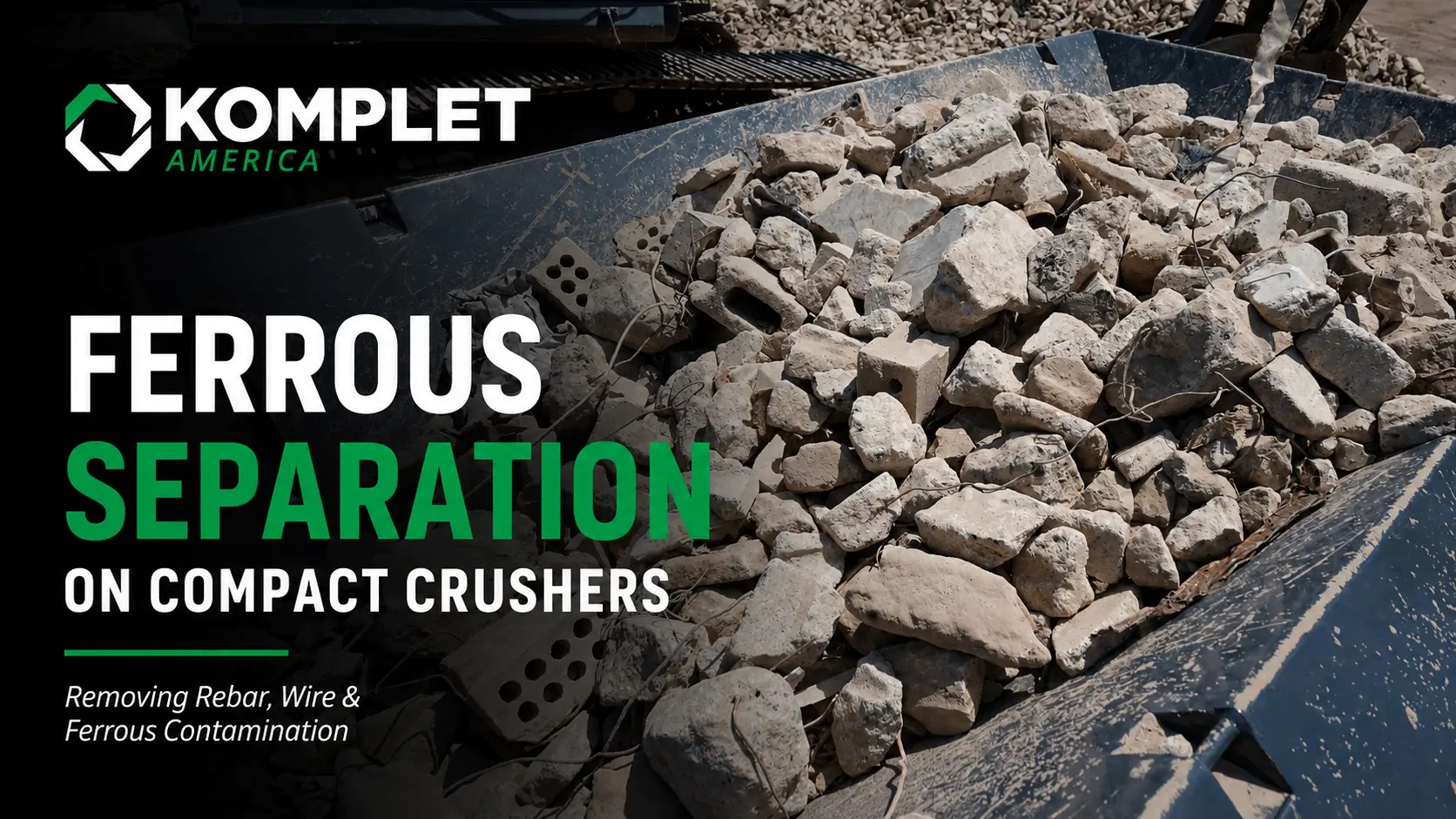
- Standard hydraulic magnetic belt (K-JC 604, K-JC 704 PLUS, K-JC 805) automatically separates rebar from output during crushing; K-JC 503 includes magnetic attachment as option (included in base price)
Typical Primary Output Spec
Primary jaw crusher output typically ranges from 3/4″ minus to 4″ minus depending on jaw setting and feed material. For most demolition operations producing road base, structural fill, or general aggregate, primary jaw output is the FINAL output — no secondary processing required. The single-stage workflow handles the largest share of demolition operations economically.
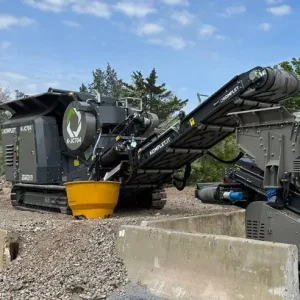
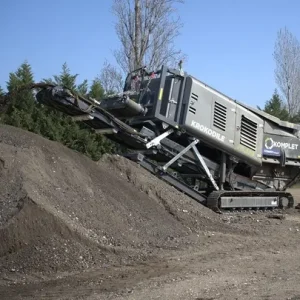
Komplet’s Compact Mobile Jaw Crusher Lineup
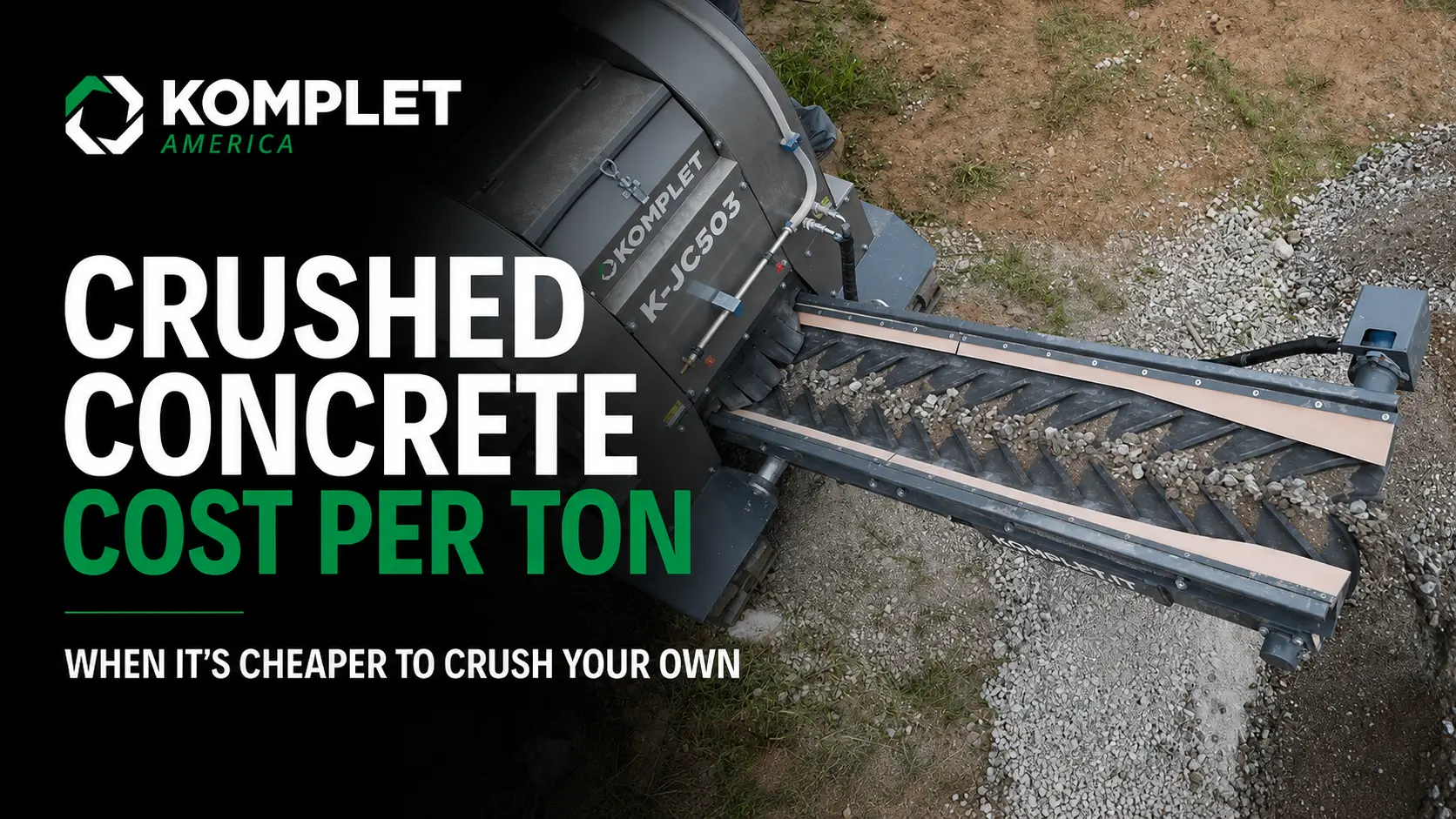
- K-JC 503 — up to 34 US tph, 19″ x 12″ jaw, 25 HP Tier 4 Final, ~7,496 lb. Tight-access urban demolition.
- K-JC 604 — up to 55 US tph, 23″ x 16″ jaw, 55 HP, ~19,400 lb. Mid-range demolition operations.
- K-JC 704 PLUS — up to 90 US tph, 27″ x 16″ jaw, 74 HP, ~26,455 lb. Komplet’s best-selling crusher — workhorse for typical contractor demolition operations.
- K-JC 805 — up to 160 US tph, 31″ x 21″ jaw, 130 HP, ~49,600 lb. Largest jaw crusher in the lineup, for high-volume demolition and aggregate operations.
Impact Crushers: For Premium Cubical Secondary Output
Impact crushers reduce material through high-speed rotor blow bars (NOT hammers — hammers belong to hammer mills, a different crusher type). The rotating blow bars strike material in the chamber, throwing it against impact plates (also called impact aprons) where additional reduction occurs. Material rebounds between rotor and impact plates multiple times, with the repeated impact action producing more uniform, more cubical output than compression-based jaw crushing.
Why Add an Impact Crusher to Demolition Workflow
The economic case for adding an impact crusher to a demolition workflow depends on whether your customers are willing to pay premium pricing for cubical aggregate output. Specific scenarios where impact crushing adds value:
- Concrete batch plant feedstock — concrete mix designs commonly require cubical aggregate for proper bond and strength characteristics; flat or elongated jaw crusher output may not qualify
- Hot-mix asphalt plant feedstock — premium asphalt mix designs prefer cubical aggregate for better compaction and pavement durability
- Decorative aggregate markets — landscape, hardscape, and architectural applications often command premium pricing for cubical or angular shapes
- State DOT specification work where cubical particle shape is specified for specific applications
For most demolition contractors producing road base, structural fill, drainage stone, or general aggregate, jaw output is the FINAL output — adding an impact crusher would be unnecessary capital expense without commensurate revenue increase. The integrated jaw + impact workflow makes economic sense specifically when premium-pricing markets are the target.
Komplet K-IC 70 Compact Impact Crusher
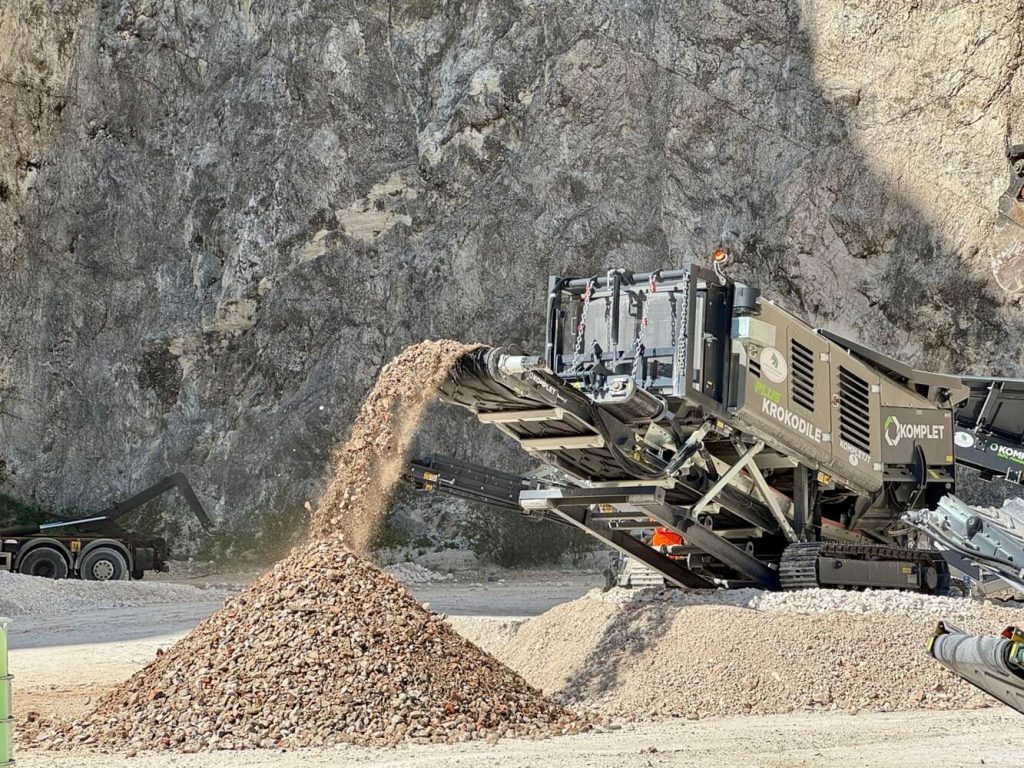
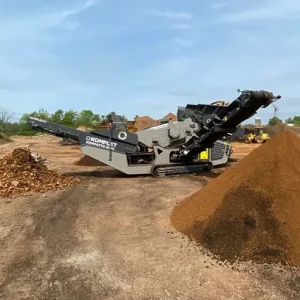
K-IC 70 Compact Impact Crusher — up to 90 US tph, 25″ x 20″ feed, 100 HP. Launched as Komplet’s compact mobile impact crusher option for premium cubical secondary output. Pairs naturally with the K-JC 704 PLUS in a typical contractor workflow targeting premium aggregate markets.
Important: K-IC 70 as Secondary, Not Primary
The K-IC 70 is engineered for SECONDARY reduction — added to a workflow AFTER primary jaw crushing has reduced demolition concrete and removed rebar. Using the K-IC 70 as a primary crusher for raw demolition concrete with embedded rebar can wrap the steel around the high-speed rotor and create jams — exactly what the jaw crusher’s compression action and magnetic separation are designed to prevent. Match the right equipment to the right role: jaws for primary reduction with rebar handling; K-IC 70 for premium cubical secondary output after primary reduction.
The Integrated Jaw + Impact + Screen Workflow
Operations targeting premium aggregate markets typically deploy a three-stage workflow:
Stage 1: Primary Reduction (Jaw Crusher)
Demolition concrete loads into the jaw crusher’s wide jaw opening. Compression between fixed and moving jaw plates breaks the concrete around embedded rebar; magnetic belt automatically separates ferrous metal during crushing. Output reduces large irregular demolition pieces to the 3/4″ to 4″ range typical of jaw crusher discharge.
Stage 2: Secondary Reduction (Impact Crusher)
Primary jaw output transfers to the impact crusher (typically via mobile conveyor for continuous operation). The K-IC 70’s high-speed rotor and impact apron produce cubical output suitable for premium aggregate markets. Output gradation typically ranges from #57 stone to fines depending on impact crusher settings.
Stage 3: Spec-Size Separation (Screener)
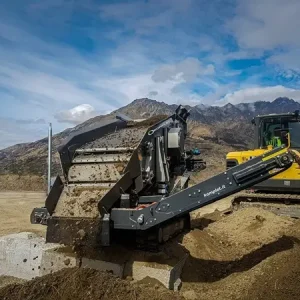
Secondary impact output transfers to a vibrating scalping screener to separate into final spec sizes. The Kompatto 5030 — Komplet’s best-selling screener with hydraulic 2-way / 3-way conversion — produces 2 or 3 spec sizes simultaneously. Oversize returns to the impact crusher for additional reduction; spec sizes go to dedicated stockpiles.
Workflow Connection: Mobile Conveyors
The K-TC 460 portable mobile conveyor — up to 132 US tph, 25″ Chevron 3-ply belt, 25 HP Tier 4 Final, ~7,000 lb — handles material transfer between processing stages. Without conveyor integration, loader cycles between stages create bottlenecks that slow the entire workflow.
Standard Single-Stage Workflow (Most Demolition Operations)
For demolition operations producing standard road base, structural fill, drainage stone, or general aggregate (not premium cubical markets), the integrated workflow simplifies to two stages: primary jaw crushing + screening for spec sizes. The K-JC 704 PLUS (best-selling crusher) + Kompatto 5030 (best-selling screener) combination handles the operational sweet spot for typical contractor demolition operations.
Standard Features That Make Demolition Crushing Work
Hydraulic Magnetic Belt
K-JC 604, K-JC 704 PLUS, and K-JC 805 ship with integrated hydraulic magnetic belts that automatically lift ferrous metal off the discharge conveyor during crushing. K-JC 503 includes magnetic attachment as an option (included in base price). Recovered rebar typically sells as scrap metal at $100-$300+/ton — converting embedded steel into recovered revenue while keeping crushed RCA output clean.
Reverse Jaw Function
All Komplet jaw crushers include reverse jaw function — clears uncrushable obstructions in seconds via wireless remote without requiring chamber entry. Construction-side feed routinely includes uncrushable items (oversized rebar bundles, embedded structural steel, foreign metal objects, occasional construction tools) that would jam other crusher types. The reverse jaw function turns potential downtime events into 30-second remote operations.
Standard Dust Suppression for OSHA Compliance
All Komplet jaw crushers ship with standard water-spray dust suppression specifically engineered for OSHA crystalline silica compliance (PEL of 50 ug/m3 over 8 hours). Concrete crushing generates significant crystalline silica dust; standard dust suppression supports compliance without aftermarket retrofits. Critical for demolition operations bidding commercial work in jurisdictions with active OSHA enforcement.
Wireless Remote Control
All Komplet jaw crushers and the K-IC 70 include wireless remote control — operator handles deployment, operation, jaw setting adjustment, conveyor positioning, and reverse jaw function from a safe position. Critical for safety (operator stays clear of the crushing chamber) and productivity (single operator handles full operation rather than coordinating multiple crew members).
Self-Propelled Tracked Mobility
All Komplet compact mobile equipment features self-propelled tracked mobility with hydraulically folding components. Deployment in 15-30 minutes from arrival to operating production. Same-day deployment is the operational baseline for project work — equipment requiring multi-hour setup or specialized assembly crews doesn’t fit project-based demolition economics.
Tier 4 Final Emissions Compliance
All current Komplet jaw crushers and the K-IC 70 use Tier 4 Final emissions-compliant diesel engines — required for federal compliance on construction equipment manufactured after 2014/2015 in the US. Tier 4 Final compliance is necessary for operating in many state-level emissions-restricted markets.
Selection Framework: Single-Stage vs. Integrated Multi-Stage
When Single-Stage Jaw Crushing Is Sufficient
Most typical contractor demolition operations don’t require impact crushing. Single-stage jaw + screen workflow handles:
- Road base aggregate for state DOT non-structural pavement applications
- Structural fill for trench backfill, bedding, embankment construction
- Drainage stone for French drains, foundation drainage, septic field stone
- General aggregate for parking lot bases, industrial pad construction, walkway base
- Recycled concrete aggregate (RCA) for direct customer sale to landscape supply yards and contractors
When Integrated Jaw + Impact Workflow Adds Value
The economic case for adding impact crushing requires premium market access:
- Concrete batch plants buying cubical aggregate for mix designs
- Hot-mix asphalt plants buying cubical aggregate for premium pavement work
- Decorative aggregate markets with established premium pricing for shape
- State DOT specification work requiring cubical aggregate for specific applications
Without these markets, the additional capital cost of an impact crusher and the additional operating cost of a multi-stage workflow may exceed the revenue premium they enable. Match the workflow to your actual market position.
Volume Considerations
Operations processing under ~10,000 tons annually typically work better with single-stage jaw + screen; the volume doesn’t justify the additional capital and operational complexity of impact crushing even with premium market access. Operations at 30,000+ tons annually with consistent premium aggregate market access typically see the integrated workflow economics justify the equipment investment.
Frequently Asked Questions
Do I need both a jaw crusher AND an impact crusher for demolition?
Most demolition operations don’t. Single-stage jaw + screen workflow handles standard road base, structural fill, drainage stone, and general aggregate production economically. Adding an impact crusher makes economic sense specifically when your customers will pay premium pricing for cubical aggregate (concrete batch plants, hot-mix asphalt plants, decorative aggregate markets, specific state DOT specs). Without those premium markets, the additional capital and operating cost may exceed the revenue benefit.
Can I use the K-IC 70 as a primary crusher for demolition concrete?
The K-IC 70 is engineered for SECONDARY reduction after primary jaw crushing. Using it as a primary crusher for raw demolition concrete with embedded rebar can wrap the steel around the high-speed rotor and create jams — exactly what the jaw crusher’s compression action and magnetic separation prevent. For demolition concrete primary reduction, use a K-JC jaw crusher; add the K-IC 70 as a secondary stage if your operation serves premium aggregate markets.
Do impact crushers use hammers?
No — impact crushers use blow bars, not hammers. Hammers belong to hammer mills (a different crusher type that Komplet doesn’t make). Hammer mills use rotating hammers to shatter soft material; impact crushers use blow bars on a high-speed rotor. The terminology distinction matters because each type handles different materials differently.
How does magnetic separation work in demolition crushing?
Komplet jaw crushers from K-JC 604 upward include integrated hydraulic magnetic belts that automatically lift ferrous metal off the discharge conveyor during crushing. The magnetic belt runs above the discharge belt; ferrous metal in the crushed output gets attracted upward to the magnetic belt, then drops off to a separate scrap pile when it passes the magnet end. Recovered rebar typically sells as scrap metal at $100-$300+/ton — adding revenue while keeping crushed RCA output clean. The K-JC 503 includes magnetic attachment as an option (included in base price).
What’s the throughput of an integrated demolition crushing workflow?
Throughput depends on the slowest stage in the workflow. For a typical K-JC 704 PLUS (up to 90 US tph) + K-IC 70 (up to 90 US tph) + Kompatto 5030 (up to 280 US tph) workflow, the jaw and impact stages each run at 90 tph; the screener has significant headroom. Real-world utilization typically runs 60-70% of rated capacity once operational reality (loading time, repositioning, breaks) is factored in.
How long does a multi-stage demolition crushing workflow take to set up?
Each piece of compact mobile equipment deploys in 15-30 minutes individually. For a complete jaw + impact + screener workflow, total setup time runs approximately 1-2 hours including positioning equipment in the right relationship for material flow. Subsequent re-deployments at the same site (after temporary breakdown for material clearance, repositioning, etc.) typically run 30-60 minutes.
Can I rent the equipment first to validate the workflow?
Yes — through Komplet’s authorized dealer and rental network. Find your local Komplet dealer or call (908) 369-3340. Many partners offer rent-to-own arrangements where rental payments credit toward eventual purchase. Renting the integrated workflow on a real demolition project validates the actual operational economics and equipment fit before committing capital.
What’s the warranty on Komplet equipment?
All new Komplet equipment ships with a 1-year / 1,000-hour warranty (whichever comes first). Komplet America’s parts inventory is forecasted 12 months in advance, supporting fast wear-part availability when service items are needed. Authorized dealers across North and Central America provide local service support — call (908) 369-3340 for parts, service, or technical questions.
Final Thoughts
Maximizing efficiency in demolition projects starts with matching the right crushing technology to the right operational role: jaw crushers for primary reduction of demolition concrete with embedded rebar; impact crushers (when economically justified) for premium cubical secondary output targeting concrete batch plants, hot-mix asphalt plants, and decorative aggregate markets; screeners for spec-size production. Most demolition operations achieve excellent economics with single-stage jaw + screen workflow alone; operations targeting premium markets benefit from adding K-IC 70 impact crushing in the right scenarios. The standard productivity features (magnetic separation, reverse jaw, dust suppression, wireless remote, tracked mobility) make all of this work in real construction-side conditions. The right equipment combination delivers project economics that haul-out alternatives simply can’t match.
Browse Komplet America’s compact mobile crushing lineup — jaw crushers from K-JC 503 through K-JC 805 plus the K-IC 70 impact crusher — or call us to discuss the right workflow for your specific demolition operation.
Ready to Talk Demolition Crushing Efficiency?
- Call (908) 369-3340
- Email [email protected]
- Schedule a demo or request a quote
- Find your local Komplet dealer for rental availability
- Ask about our 1-year / 1,000-hour warranty and equipment financing options
Never enough — that’s how we approach service, support, and helping operations integrate the right crushing equipment for maximum demolition project efficiency.
Disclaimer: All cost, ROI, payback, pricing, scrap pricing, and revenue figures in this article are illustrative examples based on sample assumptions about volume, regional pricing, material specifications, and market conditions. Actual results vary significantly by region, market, material type, equipment utilization, operator skill, financing terms, regulatory environment, and many other factors. Equipment pricing, scrap metal pricing, fuel costs, and labor rates all change over time and by location. Komplet America makes no guarantee, warranty, or representation of specific financial performance, payback timelines, or business outcomes for any particular operation. For current pricing and a payback estimate based on your specific volume, material, and local market, contact us at (908) 369-3340 to speak with our team.