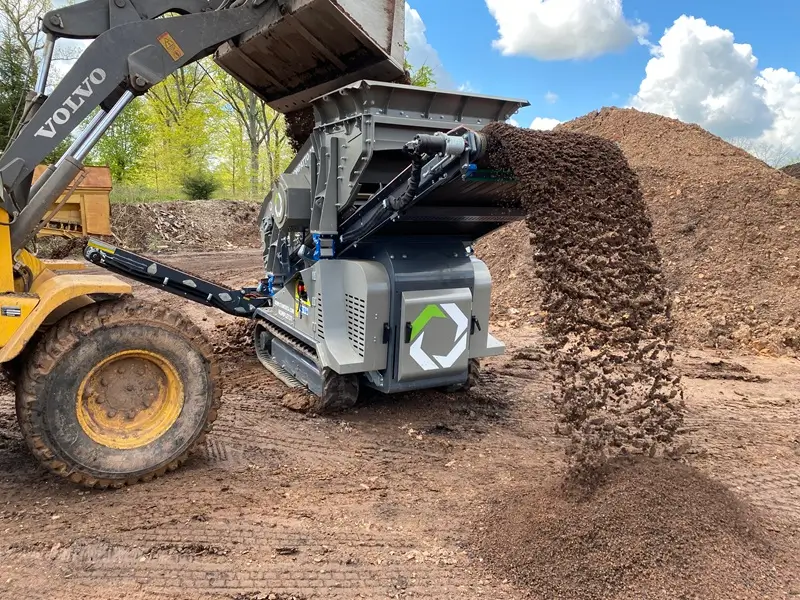

Material sorting is fundamental to landscape supply, aggregate production, and topsoil/mulch operations — the difference between salable spec product and unsorted bulk material that doesn’t command premium pricing. The right screener efficiently separates incoming material into multiple finished product streams sized for end-market applications. Critical for buyers evaluating screener equipment: not all screeners are equal, and matching screener type to material type is the most important equipment selection decision.
This basic guide walks through how vibrating screeners and trommel screeners support landscape material sorting — covering the critical distinction between vibrating scalping screeners (best for dry mineral aggregate) and trommel screeners (best for wet/sticky compost, topsoil, mulch), how mesh selection drives output specifications, and Komplet America’s compact mobile screener lineup. Understanding the screener type distinction up front prevents the most common equipment mismatch that operations face when matching screening equipment to specific landscape and aggregate applications.
Vibrating Scalping Screeners vs. Trommel Screeners
Critical Distinction: Match Screener Type to Material
The most important screener selection decision is screener TYPE before specific model. Vibrating scalping screeners and trommel screeners are designed for fundamentally different material profiles:
Vibrating Scalping Screeners (For Dry Mineral Aggregate)
Vibrating scalping screeners use vibrating decks with mesh openings to separate dry mineral material by size. Material moves across the deck under vibration, with smaller particles passing through the mesh while larger particles stay on top.
Best applications:
- Crushed stone and gravel (decorative stone, base stone, drainage stone)
- RCA from concrete crushing operations (producing spec-sized aggregate from primary jaw crusher output)
- Natural mineral aggregate (quarry rock, river rock, decorative landscape stone)
- Sand and base material sorting (separating fines from coarse aggregate)
Wet/sticky material BLINDS vibrating screen mesh — material sticks to mesh openings preventing material flow. Vibrating screeners are NOT optimal for wet topsoil, compost, organic-laden soil, or material with significant moisture/clay content.
Trommel Screeners (For Wet/Sticky Material)
Trommel screeners use a rotating drum with mesh openings to separate material. Material tumbles through the drum, with the rotating action exposing material to mesh openings repeatedly. Self-cleaning rotation prevents the material binding that affects vibrating screens with wet/sticky material.
Best applications:
- Topsoil screening for landscape supply (separating fine soil from rocks, debris, organic matter)
- Compost screening (separating finished compost from undecomposed material that needs additional processing)
- Mulch screening (separating fine mulch from coarse material based on end-market spec)
- Excavated soil sorting (separating salable fines from oversized material)
- Wood chips and bark mulch (separating fines for premium mulch products)
The Common Equipment Mismatch
The most common equipment mismatch operations face: buying a vibrating scalping screener for landscape supply applications (topsoil, compost, mulch) and discovering the screener doesn’t perform on wet/sticky material. Operations needing to handle topsoil, compost, or mulch should evaluate trommel screeners (K-TS 30 or K-TS 40), not vibrating scalping screeners. Operations needing to handle dry mineral aggregate (decorative stone, RCA, base material) should evaluate vibrating scalping screeners (Kompatto 221, 5030, or 124).
How Mesh Selection Drives Output Specifications
Mesh Opening Determines Output Size
Both vibrating scalping screens and trommel screens use mesh with specific opening sizes. Mesh size determines what passes through (smaller particles than mesh opening) versus what stays on top (larger particles than mesh opening). Different finished products require different mesh sizes:
- Fine topsoil typically uses 1/2″ or smaller mesh (sometimes finer for premium garden soil applications)
- Standard topsoil for turf and base typically uses 1/2″ to 3/4″ mesh
- Premium compost typically uses 3/8″ to 1/2″ mesh
- Coarse compost or rough mulch typically uses 3/4″ to 1″ mesh
- Decorative stone, base aggregate uses mesh matching specific stone size specifications (#57, #67, 3/8″, 3/4″, etc.)
- Drainage stone uses larger mesh matching drainage applications
Multi-Deck Configurations
Multi-deck vibrating screeners (like Kompatto 5030 with hydraulic 2-way / 3-way conversion) produce multiple finished product sizes simultaneously by stacking screen decks with different mesh sizes. Material that passes the top mesh continues to the next deck where finer mesh further sorts the smaller fraction. Multi-deck operations produce 2 or 3 distinct finished products per screening cycle, supporting operations that need multiple finished sizes from the same incoming material.
Mesh Changes for Different Production Runs
Operations producing different finished products at different times can change mesh sizes between production runs to match specifications. Komplet’s screeners include hydraulic functions supporting mesh changes — supports operational flexibility across different end markets without dedicated equipment for each product specification.
Landscape and Aggregate Application Coverage
Landscape Supply Operations (Use K-TS Trommel)
Landscape supply operations producing topsoil, compost, and mulch for retail and wholesale landscape markets typically use trommel screeners:
- Topsoil production from excavated soil source — trommel screens out rocks, roots, debris, and other oversized material producing fine soil for turf, garden, and landscape applications
- Compost production from windrow composting operations — trommel separates finished compost from undecomposed material that returns to the windrow
- Mulch production from wood waste processing — trommel separates fine mulch (premium products) from coarse mulch (lower-grade products)
- Bagged product preparation — trommel sorting prepares material for bagging operations producing retail landscape products
Aggregate Production (Use Kompatto Vibrating Scalping)
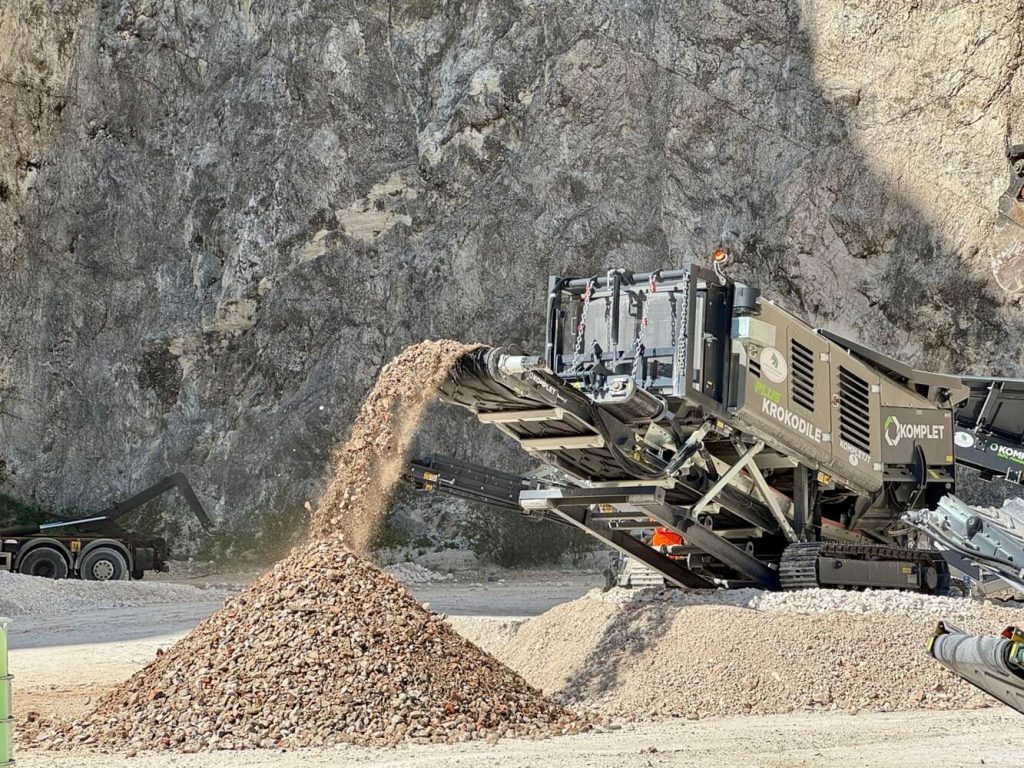
Aggregate production operations producing crushed stone, RCA, and decorative stone for construction and landscape markets typically use vibrating scalping screeners:
- Crushed stone production from quarry rock — vibrating scalping screen sorts crushed stone into spec-sized products (#57, #67, #8, base, drainage)
- RCA production from concrete crushing operations — vibrating screen sorts RCA into spec sizes for road base, drainage, structural fill applications
- Decorative stone sorting from natural stone or processed material — vibrating screen separates decorative grade material from off-spec material
- Base material production from mineral aggregate — vibrating screen produces base course material for construction and paving applications
Mixed Operations Often Need Both
Operations serving multiple landscape and aggregate markets typically need both screener types — trommel for compost/topsoil/mulch operations AND vibrating scalping for mineral aggregate operations. Single-equipment operations face limitations matching equipment to material variety.
Komplet America’s Compact Mobile Screener Lineup
Vibrating Scalping Screeners (For Dry Mineral Aggregate)
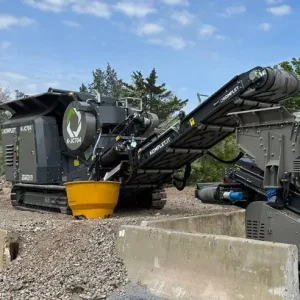
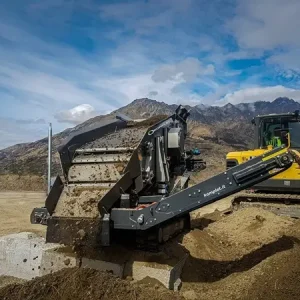
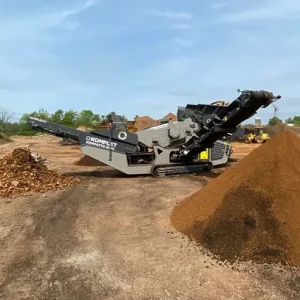
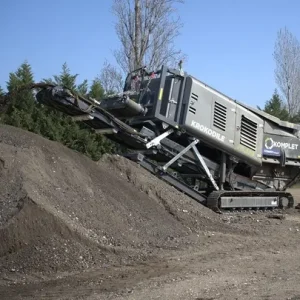
- Kompatto 221 — up to 90 US tph, 7’×3.5′ (2 deck), 25 HP Diesel, ~7,275 lb. Smallest self-propelled scalper. Tight-access urban operations and small aggregate operations.
- Kompatto 5030 — up to 280 US tph, 8’×3’2″ + 7’×3’2″, 45 HP Tier 4 Final, ~26,455 lb. Komplet’s best-selling screener. Hydraulic 2-way / 3-way conversion supporting 2 or 3 finished product sizes simultaneously.
- Kompatto 124 — up to 350 tph, 11.8’×3.7′, 75 HP, ~37,038 lb. Largest scalping screen in the lineup. High-volume aggregate operations.
Trommel Screeners (For Wet/Sticky Material — Compost, Topsoil, Mulch)
- K-TS 30 — up to 80 tph, 68″×51″ or 103″×51″ drum, 23 kW genset, ~8,818 lb. Compost, topsoil, mulch operations.
- K-TS 40 — up to 120 tph, 126″×55″ or 171″×43″ drum, 40 kW genset, ~25,353 lb. Higher-volume compost/topsoil/mulch operations.
Standard Features Across Komplet Screeners
- Self-propelled tracked mobility for site-to-site movement supporting multi-location operations
- Wireless remote control for safe operator distance during operation
- Hydraulic functions supporting mesh changes, deck adjustments, and material flow
- Tier 4 Final emissions-compliant diesel engines (where applicable to specific equipment) supporting CARB compliance, federal contract eligibility, and LEED-certified project requirements
- Compact transport dimensions supporting trailer transport between operations and seasonal storage
Economic Impact of Material Sorting
Premium Pricing for Spec Product
Sorted material commands premium pricing versus unsorted bulk material. Spec-sized topsoil, premium compost, and decorative stone typically sell at 1.5-3x the price of unsorted bulk material. Operations that invest in screening equipment capture the price premium across their material flow.
Multiple Product Streams Per Operation
Multi-deck screening operations produce 2-3 finished product sizes simultaneously, with each size targeting different end markets at different price points. Operations producing only one finished product face revenue ceiling that multi-product operations don’t.
Customer Specification Compliance
Commercial landscape buyers (contractors, garden centers, municipalities) typically require spec product matching specific size, moisture, and quality parameters. Screening operations meeting buyer specifications maintain customer relationships; unsorted operations lose access to premium customer segments that can’t accept off-spec material.
Reduced Material Disposal
Screening operations recover salable product from material that would otherwise go to disposal. Each ton of screened-out salable material represents recovered revenue plus avoided disposal cost — both economic benefits.
Frequently Asked Questions
What’s the difference between a vibrating screener and a trommel screener?
Vibrating scalping screeners use vibrating decks with mesh — best for DRY MINERAL aggregate (crushed stone, RCA, decorative stone, base material). Trommel screeners use a rotating drum with mesh — best for WET/STICKY material (compost, topsoil, mulch, organic-laden soil). Wet/sticky material blinds vibrating screen mesh; trommel rotation prevents binding through self-cleaning action. Match screener type to material type before selecting specific equipment model.
Can I use a vibrating screener for topsoil or compost?
Not optimally. Vibrating scalping screeners work for DRY topsoil with low moisture content and minimal organic matter, but struggle with wet topsoil, compost, or material with significant moisture or organic content. Material binding (sticky material clogging the mesh) reduces throughput and quality. For topsoil, compost, and mulch operations, trommel screeners (K-TS 30 or K-TS 40) are typically the right equipment choice. For decorative stone, crushed stone, base material, and other dry mineral aggregate, vibrating scalping screeners (Kompatto 221, 5030, or 124) work well.
What mesh size should I use for landscape topsoil?
Depends on intended end market. Premium garden soil typically uses fine mesh (1/4″ or finer for some specialty products). Standard turf topsoil typically uses 1/2″ to 3/4″ mesh. Coarser construction-grade topsoil uses 3/4″ or 1″ mesh. Match mesh size to customer specifications. Operations producing multiple grades typically change mesh between production runs or use multi-deck configurations producing multiple grades simultaneously.
How much material can a vibrating screener process?
Throughput varies by screener model, mesh size, material moisture, and feed presentation. Komplet’s vibrating scalping screener lineup spans up to 90 US tph (Kompatto 221) through up to 280 US tph (Kompatto 5030, best-seller) through up to 350 tph (Kompatto 124, largest). Specific throughput on your specific material depends on multiple factors — schedule a demo or request technical specifications matching your operational profile.
Can the same screener handle different products?
Yes — Komplet screeners support mesh changes between production runs, enabling operations to produce different finished products at different times with the same equipment. Multi-deck configurations (Kompatto 5030 hydraulic 2-way / 3-way conversion) also produce multiple finished sizes simultaneously without mesh changes. Operations evaluating equipment should consider their typical product mix when selecting between single-product and multi-product configurations.
What’s the K-JC 704 PLUS + Kompatto 5030 combination?
Operations producing spec-sized RCA from concrete crushing typically pair the K-JC 704 PLUS jaw crusher (Komplet’s best-seller) with the Kompatto 5030 vibrating scalping screener (Komplet’s best-seller). Best-seller × best-seller combination produces spec-sized RCA from demolished concrete in a single workflow. For full details, see our Crusher + Screener Multiple End Products guide.
How does Komplet equipment compare on landscape vs. aggregate operations?
Different equipment for different applications: trommel screeners (K-TS) for landscape operations with compost/topsoil/mulch; vibrating scalping screeners (Kompatto) for aggregate operations with mineral material. Operations serving both market types often need both equipment categories. Komplet America is a USCC member (United States Composting Council) supporting compost industry, and CDRA member supporting C&D recycling industry — reflecting commitment to both market segments.
Where can I see Komplet screeners in operation?
Komplet America offers equipment demos at the Komplet America yard in Hillsborough, NJ (749 Clawson Ave.) or through authorized Komplet dealers across N&C America. Komplet America does not transport equipment to prospect sites for demos. Call (908) 369-3340 to schedule a yard visit, or contact your local authorized dealer for regional demo availability.
Final Thoughts
Material sorting equipment selection starts with matching screener TYPE to material profile. Vibrating scalping screeners (Kompatto 221, 5030, 124) deliver best results on dry mineral aggregate — crushed stone, RCA, decorative stone, base material. Trommel screeners (K-TS 30, K-TS 40) deliver best results on wet/sticky material — topsoil, compost, mulch, organic-laden soil. Operations matching screener type to material capture sorting performance, throughput, and equipment longevity that mismatched equipment can’t deliver. Mesh selection within the chosen screener type drives finished product specifications matching end-market requirements. Multi-deck and multi-mesh configurations support operations producing multiple finished products from the same incoming material flow. Komplet America’s complete screener lineup covers both equipment categories — supporting landscape supply operations, aggregate producers, and mixed operations across N&C America. Komplet’s USCC membership (compost industry) and CDRA membership (C&D recycling industry) reflect commitment to both market segments served by the screener lineup.
Browse Komplet America’s compact mobile screener lineup or call us to discuss equipment selection matching your specific material profile and operational requirements.
Ready to Talk Screening Equipment?
- Call (908) 369-3340
- Email [email protected]
- Schedule a demo at the Komplet America yard or through your local authorized dealer
- Find your local Komplet dealer for rental availability
- Ask about our 1-year / 1,000-hour warranty and equipment financing options
Never enough — that’s how we approach service, support, and helping operations match the right screener type and configuration to their specific landscape and aggregate operations.
Disclaimer: All cost, ROI, payback, pricing, and revenue figures in this article are illustrative examples based on sample assumptions about volume, regional pricing, material specifications, and market conditions. Actual results vary significantly by region, market, material type, equipment utilization, operator skill, financing terms, regulatory environment, and many other factors. Equipment pricing, throughput on specific material, and finished product market pricing all change over time and by location. Specific throughput rates depend on material moisture, particle size distribution, mesh selection, and feed presentation; actual operational throughput varies from rated capacity. Komplet America makes no guarantee, warranty, or representation of specific financial performance, payback timelines, or operational outcomes for any particular operation. For current pricing, throughput estimates on your specific material, and equipment selection guidance, contact us at (908) 369-3340 to speak with our team.