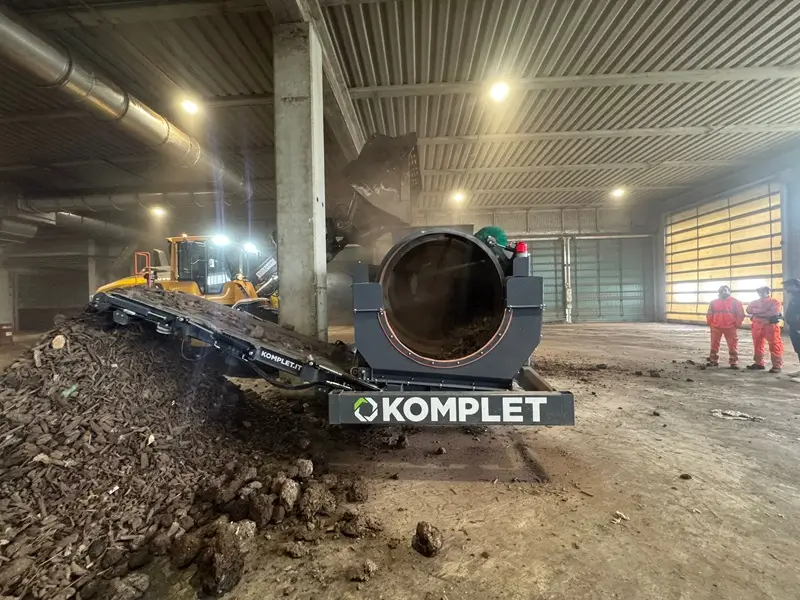

Commercial composting operations live or die on output quality. Customers buying compost for agriculture, landscape, horticulture, and erosion control applications expect consistent particle size, minimal contamination from oversize debris, and predictable physical characteristics. Trommel screeners — rotating drum screens that separate compost by size — are the workhorse equipment for producing finished, market-ready compost from the raw output of composting operations. Done right, trommel screening converts variable-quality compost into premium product commanding premium pricing; done wrong (or skipped entirely), the operation produces inconsistent material that struggles to find premium buyers.
This basic guide walks through how trommel screeners support commercial composting operations — separation principles, why trommels work better than vibrating screens for compost, mesh sizing for different finished products, wet/sticky material handling, regulatory and quality considerations, and how Komplet America’s K-TS 30 and K-TS 40 trommel screeners serve commercial composting operations. Komplet America is a proud member of the United States Composting Council (USCC) and supports composting industry operations across North and Central America.
How Trommel Screeners Work for Compost
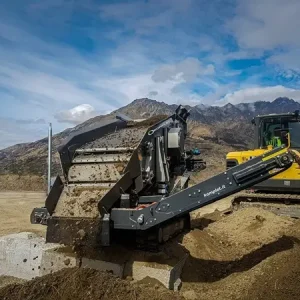
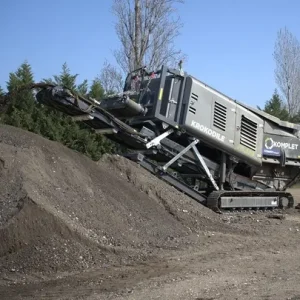
Trommel screeners separate material by size using a rotating cylindrical drum with screening mesh of specified opening size. Material loads into one end of the drum; as the drum rotates, material tumbles through the drum length while smaller particles fall through the screening mesh and oversize material continues to the discharge end. Multiple drum sections with different mesh sizes can produce multiple finished product fractions in a single pass.
Why Trommels Beat Vibrating Screens for Compost
Vibrating scalping screens excel at dry mineral aggregate sorting (concrete, asphalt, sand, gravel). Trommel screeners excel at organic material screening (compost, topsoil, mulch, mixed C&D fines) for several specific reasons:
- Wet and sticky material handling — compost has variable moisture content (typically 40-60% moisture); trommels handle moisture without blinding the screen mesh
- Tumbling action breaks up clumps — compost commonly has compacted clumps that vibrating screens may pass through without breaking; tumbling action releases material from clumps
- Long screening exposure — material spends extended time in the drum, allowing complete fines separation
- Self-cleaning rotation — rotating drum action helps prevent screen blinding from sticky organic material
- Tolerates variable feed — trommel screens accept variable particle sizes and material conditions without operator intervention
What Trommel Screeners Do NOT Do
Important scope clarification: trommel screeners separate material by SIZE only. They do not detect or remove contamination by chemical analysis, do not separate by material type (organic vs. inorganic), and do not produce finished compost from raw compost feedstock. The composting process itself produces finished compost; trommel screening separates the finished compost from oversize material that didn’t fully decompose. For chemical contamination concerns (heavy metals, pathogens, herbicide residues), composting operations need laboratory testing per applicable regulatory requirements — trommel screening alone does not address these factors.
Mesh Sizing for Different Finished Compost Products
Different compost markets require different finished particle sizes. Trommel mesh selection determines what fraction of the input material passes through as finished product vs. what continues as oversize for re-composting or alternative use.
Standard Compost (Landscape and Garden Markets)
Most commercial landscape and garden compost markets accept finished compost passing through 1/2″ or 5/8″ screen mesh. This produces a relatively coarse compost suitable for general landscape use, garden bed amendment, and basic agricultural applications. Trommel mesh of 1/2″ to 5/8″ is the most common starting configuration for general-purpose composting operations.
Premium Fine Compost (Horticulture, Container Mix)
Horticultural markets, container mix manufacturers, premium garden centers, and specialty agricultural applications often require finer compost. Trommel mesh of 1/4″ to 3/8″ produces fine compost suitable for these premium markets. Finer mesh produces higher unit pricing but with reduced throughput rate (more material rejected as oversize) — run the economics for your specific market.
Erosion Control Blanket Material
Erosion control products (compost blankets, hydromulch base material, slope stabilization) often use coarser compost — 3/4″ to 1″ mesh range — that retains structure for application. Coarser mesh produces higher throughput rate but with lower unit pricing than finer products.
Multi-Product Operations
Commercial composting operations serving multiple markets benefit from screening flexibility. Trommel screen mesh changes (typically 30-60 minute service operation) allow operations to switch between finished product specifications based on market demand. Some operations use multiple trommel passes — first pass with coarser mesh for general product, second pass with finer mesh for premium product from the fines.
Trommel Screening in the Composting Workflow
Where Trommel Screening Fits
Trommel screening typically occurs at the end of the composting process, after the raw feedstock has fully decomposed through windrow turning, in-vessel composting, or static aerated pile composting. Output from the composting process includes finished compost (the desired product) plus oversize material that didn’t fully decompose (typically wood chips, plastic contamination from feedstock, undecomposed material clumps, and miscellaneous oversize debris). Trommel screening separates these fractions.
Pre-Screening Considerations
- Moisture management — very wet compost may benefit from drying or windrow management before screening; very dry compost screens easily
- Pre-removal of large debris — large contamination items (boards, plastic sheets, large rocks) should be removed manually before trommel feeding to protect equipment
- Operating temperature — freshly turned compost may still be hot; allow appropriate cooling before screening
Post-Screening Material Handling
- Finished compost → stockpile, bagging, bulk loading for customer pickup or delivery
- Oversize material → may go back into composting process for additional decomposition, used as bulking agent for next compost batch, used as biomass fuel, or disposed depending on operation
- Quality testing — per applicable regulatory and certification requirements (USCC STA, state organics permits)
Integration with Conveyors
For continuous-production composting operations, trommel screening pairs naturally with conveyors for material flow management. The K-TC 460 portable mobile conveyor — up to 132 US tph, 25″ Chevron 3-ply belt, 25 HP Tier 4 Final, ~7,000 lb — handles material transfer between processing stages or to stockpiles.
Why Trommels Excel at Wet and Sticky Material
The fundamental design advantage of trommel screeners over vibrating scalping screens: handling wet, sticky, and variable-moisture material. This advantage drives trommel selection for compost, topsoil, mulch, mixed C&D fines, and any other organic or moisture-variable material.
The Wet Material Problem
Wet material (compost at typical 40-60% moisture, recently rained-on topsoil, mulch with high moisture content) tends to:
- Stick to screen surfaces (blinding) on flat vibrating screens — material stays on the screen rather than passing through
- Form clumps that bridge screen openings without separating
- Reduce throughput dramatically on equipment not designed for moisture variability
How Trommels Solve It
The rotating drum design addresses each problem mechanically. The drum rotation continually exposes new screen surface area as material tumbles, preventing material from sitting and blinding the screen. The tumbling action breaks up clumps that would bridge openings on a static surface. The drum drives material through the full drum length, providing extended residence time for complete separation. Self-cleaning brushes or chains (depending on configuration) further reduce blinding risk.
Material Range Beyond Compost
Trommel screeners’ wet/sticky material capability extends to other organic-rich and moisture-variable applications:
- Topsoil screening for landscape supply markets
- Mulch screening for landscape and erosion control products
- Mixed C&D fines screening for soil reuse from demolition projects
- Mining tailings screening (though Komplet doesn’t serve mining; this is technology context for completeness)
- Sand and clay separation from organic material in soil rehabilitation work
Komplet America’s Trommel Screener Lineup
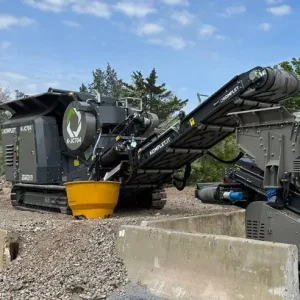
K-TS 30 Compact Trommel Screener
K-TS 30 Compact Trommel Screener — the smaller of Komplet’s two trommel screeners. Suits small-to-mid commercial composting operations and contractors needing flexible screening capacity.
- Throughput: Up to 80 tph
- Drum size options: 68″ x 51″ or 103″ x 51″
- Onboard genset: 23 kW for self-contained operation
- Operating weight: Approximately 8,818 lb
- Self-propelled tracked mobility for site-to-site movement and on-site repositioning
- Wireless remote control for safe operator distance during operation
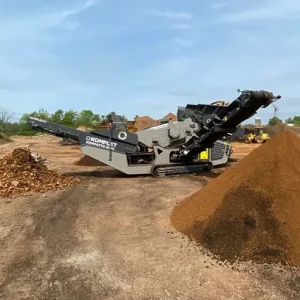
K-TS 40 Portable Trommel Screener
K-TS 40 Portable Trommel Screener — Komplet’s larger trommel for higher-volume composting and screening operations.
- Throughput: Up to 120 tph
- Drum size options: 126″ x 55″ or 171″ x 43″
- Onboard genset: 40 kW for higher-power operation
- Operating weight: Approximately 25,353 lb
- Self-propelled tracked mobility with hydraulically folding components
- Wireless remote control
Choosing Between K-TS 30 and K-TS 40
Match equipment size to operational throughput requirements:
- Under 30,000 tons annually composting volume: K-TS 30 typically fits
- 30,000-80,000 tons annually composting volume: K-TS 40 typically fits
- Multi-site contractor operations: K-TS 30 for higher mobility flexibility; K-TS 40 if individual sites have higher volume
- Higher-volume centralized composting facilities: K-TS 40 for sustained throughput
Regulatory and Quality Considerations for Commercial Composting
USCC Seal of Testing Assurance (STA)
The United States Composting Council operates the Seal of Testing Assurance (STA) program — voluntary third-party testing and certification for commercial compost products. STA certification helps composters demonstrate consistent product quality to customers and may be required for some state agricultural and erosion control specifications. Trommel screening produces the consistent particle size that STA-certified products require.
State Organics Recycling Permits
Many states require permits for commercial composting operations under organics recycling regulations. Permit requirements typically include facility design, operational practices, water management, odor management, and product quality testing. Specific requirements vary by state and operation scale. Consult applicable state environmental agencies and qualified permit consultants for jurisdiction-specific guidance.
USDA NOP (National Organic Program) Considerations
Compost products marketed for use in USDA-certified organic agriculture must comply with NOP standards regarding feedstock sources, processing parameters, and prohibited substances. Compost producers serving organic markets need certification through accredited certifying agents. Trommel screening produces the consistent particle size organic agricultural markets prefer.
Pathogen Reduction (PFRP)
Process to Further Reduce Pathogens (PFRP) requirements apply to compost from biosolids, animal manure, and other potentially-pathogenic feedstocks. Compliance typically involves time-temperature documentation during composting (not screening). Trommel screening produces the finished product but does not address pathogen reduction — that comes from the composting process itself.
Economic Considerations for Composting Operations
Compost Market Pricing
Finished compost commonly sells in $20-$40+/yard range for general landscape and agricultural markets, with premium pricing for STA-certified products, organic-certified products, specialty horticultural mixes, and erosion control specifications. Market pricing varies significantly by region, demand conditions, and product specifications.
Operational Cost Components
- Equipment capital cost for trommel screener and supporting equipment
- Operational fuel (K-TS 30 onboard 23 kW genset, K-TS 40 onboard 40 kW genset)
- Mesh changes for product specification flexibility
- Labor for operation, material handling, quality testing
- Site infrastructure (stockpile pads, water management, etc.)
- Quality testing fees if pursuing STA certification or organic certification
Komplet Capital Financing
Komplet Capital offers 24-hour approval, 100% financing, 3-6 year terms on Komplet equipment including K-TS trommel screeners. New equipment qualifies for Section 179 tax deduction up to $1.22M (2024 limit). For commercial composting operations evaluating equipment investment, financing structures matter — talk to the team about options that fit operational economics.
Frequently Asked Questions
What’s the difference between trommel screeners and vibrating screens for compost?
Trommel screeners use a rotating drum to handle wet, sticky, variable-moisture material that would blind vibrating scalping screens. For compost (typically 40-60% moisture), topsoil, mulch, and similar organic material, trommels are the right tool. Vibrating scalping screens like Komplet’s Kompatto lineup excel at dry mineral aggregate (concrete, asphalt, sand, gravel). Match equipment to material characteristics.
What mesh size should I use for compost screening?
Depends on target market: 1/2″ to 5/8″ mesh produces general landscape and garden compost (most common); 1/4″ to 3/8″ mesh produces fine compost for horticulture and container mix markets (premium pricing, lower throughput); 3/4″ to 1″ mesh produces coarser compost for erosion control products (higher throughput, lower unit pricing). Multi-product operations switch mesh sizes based on market demand.
How wet can compost be for trommel screening?
Trommel screeners handle compost at typical operational moisture (40-60%) effectively. Very wet compost (above ~65% moisture) may benefit from windrow turning and drying before screening. Very dry compost screens easily but may produce excessive dust during operation. Reference your equipment’s OEM operator’s manual for specific moisture range guidance.
Can trommel screeners detect contamination in compost?
No. Trommel screeners separate by SIZE only — they do not detect chemical contamination, pathogens, heavy metals, herbicide residues, or other quality factors that require laboratory testing. Trommel screening produces consistent particle size; quality compliance requires laboratory testing per applicable regulatory and certification requirements (USCC STA, state organics permits, USDA NOP for organic compost).
Does Komplet make compost-specific equipment beyond trommels?
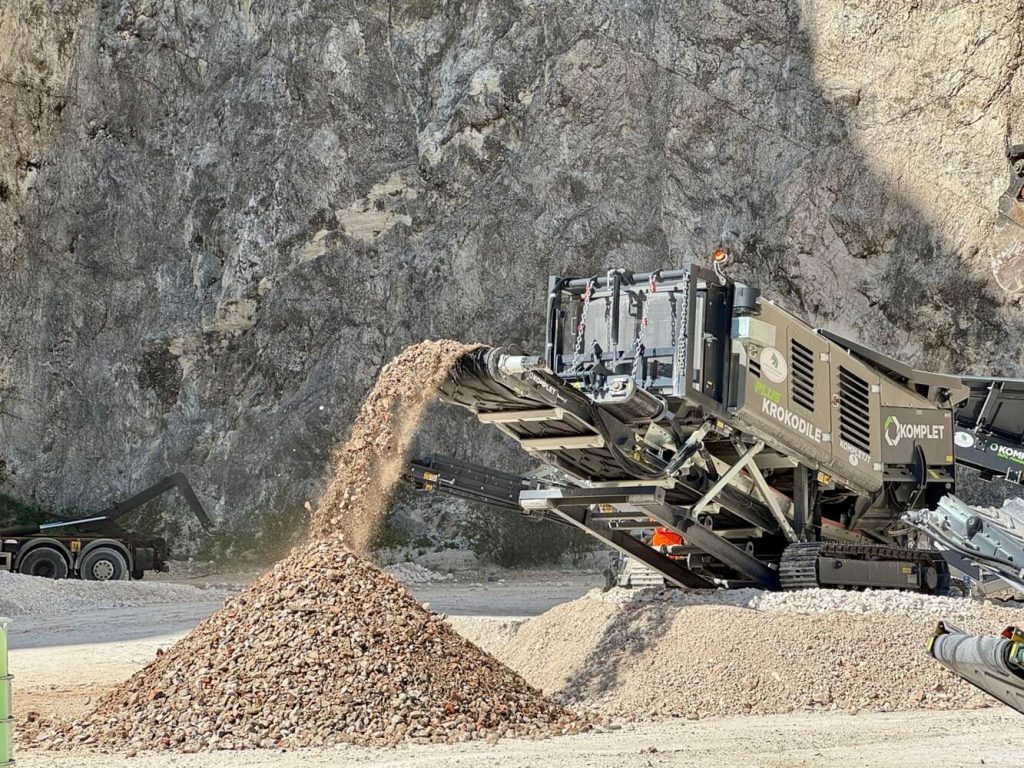
Komplet makes the K-TS 30 and K-TS 40 trommel screeners which are the primary compost-relevant equipment. The Krokodile PLUS slow-speed shredder can pre-process some compost feedstocks (woody material, branches, large organic debris) before composting. Komplet doesn’t make windrow turners, in-vessel composting equipment, or other composting-specific equipment beyond screening — those equipment categories come from manufacturers focused on those segments.
Is Komplet a USCC member?
Yes — Komplet America is a proud member of the United States Composting Council (USCC) and supports composting industry operations across North and Central America.
Should I rent or buy a trommel screener?
Renting is typically the right starting point for first-time composting operations and seasonal screening needs. For established commercial composting operations with continuous screening requirements, ownership economics typically justify purchase. Find your local Komplet dealer or call 908-369-3340 to discuss rental availability and operational economics.
What’s the warranty on Komplet trommel screeners?
All new Komplet equipment ships with a 1-year / 1,000-hour warranty (whichever comes first). Komplet America’s parts inventory is forecasted 12 months in advance, supporting fast wear-part availability when service items are needed. Authorized dealers across North and Central America provide local service support.
Final Thoughts
Trommel screeners are the right screening equipment for commercial composting operations because of their unique capability with wet, sticky, variable-moisture organic material. The rotating drum design addresses the screen blinding and clumping problems that limit vibrating screens on compost feed; mesh size flexibility supports multiple finished product specifications from the same equipment; self-contained mobile operation fits the operational profile of composting operations from small-scale contractor work through mid-volume commercial facilities. Komplet America’s K-TS 30 and K-TS 40 trommel screeners cover the full operational range for North and Central American commercial composting operations, supported by Komplet America’s USCC membership and authorized dealer network across the continent.
Browse Komplet America’s trommel screener lineup or call us to discuss whether trommel screening fits your specific composting operation.
Ready to Talk Trommel Screeners for Composting?
- Call 908-369-3340
- Email [email protected]
- Schedule a demo or request a quote
- Find your local Komplet dealer for rental availability
- Ask about our 1-year / 1,000-hour warranty and equipment financing options
Never enough — that’s how we approach service, support, and helping commercial composting operations produce premium finished compost.
Disclaimer: All cost, ROI, payback, pricing, and revenue figures in this article are illustrative examples based on sample assumptions about volume, regional pricing, material specifications, and market conditions. Actual results vary significantly by region, market, material type, equipment utilization, operator skill, financing terms, regulatory environment, and many other factors. Compost market pricing, fuel costs, labor rates, and equipment pricing all change over time and by location. Komplet America makes no guarantee, warranty, or representation of specific financial performance, payback timelines, or business outcomes for any particular operation. Composting industry regulatory requirements (USCC STA, state organics permits, USDA NOP, PFRP) are complex and jurisdiction-specific; consult applicable regulatory authorities, accredited certifying agents, and qualified compliance professionals for jurisdiction-specific guidance. For current pricing and a payback estimate based on your specific volume, material, and local market, contact us at 908-369-3340 to speak with our team.