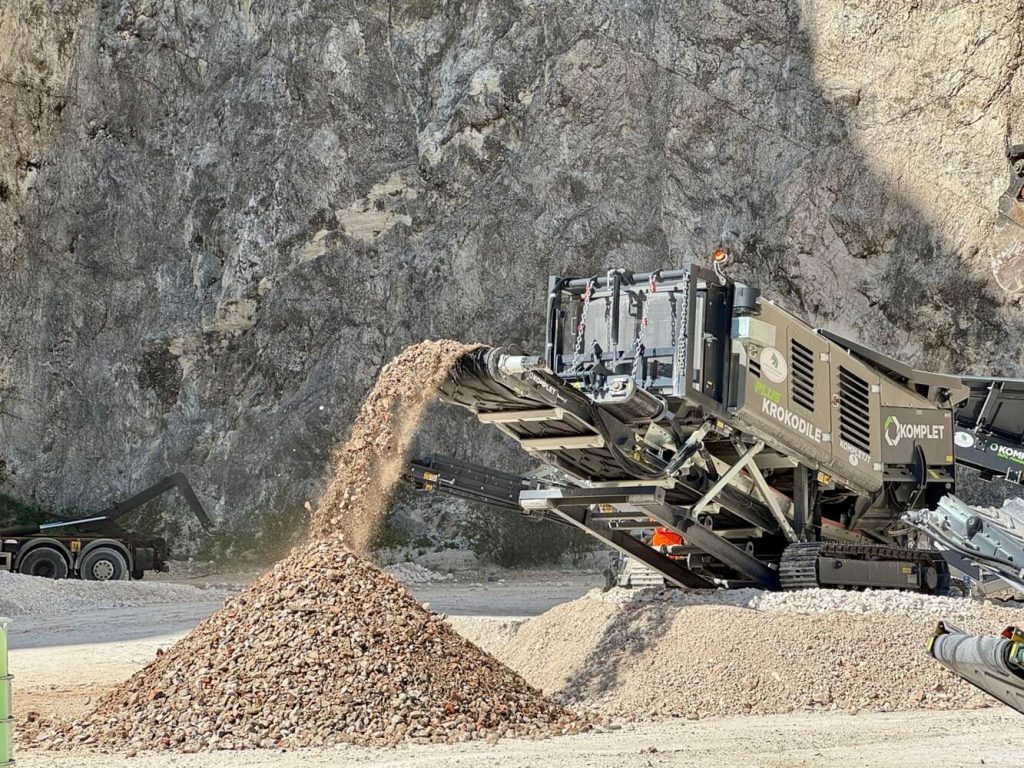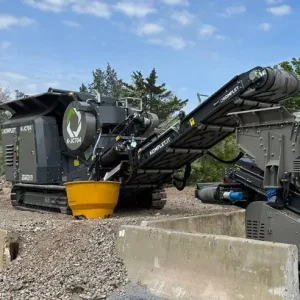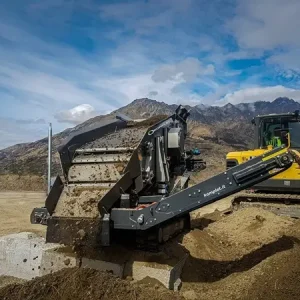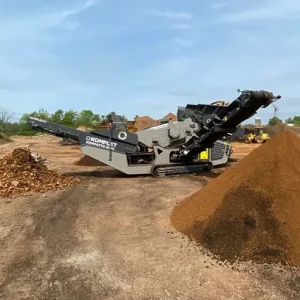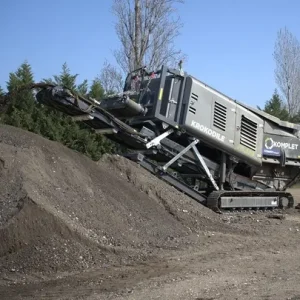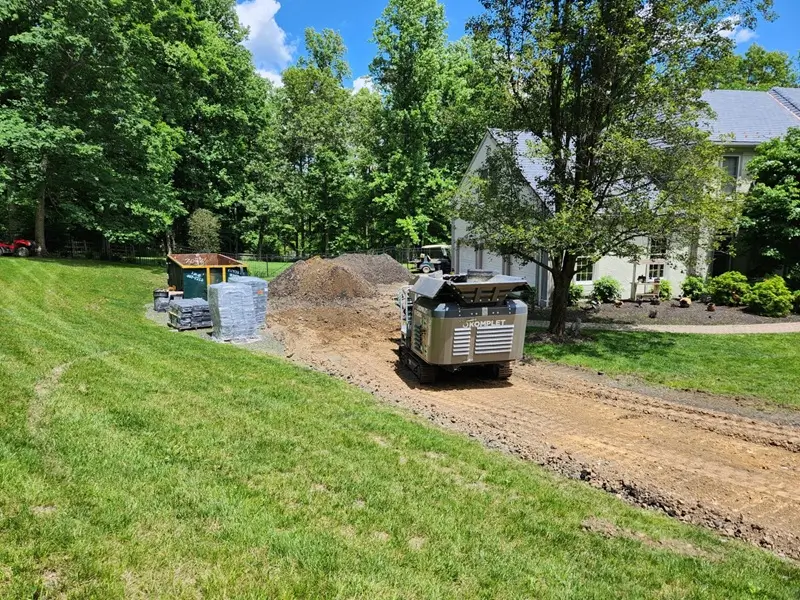

Mobile crushing equipment delivers a fundamentally different operational economics than the haul-out alternative. Instead of paying to remove demolition concrete, excavated rock, asphalt, and mixed C&D debris from project sites — and paying again to purchase aggregate for project work — operations using compact mobile crushers convert that material on-site into spec-sized aggregate that can be reused, sold, or applied to subsequent projects. The economic and operational benefits compound across every dimension of a typical contractor or aggregate operation.
This guide walks through the real benefits of mobile crushing for on-site waste recycling — quantified economic benefits (avoided dump fees, recovered material revenue, schedule compression), the operational productivity features that make compact mobile equipment work in real conditions, the typical applications across construction, demolition, recycling, and aggregate markets, and how Komplet America’s compact mobile crusher lineup delivers these benefits with throughput from 34 to 160 US tph.
The Economic Benefits of On-Site Mobile Crushing
Avoided Dump Fees
Concrete tipping fees in major US metros run $50-$100+/ton. A 1,000-ton commercial demolition project pays $50,000-$100,000+ in dump fees if hauled to a landfill. On-site crushing eliminates most of this cost — the largest single economic driver of mobile crushing economics for demolition contractors. For asphalt, brick, and mixed C&D debris, similar tipping fees apply with similar avoided-cost economics.
Recovered Material Revenue
Recycled concrete aggregate (RCA) sells for $15-$30/ton in most regional markets — often higher in markets with strong RCA acceptance. Recovered ferrous metal (rebar from demolition concrete) sells as scrap at $100-$300+/ton. For a 1,000-ton concrete demolition project with 5% rebar content (50 tons), recovered material revenue typically runs $15,000-$45,000+ on top of dump-fee avoidance.
Avoided Aggregate Purchase
Operations using on-site crushed material for base aggregate under their own subsequent construction work eliminate aggregate purchase costs. For a contractor using 2,000+ tons of base aggregate annually at $25/ton, that’s $50,000+ in avoided purchases. The same crusher serving multiple roles (recycling demolition material AND producing project aggregate) compounds the economic benefit.
Eliminated Hauling Cost
Concrete is heavy and bulky. Hauling cost commonly runs $5-$30/ton for round trips to disposal or aggregate sources, with truck count scaling with distance. Eliminating most hauling (95%+ reduction since processed material stays on-site or relocates as finished spec aggregate) saves $5,000-$30,000+ per medium-size project. For projects with 50+ mile distance to disposal, the savings are even larger.
Project Schedule Compression
On-site crushing eliminates haul-out trips, dump waiting time, and post-demolition site cleanup time. Demolition projects with on-site crushing typically complete 10-30% faster than haul-out alternatives. Faster completion means lower overhead absorption per project, faster crew rotation to the next contract, and earlier billing milestones — all of which compound into measurably better operational economics.
Federal Section 179 Tax Deduction
New equipment purchases qualify for Section 179 tax deduction up to $1.22M (2024 limit). Effectively, qualifying equipment can be fully deductible in the year of purchase rather than depreciated over multiple years. Combined with Komplet Capital financing (24-hour approval, 100% financing, 3-6 year terms), many operations structure equipment purchases so the cash flow benefits — Section 179 deduction in year one, plus avoided dump fees and recovered material revenue offsetting monthly payments — make the equipment effectively self-financing.
The Operational Benefits of Mobile Crushing
Multi-Site Deployment
Construction work happens at the project site, which changes from project to project. Compact mobile crushers (Komplet’s tracked self-propelled lineup) drive between job sites at the same speed as the work. A demolition contractor working a residential teardown this week, a commercial demolition next month, and an excavation project after that uses the same crusher across all three projects without specialized rigging or extensive setup.
Same-Day Deployment
Compact mobile equipment with hydraulic conveyor folding and wireless remote control deploys in 15-30 minutes from arrival to operating production. Same-day deployment is the operational baseline for project work. Equipment requiring multi-hour setup or specialized assembly crews doesn’t fit project-based construction economics.
Single-Operator Operation
Komplet’s wireless remote control lets a single operator handle the full machine — driving it into position, deploying conveyors, running warm-up, and managing operation throughout the day. Single-operator operation minimizes labor cost compared to multi-operator setups; operator labor cost is typically the largest single recurring operational expense.
Tight-Access Capability
The K-JC 503 (5′ transport width) fits where larger machines can’t deploy — urban demolition sites, residential renovations, narrow industrial sites, basement and indoor work. Most other Komplet jaw crushers also handle standard contractor sites without specialized rigging. Equipment that physically can’t access the work site doesn’t deliver its theoretical benefits, regardless of how productive it is otherwise.
Self-Contained Power
All Komplet jaw crushers run on onboard Tier 4 Final diesel engines — no external power source, no grid dependency, no generator coordination at remote job sites. The machine arrives ready to run wherever fuel is available. Power ratings range from 25 HP (K-JC 503) to 130 HP (K-JC 805).
Standard Productivity Features That Make Mobile Crushing Work
Mobile crushing benefits depend on standard equipment features specifically engineered for the operational realities of construction-side work. Equipment lacking these features may appear cheaper at purchase but typically delivers significantly worse mobile crushing economics through downtime, manual workload, and compliance issues.
Hydraulic Magnetic Belt
K-JC 604, K-JC 704 PLUS, and K-JC 805 ship with integrated hydraulic magnetic belts that automatically lift ferrous metal off the discharge conveyor during crushing. Recovered rebar and embedded metal becomes scrap revenue while keeping crushed output clean. Without integrated magnetic separation, demolition concrete crushing requires extensive manual rebar removal — eliminating most of the schedule compression benefits of mobile crushing.
Reverse Jaw Function
All Komplet jaw crushers include reverse jaw function — clears uncrushable obstructions in seconds via wireless remote without requiring chamber entry. Construction-side feed (mixed C&D debris, contaminated demolition material, occasional foreign objects) routinely contains uncrushable items that would jam other crusher types. The reverse jaw function turns potential downtime events into 30-second remote operations.
Standard Dust Suppression
All Komplet jaw crushers ship with standard water-spray dust suppression systems specifically engineered for OSHA crystalline silica compliance (PEL of 50 ug/m3 over 8 hours). Crystalline silica regulations apply to most demolition and aggregate work involving stone, concrete, and brick. Dust suppression as standard equipment (rather than aftermarket retrofit) supports compliance without additional engineering.
Wireless Remote Control
All Komplet jaw crushers include wireless remote control — operator handles deployment, operation, jaw setting adjustment, conveyor positioning, and reverse jaw function from a safe position. Critical for safety (operator stays clear of the crushing chamber) and for productivity (single operator handles full operation rather than coordinating multiple crew members).
Hydraulically Adjustable Jaw Setting
Output size adjustment from the wireless remote without manual tooling. Operations switch between coarse output for base aggregate and finer output for premium spec aggregate in seconds. Hydraulic adjustment supports flexible production matching different customer requirements without setup downtime.
Self-Propelled Tracked Mobility
All Komplet jaw crushers feature self-propelled tracked mobility — the machine drives onto a transport trailer for road movement and drives off at the new site. No specialized rigging, no crane requirements, no multi-day setup. Tracked mobility also lets the crusher follow the working face as demolition progresses or as a quarry face advances.
Ultrasonic Feed Sensor (K-JC 503)
The K-JC 503 includes an ultrasonic feed sensor that automatically regulates feeder belt speed based on chamber load — preventing overfeeding that would cause jams and underfeeding that would reduce throughput. Standard on the K-JC 503; available as an option on other lineup members.
Tier 4 Final Emissions Compliance
All current Komplet jaw crushers use Tier 4 Final emissions-compliant diesel engines — required for federal compliance on construction equipment manufactured after 2014/2015 in the US. Tier 4 Final compliance is necessary for operating in many state-level emissions-restricted markets.
Mobile Crushing Applications: Where the Benefits Apply
Concrete Demolition and Recycling
The largest single mobile crushing application. Demolition contractors processing reinforced concrete (slabs, foundations, walls, structural elements) use mobile jaw crushers to convert demolition material into RCA on-site. Avoided dump fees + recovered RCA revenue + recovered scrap metal + schedule compression all compound into project economics that the haul-out alternative can’t match.
Asphalt Recycling
Pavement removal generates RAP (recycled asphalt pavement) that can be reused in hot-mix asphalt or as base material. Mobile crushers handle the variable composition of recovered pavement reliably while producing consistent gradation for downstream processing or direct reuse.
Excavation Rock Recovery
Excavation contractors hitting ledge rock during site preparation use mobile crushers to convert excavated rock into useful base aggregate for the same project. On-site crushing eliminates aggregate purchases for foundation and pavement work while diverting excavated material from disposal — direct savings on both sides of the project budget.
Mixed C&D Debris Processing
C&D recyclers processing mixed demolition debris (concrete + brick + masonry + asphalt + miscellaneous building materials) use mobile crushers to reduce the mixed stream into separable fractions. The mixed feed composition that other equipment types would struggle with suits jaw crusher mechanics well.
Aggregate Production
Small-to-mid-volume aggregate operations use mobile crushers as primary reduction equipment for natural rock processing. Mobile equipment supports satellite quarry operations, mobile/portable processing operations, and growing aggregate businesses scaling up from rental to ownership.
Specialty Stone and Decorative Aggregate
Operations producing limited-volume specialty stone for landscape, architectural, and decorative markets use mobile crushers efficiently — the compact lineup matches the typically lower throughput of specialty stone production while providing flexibility to adjust output sizes for different end markets.
Komplet America’s Mobile Crushing Lineup
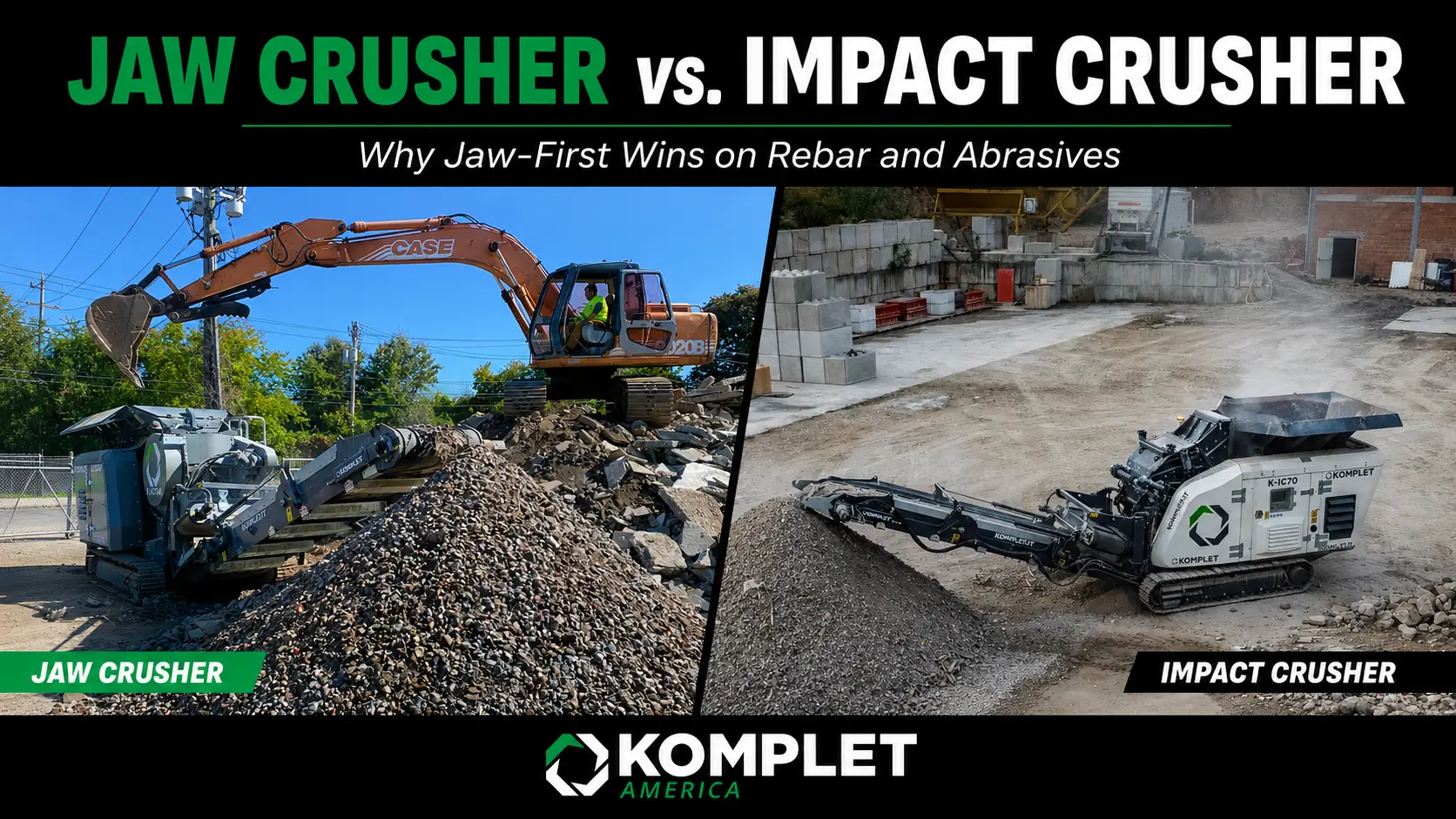
Throughput ranges from 34 to 160 US tph across the compact mobile jaw crusher lineup, plus the K-IC 70 impact crusher for premium cubical secondary output:
- K-JC 503 — up to 34 US tph, 19″ x 12″ jaw, 25 HP Tier 4 Final, ~7,496 lb. Tight-access urban demolition, small-scale crushing operations.
- K-JC 604 — up to 55 US tph, 23″ x 16″ jaw, 55 HP, ~19,400 lb. Mid-range mobile crushing for typical demolition and aggregate work.
- K-JC 704 PLUS — up to 90 US tph, 27″ x 16″ jaw, 74 HP, ~26,455 lb. Komplet’s best-selling crusher — workhorse for typical contractor and aggregate operations.
- K-JC 805 — up to 160 US tph, 31″ x 21″ jaw, 130 HP, ~49,600 lb. Largest jaw crusher in the lineup, for high-volume operations.
- K-IC 70 — up to 90 US tph, 25″ x 20″ feed, 100 HP. Premium cubical secondary output for concrete and asphalt mix-design markets.
Frequently Asked Questions
How much can mobile crushing actually save vs. hauling waste off-site?
For a typical 500-ton commercial concrete demolition project in a major US metro, the conventional disposal pathway costs $75,000-$170,000+ (demolition + hauling + tipping fees). On-site crushing reduces total cost to $15,000-$30,000 (operation + crew + minor wear parts), with recovered material revenue typically running $7,500-$30,000+ on top. Net savings range from $60,000 to $170,000+ for that single project. Numbers vary by region, project specifics, and market conditions — the range is illustrative.
What’s the smallest project that justifies mobile crushing equipment?
Single-project justification typically starts around 200-500 tons of crushable material in markets with high tipping fees, or 500-1,000 tons in markets with moderate tipping fees. Below those thresholds, equipment mobilization and operating costs may exceed the avoided disposal costs for a single project. For operations with recurring demolition or aggregate pipeline, much smaller individual project sizes work because the equipment amortizes across many projects.
Should I rent mobile crushing equipment first or buy outright?
Renting is typically the right starting point for first-time mobile crushing operations. Komplet’s authorized dealer and rental network includes partners offering rent-to-own arrangements where rental payments credit toward eventual purchase. Find your local Komplet dealer or call 908-369-3340. For contractors with recurring demolition pipeline of 3+ projects per year, ownership economics typically justify purchase quickly.
Can mobile crushers handle demolition concrete with rebar?
Yes — this is exactly what they’re designed for. Komplet jaw crushers (K-JC 604, K-JC 704 PLUS, K-JC 805) include integrated hydraulic magnetic belts that automatically lift ferrous metal off the discharge conveyor during crushing. The reverse jaw function clears any uncrushable material that enters the chamber. Together these features handle reinforced concrete without manual rebar removal — and the recovered rebar typically sells as scrap metal at $100-$300+/ton, adding revenue.
How long does mobile crushing equipment take to set up at a new site?
Under 30 minutes for a typical Komplet jaw crusher. Self-propelled tracked, hydraulically folding conveyors, wireless remote control. One operator drives the machine into position, deploys conveyors, runs a brief warm-up, and starts feeding. Same-day deployment is the operational baseline for project work.
What about regulatory compliance for on-site crushing?
Demolition permits are typically required by local building authorities for commercial concrete demolition. Crushing demolition concrete for use on the same project is generally permitted under standard construction activities. OSHA crystalline silica compliance applies (PEL of 50 ug/m3 over 8 hours) — Komplet’s standard dust suppression supports compliance. Operating as a commercial recycler accepting outside material requires state-level permits in most jurisdictions. Consult local building authorities and a local environmental attorney for specific requirements.
How does mobile crushing affect my project schedule?
Most projects with on-site mobile crushing complete 10-30% faster than haul-out alternatives. The schedule compression comes from eliminating haul-out trips, dump waiting time, and post-demolition site cleanup time. Faster completion means lower overhead absorption per project, faster crew rotation to the next contract, and earlier billing milestones.
What’s the warranty on Komplet mobile crushing equipment?
All new Komplet equipment ships with a 1-year / 1,000-hour warranty (whichever comes first). Komplet America’s parts inventory is forecasted 12 months in advance, supporting fast wear-part availability when service items are needed. Authorized dealers across North and Central America provide local service support — call 908-369-3340 for parts, service, or technical questions.
Final Thoughts
Mobile crushing benefits compound across every dimension of typical contractor and aggregate operations — avoided dump fees, recovered material revenue, avoided aggregate purchases, eliminated hauling costs, project schedule compression, and federal Section 179 tax benefits all work together to deliver operational economics that the haul-out alternative simply can’t match. The standard productivity features (magnetic separation, reverse jaw, dust suppression, wireless remote, tracked mobility) make these benefits achievable in real construction-side conditions rather than theoretical advantages that only work in ideal scenarios. For demolition contractors, concrete recyclers, asphalt recyclers, excavation contractors, and aggregate operations, on-site mobile crushing typically represents one of the highest-return operational decisions available.
Komplet America’s compact mobile crushing lineup — K-JC 503 through K-JC 805 plus the K-IC 70 impact crusher — covers mobile crushing operations from tight-access urban demolition through high-volume mid-size aggregate work. Browse the complete equipment lineup or call us to discuss whether on-site mobile crushing fits your specific operation.
Ready to Talk On-Site Crushing?
- Call 908-369-3340
- Email [email protected]
- Schedule a demo or request a quote
- Find your local Komplet dealer for rental availability
- Ask about our 1-year / 1,000-hour warranty and equipment financing options
Never enough — that’s how we approach service, support, and helping operations turn waste into revenue right at the job site.
Disclaimer: All cost, ROI, payback, dump fee, scrap pricing, and revenue figures in this article are illustrative examples based on sample assumptions about volume, regional pricing, material specifications, and market conditions. Actual results vary significantly by region, market, material type, equipment utilization, operator skill, financing terms, regulatory environment, and many other factors. Equipment pricing, tipping fees, RCA pricing, scrap metal pricing, fuel costs, and labor rates all change over time and by location. Komplet America makes no guarantee, warranty, or representation of specific financial performance, payback timelines, or business outcomes for any particular operation. For current pricing and a payback estimate based on your specific volume, material, and local market, contact us at 908-369-3340 to speak with our team.