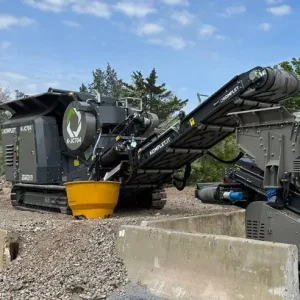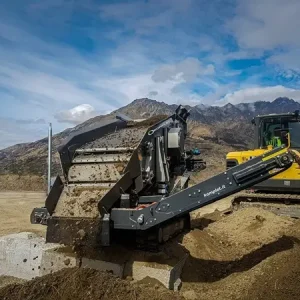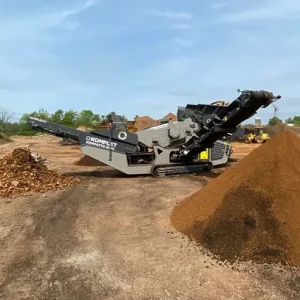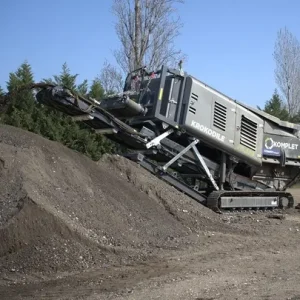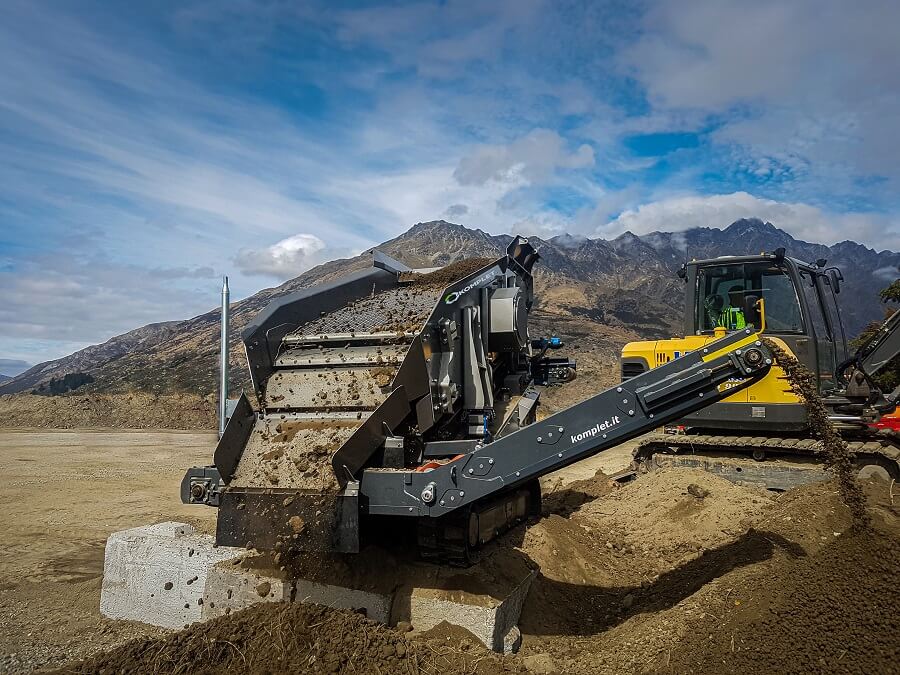

Pick the wrong screener technology for the work and the screener struggles even when sized correctly. Vibrating scalping screens and trommel screens are different tools engineered for different feed materials — neither is universally better. Vibrating scalping screens excel on hard, dry, abrasive material; trommels excel on wet, sticky, fibrous, and irregular organic feedstock. The right answer depends on what you are screening, not which technology is theoretically superior.
Komplet America builds both: the Kompatto vibrating scalping screener lineup (Kompatto 221, Kompatto 5030, Kompatto 124) for C&D, RCA, aggregate, and dry-soil applications, and the K-TS trommel screener lineup (K-TS 30, K-TS 40) for compost, topsoil, mulch, and organic feedstock applications. This guide walks through the honest selection logic — when vibrating scalping is the right call, when a trommel is the right call, and how each Komplet product line fits the work.
How Each Screen Technology Works
Vibrating Scalping Screens — How They Work
A vibrating scalping screen uses a tilted multi-deck flat screen surface driven by a vibrating mechanism. Material enters the hopper, vibrates across the upper deck (which catches oversize that does not pass through the mesh), drops to the lower deck (which catches the mid-fraction), and falls through to the bottom collection (the fines). The vibration energy is what moves material across the deck and what shakes oversize chunks loose so the underlying spec cuts can pass through. Most Komplet vibrating scalping screens are two-deck — they produce three discrete output streams in a single pass.
Vibrating scalping screens are mechanically straightforward: hopper, vibrating screen surface, two or three discharge conveyors for the spec cuts. Screen mesh and screen panels are interchangeable, so the same machine handles different spec cuts and different feed materials by changing the mesh selection.
Trommel Screens — How They Work
A trommel screen uses a rotating drum with screen mesh forming the drum surface. Material is fed into the drum and tumbles inside as the drum rotates; smaller fractions drop through the mesh openings while larger material moves through the drum length to be discharged off the end. The rotating tumbling action constantly turns and reorients material, which keeps moisture, clumping, and bridging in check on materials where a flat vibrating deck would struggle.
Trommels typically run on electric drive with onboard genset power (the K-TS 30 uses a 23 kW genset; the K-TS 40 uses a 40 kW genset), giving them quieter operation and simpler engine-emissions management than diesel-driven vibrating units. Drum sections can typically be configured for different mesh sizes.
When Vibrating Scalping Screens Are the Right Call
Vibrating scalping screens win for hard, dry, abrasive feed material — the screen technology of choice for most C&D recycling, aggregate finishing, and contractor on-site recycling work. Specific application fits where vibrating scalping is the right answer:
On-Site C&D Recycling and RCA Production
Crushed concrete (RCA), demolition aggregate, and other hard dry C&D feed run through vibrating scalping screens with little issue. The vibration shakes oversize loose, the dry feed flows easily through the mesh, and the spec cuts come out clean. For contractors paired with a Komplet jaw crusher, the vibrating scalping screen is almost always the right screener choice — the Kompatto 221 or Kompatto 5030 paired with the appropriate crusher delivers a complete RCA production spread.
Aggregate Yard Spec-Cut Production
Aggregate yards finishing crusher output into spec stockpiles (3/4″ base, 1-1/2″ drainage, fines) use vibrating scalping screens for the throughput, the deck count, and the predictable separation on dry material. The Kompatto 5030 (up to 280 US tph) and Kompatto 124 (up to 350 tph) cover yard-finishing throughput requirements for most contractor-scale and small commercial yard operations.
Dry Soil Screening on Excavation Projects
Excavation projects screening dry or moderately dry soil to separate fill grade, oversize rock, and rejected debris use vibrating scalping screens for the tonnage and the spec separation. The vibration handles the oversize-rock content well; spec cuts come out clean and ready for use as fill or stockpile.
Hardscape, Decorative Aggregate, and Specialty Stone
Smaller-scale hardscape and decorative aggregate operations use the Kompatto 221 — Komplet’s smallest self-propelled scalper — for precision spec separation on modest volumes. The vibration delivers clean spec cuts on dry stone material with the operator-friendly footprint and capital point that fits these operations.
When Trommel Screens Are the Right Call
Trommels win for wet, sticky, fibrous, and irregular organic feedstock — the materials where flat vibrating decks struggle with bridging, clogging, and inconsistent flow. Specific application fits where a trommel is the right answer:
Compost Screening
Active compost feedstock and finished compost for sale both contain moisture, fibrous material (wood chips, partial decomposition residues), and irregular particle shapes that bridge on flat vibrating decks. The trommel’s rotating tumbling action keeps the material moving and turning, breaking up clumps and clearing fibrous strings that would catch on vibrating mesh. The K-TS 30 and K-TS 40 are engineered specifically for this work.
Topsoil with High Moisture or Clay Content
Topsoil for landscape supply often arrives at the screener with meaningful moisture content and clay fraction — particularly in spring conditions, after rain events, or in regions with clay-rich soils. Vibrating scalping screens can handle moderately moist topsoil but struggle when moisture and clay content rise; the material sticks to the deck, blinds the mesh, and forces the operator into clearing cycles. Trommels handle wet, clay-rich topsoil more forgivingly because the tumbling action keeps the material moving across the mesh rather than sitting on it.
Mulch Screening for Landscape Supply
Mulch is fibrous, irregular, and often partially moist depending on age and storage conditions. Trommels handle mulch better than vibrating scalping screens because mulch’s fibrous strings don’t bridge and catch the same way on a rotating drum as they do on a flat deck. Landscape supply operations producing graded mulch typically run trommel screeners for that line of product.
Mixed Organic Feedstock and Yard Waste Processing
Yard waste, mixed green compost feedstock, and similar organic streams with variable moisture, fiber content, and particle shape are trommel territory. Vibrating scalping screens can do some of this work but with frequent operator clearing cycles; trommels handle it as routine production with much less operator intervention.
Side-by-Side: Engineering and Operational Trade-Offs
Throughput per Surface Area
Vibrating scalping screens have the engineering advantage on throughput per unit screening surface for dry material — the entire flat deck contributes to separation simultaneously, and the vibration energy moves material across efficiently. Trommels have less effective screening surface at any one moment (only the portion of the rotating drum at the appropriate angle is actively separating), but they make up for it on wet/sticky material where vibrating screens cannot maintain throughput at all due to bridging and clogging. On dry C&D feed, the vibrating advantage is real; on wet organics, the trommel advantage is real for the same throughput reasons applied to the actual material being screened.
Bridging, Blinding, and Clogging
Vibrating scalping screens vibrate oversize loose effectively for dry material — the vibration shakes trapped chunks free and clears the deck. They struggle on wet sticky material that adheres to the mesh and on fibrous material that catches and weaves. Trommels handle wet sticky and fibrous material with the rotating tumbling action that keeps material moving and clearing — but pay a penalty on dry hard C&D where vibrating scalping is more efficient. Choose based on the dominant feed material, not in the abstract.
Spec Cut Count and Mesh Selection
Komplet vibrating scalping screens are two-deck, producing three spec cuts (oversize, mid-fraction, fines) in a single pass. Mesh and screen panels are interchangeable. Komplet trommels (K-TS 30, K-TS 40) typically produce a smaller number of cuts in a single pass, with drum sections configurable for the target mesh sizes. For operations requiring multiple spec cuts in one pass on dry material, two-deck vibrating scalping is more flexible; for single-cut or two-cut wet/organic screening, the trommel is fit-for-purpose.
Drive Type, Noise, and Emissions Management
Komplet vibrating scalping screens are diesel-powered with EPA Tier 4 Final compliant engines — typical for jobsite mobility where grid power is not available. Komplet trommels use electric drive with onboard genset power. Electric drive trommels offer some operational advantages — quieter operation, simpler maintenance for the drive components, no engine emissions during screen operation (only the genset emits) — at the trade-off of running through a generator system. For organic-feedstock operations near residential receptors or in sensitive operating environments, the quieter electric trommel can be a meaningful advantage.
Capital and Operating Cost
Within the Komplet lineup, the comparable trommels run higher capital cost than the comparable vibrating scalping screens. The trommel premium reflects the rotating drum mechanism, the genset drive, and the application-specific engineering. Operating cost depends heavily on application — running a trommel on dry C&D it was not engineered for produces poor utilization and maintenance issues; running a vibrating scalping screen on wet sticky organics produces frequent operator clearing cycles. Match the technology to the work and operating cost performs as engineered.
The Komplet America Screener Lineup — Both Technologies
All current Komplet screeners are tracked, self-propelled, EPA Tier 4 Final compliant, and operated by wireless remote. Verified pricing and specs:
Vibrating Scalping Screens — for Hard Dry C&D, Aggregate, Dry Soil
- Kompatto 221 — up to 90 US tph, two-deck 7′ × 3.5′ screen, 25 hp Tier 4F diesel, ~7,275 lb. Komplet’s smallest self-propelled scalper.
- Kompatto 5030 — up to 280 US tph, two-deck 8′ × 3’2″ upper / 7′ × 3’2″ lower decks, 45 hp Tier 4F diesel, ~26,455 lb. Komplet America’s best-selling screener.
- Kompatto 124 — up to 350 tph, two-deck 11.8′ × 3.7′ upper / 10.8′ × 3.7′ lower decks, 75 hp Tier 4F diesel, ~37,038 lb. The largest mobile scalping screen in the Komplet lineup.
Trommel Screens — for Wet/Sticky Organic Feedstock
- K-TS 30 — compact tracked trommel screener, up to 60 mch, 23 kW genset (electric drive), ~8,818 lb. Engineered for compost, topsoil, mulch, and organic feedstock.
- K-TS 40 — portable tracked trommel screener, up to 120 tph, 40 kW genset (electric drive), ~25,353 lb. Higher-throughput trommel for larger compost and landscape supply operations.
Companion Conveyor (Either Screener Type)
- K-TC 460 — tracked mobile conveyor for material handling and clean stockpile management. Walks itself into position and integrates with any Komplet screener configuration.
Quick Decision Matrix
Use this short framework when starting to size the right screener for an operation:
- Crushed concrete, RCA, asphalt, brick, dry aggregate, dry soil — vibrating scalping screen (Kompatto 221, 5030, or 124, sized to the throughput and crusher pairing).
- Compost, topsoil with high moisture or clay, mulch, mixed organic feedstock, yard waste — trommel screen (K-TS 30 or K-TS 40, sized to the throughput and operating profile).
- Both at meaningful volume — you may need both. Many landscape supply operations and recycling yards run a Kompatto for the C&D / aggregate side and a K-TS for the organic / topsoil / compost side.
- Marginal cases (moderately moist soil, dry compost, occasional fibrous material) — ask Komplet America at (908) 369-3340 to walk through the specific feed profile. Some marginal cases lean either direction depending on the dominant material and operating profile.
Acquisition Paths and Demos
How operations acquire either screener type: buy new with Komplet Capital financing — 100 percent financing for qualified buyers, 24-hour approval, multi-year repayment terms. Buy certified pre-owned — verified-history equipment with OEM parts support, at meaningful capital savings versus new. Or rent through your local authorized Komplet dealer — typically the right starting point for first-time screener buyers, with rent-to-own arrangements available through many dealer partners.
Demos take place at Komplet America’s yard in Hillsborough, NJ or through authorized dealers across North and Central America. Komplet America does not transport equipment to prospect sites for demos. Both vibrating scalping and trommel demos are available — call Komplet America at (908) 369-3340 to schedule a demo of the right technology for your application.
Operator Training, Parts, and Warranty
All new Komplet equipment ships with comprehensive operator training as part of equipment delivery through authorized dealers — covering pre-shift inspection per OEM specifications, safe operational practices (including wireless remote operation, lockout/tagout, and emergency procedures), screen mesh changes (for vibrating scalping) or drum mesh configuration (for trommels), hydraulic adjustment procedures, material feed best practices, and troubleshooting. Komplet America’s parts inventory is forecasted approximately 12 months in advance, supporting fast wear-part availability. All new Komplet equipment comes with a 1-year / 1,000-hour warranty (whichever is earlier).
Frequently Asked Questions
Is a vibrating scalping screen always better than a trommel?
No. Vibrating scalping screens are better for hard dry C&D, aggregate, and dry-soil applications. Trommels are better for wet sticky organic feedstock — compost, topsoil with high moisture, mulch. Neither technology is universally superior; they’re engineered for different feed materials. Match the technology to your dominant feed.
Which Komplet screener should I buy for a contractor on-site recycling operation?
For C&D recycling specifically — crushed concrete, RCA, asphalt, brick rubble — choose a vibrating scalping screen. The Kompatto 5030 paired with the K-JC 704 PLUS jaw crusher is Komplet America’s most popular contractor-scale crushing-and-screening combination. For tight-access urban contractor work or smaller demolition operations, the Kompatto 221 with the K-JC 503 or K-JC 604 fits the scale.
Which Komplet screener should I buy for compost or landscape supply?
For compost, topsoil, mulch, and organic feedstock, choose a trommel screen. The K-TS 30 fits compact contractor-scale operations and modest volumes; the K-TS 40 covers higher-throughput compost and landscape supply. The trommel design handles the moisture, clay, and fibrous content of organic material more forgivingly than vibrating scalping screens.
Can I use a vibrating scalping screen for compost or topsoil?
With limitations. Vibrating scalping screens can handle dry, low-clay, low-fiber organic feedstock — for example, dry topsoil with minimal clay content. They struggle when moisture rises, clay content increases, or fibrous material arrives in the feed; the operator ends up doing frequent screen-clearing cycles that hurt utilization. For dedicated compost, wet topsoil, or mulch operations, the trommel is the right tool.
Can I use a trommel for crushed concrete or aggregate?
Trommels can run dry C&D and aggregate, but vibrating scalping screens deliver more throughput per unit cost on those materials and handle the abrasive feed life better than trommel mesh typically does on hard rock. For C&D and aggregate work, the vibrating scalping screen is the engineering and economic choice.
How is pricing structured between vibrating and trommel?
Within the Komplet lineup, the comparable trommels run higher capital cost than the comparable vibrating scalping screens. The K-TS 30 is roughly between the Kompatto 221 and Kompatto 5030 on capital. The K-TS 40 is positioned similarly to the Kompatto 5030 and Kompatto 124. The trommel premium reflects the rotating drum mechanism, genset electric drive, and application-specific engineering.
What if my operation processes both C&D and organic feedstock?
Many operations run both technologies — a Kompatto vibrating scalping screen for the C&D / aggregate side and a K-TS trommel for the organic / topsoil / compost side. Operations testing both at meaningful volume should consider building both into the equipment plan rather than forcing one technology onto material it does not handle well. Call Komplet America at (908) 369-3340 to walk through the specific equipment configuration that fits a dual-stream operation.
Where can I see Komplet vibrating and trommel screeners running on actual material?
Demos for both technologies take place at Komplet America’s yard in Hillsborough, NJ or through authorized dealers across North and Central America. Komplet America does not transport equipment to prospect sites for demos. Schedule a yard visit through Komplet America at (908) 369-3340 or an authorized dealer demo through your local Komplet dealer.
What warranty applies to Komplet screeners?
All new Komplet equipment, including both vibrating scalping screens (Kompatto) and trommel screens (K-TS), comes with a 1-year / 1,000-hour warranty (whichever is earlier). Improper service, non-OEM parts, and operating practices outside OEM specifications may void warranty coverage. For warranty-protected work, contact Komplet America at (908) 369-3340 or your authorized Komplet dealer.
Final Thoughts
The vibrating-vs-trommel decision is application-driven, not technology-superior. Vibrating scalping screens win for hard dry C&D, RCA, aggregate, and dry-soil work — the contractor on-site recycling and aggregate yard applications where Komplet’s Kompatto lineup (221, 5030, 124) covers contractor-scale through commercial-scale throughput. Trommels win for wet sticky fibrous organic feedstock — the compost, topsoil, mulch, and landscape supply applications where Komplet’s K-TS lineup (30, 40) handles the material more forgivingly than any flat vibrating deck.
Match the technology to the dominant feed material and the operating profile. For operations spanning both — a recycling yard with both C&D and topsoil, or a landscape supply operation with both decorative aggregate and compost — running both technologies side by side is often the right answer. Talk through your specific feed material with Komplet America or your authorized Komplet dealer before specifying.
Browse the full Komplet screener lineup — both Kompatto vibrating scalping screens and K-TS trommel screens — and the compact mobile crusher lineup for pairing options. Review Komplet Capital financing, check certified pre-owned inventory, explore crusher and screener parts and support, or contact Komplet America directly to talk through which screener technology fits your specific feed material and operational profile.
Ready to Talk Vibrating vs. Trommel for Your Operation?
- Call Komplet America at (908) 369-3340 to walk through your dominant feed material, throughput needs, and screen technology options
- Email [email protected] for spec sheets, demo scheduling, or dealer connections
- Explore Komplet Capital financing — 100% financing, 24-hour approval, multi-year terms, and our 1-year / 1,000-hour factory warranty
- Check certified pre-owned inventory for verified-history equipment at meaningful capital savings versus new
- Find your local Komplet dealer for rental availability
Never enough.
Disclaimer: Equipment prices are subject to change based on dealer location, availability, and any additional features or customizations. Prices do not include taxes, shipping, or installation fees, which may apply depending on your region. Contact Komplet America at (908) 369-3340 or visit kompletamerica.com for current pricing.
Disclaimer: Any throughput, utilization, capital cost, operating cost, or screener-comparison figures shown above are illustrative examples only. Actual results depend on material type, moisture content, feed gradation, screen mesh selection, jobsite conditions, operator skill, equipment configuration, financing terms, and operational practices. Published TPH figures reflect optimal operating conditions; real-world utilization typically runs at a meaningful fraction of theoretical capacity. The vibrating-vs-trommel comparison is general application guidance; specific equipment selection should be confirmed with Komplet America or your authorized Komplet dealer based on actual feed material and operational profile. Komplet America makes no guarantee of specific operational or financial performance for any particular customer or operation. Section 179 and bonus depreciation rules change year to year — consult a qualified tax advisor for current applicability.
Disclaimer: All operating, maintenance, screen mesh change, vibrating-mechanism, trommel-drum, and service guidance in this article is general in nature. Always refer to the official Komplet operator’s manual for the specific machine model and serial number, and follow OEM intervals and procedures. For warranty-protected work and operator training scheduling, contact Komplet America at (908) 369-3340 or your authorized Komplet dealer. Improper service or non-OEM parts may void warranty coverage and create safety hazards. Operator training, lockout/tagout procedures, and PPE requirements vary by machine model and jurisdiction — confirm with your authorized Komplet dealer and applicable safety regulators before operation.