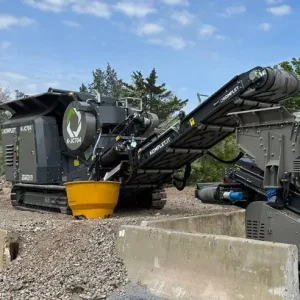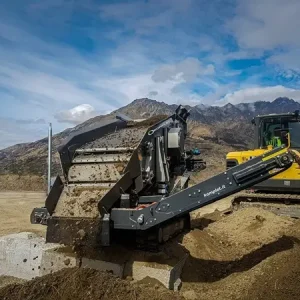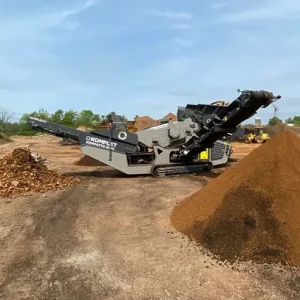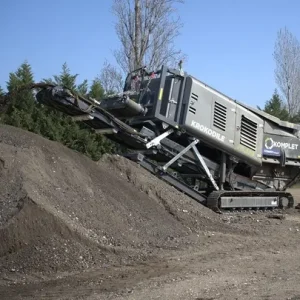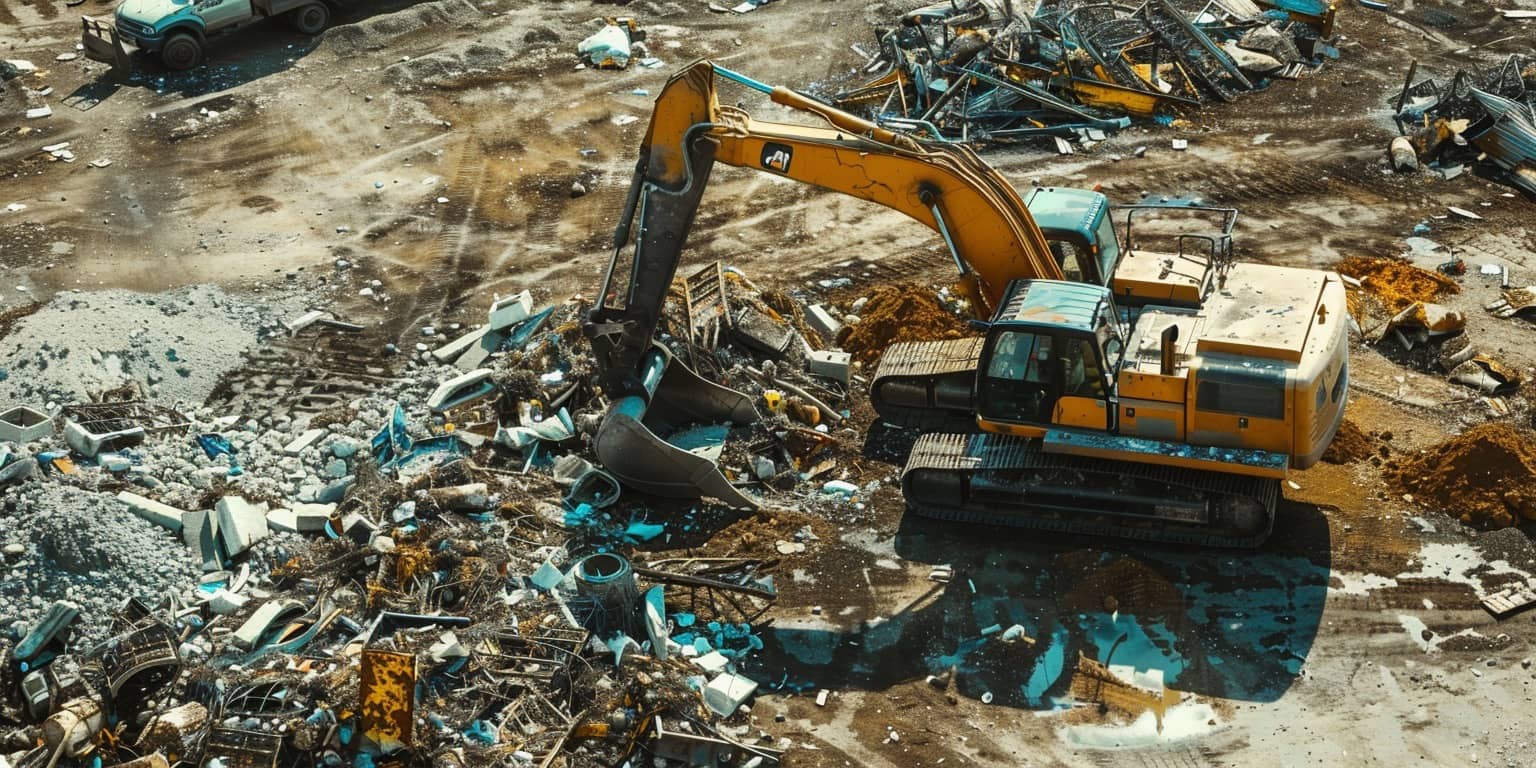

Construction and demolition waste is a recurring cost on every project. Trucking, tipping fees, scheduling delays, and the aggregate or fill that has to be purchased to replace what was hauled away — all of it adds up. On-site waste processing addresses those costs at the source, by reducing, sorting, and recovering material directly on the jobsite where it is generated.
This guide walks through the actual economic math of on-site processing — what it saves, what it costs to operate, and where it does and does not pay back. Komplet America’s compact equipment lineup is built specifically for this kind of jobsite-scale processing, with mobile crushers, screeners, and slow-speed shredders that bring the processing capability to the waste rather than hauling waste to a distant facility.
What On-Site Waste Processing Actually Means
On-site waste processing is the practice of crushing, screening, or shredding C&D material at the jobsite where it is generated. Instead of hauling unprocessed concrete, asphalt, wood, or mixed debris to a landfill or off-site recycling facility, the contractor brings mobile processing equipment to the site and reduces the material to a usable form on the spot.
Common on-site processing operations include:
- Crushing demolition concrete and asphalt into recycled aggregate for road base, fill, or sub-base reuse on the same project
- Screening excavated soil to separate fines from oversize material for reuse as backfill or cover
- Shredding mixed C&D debris (wood, drywall, plastics, mixed waste) for volume reduction and disposal cost savings
- Recovering ferrous metal from demolition concrete using integrated magnetic separation, for sale to scrap recyclers
Where the Cost Savings Come From
On-site processing reduces three recurring cost categories that every C&D project carries: hauling, tipping, and material purchasing. Each can be quantified against a baseline of off-site disposal.
Reduced Hauling and Transport Costs
Processed material is denser and more uniform than raw debris. A truck loaded with crushed concrete or shredded C&D output carries more usable tonnage per haul than the same truck loaded with bulky, irregular rubble. Fewer trucks on-site, fewer round trips to the landfill, less fuel burned, and lower per-load labor cost on the project. For projects with long haul distances to landfill or to a virgin aggregate supplier, the per-trip savings compound quickly.
Lower Tipping and Disposal Fees
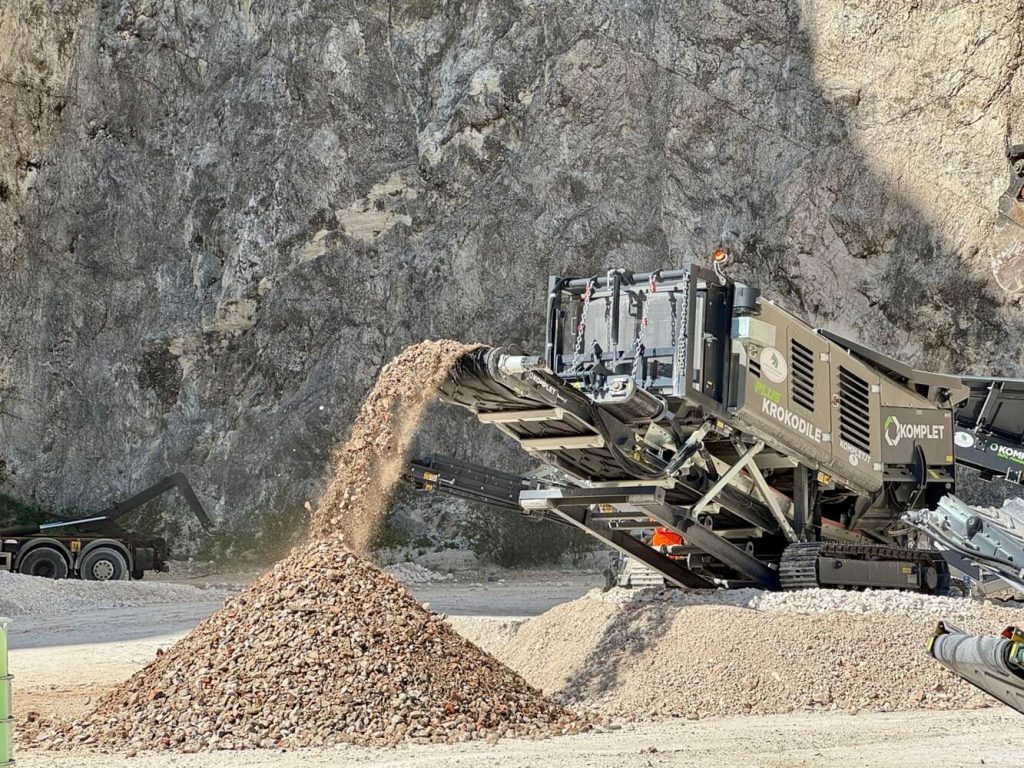
Many landfills and transfer stations charge premium rates for bulky, mixed, or unsorted C&D loads. Processed and sorted output qualifies for lower-cost disposal categories — or, in many markets, becomes a feedstock that recyclers accept at lower cost or even pay for. The Krokodile PLUS slow-speed shredder includes an integrated magnetic separator that captures ferrous metal (rebar fragments, embedded nails, banding) for separate scrap recycling — adding revenue rather than disposal cost.
Material Purchasing Savings Through Reuse
Recycled aggregate produced on-site through a Komplet jaw crusher and screener replaces virgin aggregate that would otherwise be purchased, hauled, and stockpiled. The contractor turns demolition output into project input — same material flow, opposite ledger entry.
Project Timeline Efficiency
On-site processing decouples the demolition crew from the hauling and supply schedule. The crew is not waiting for trucks to return from the dump or for fresh aggregate deliveries. The processing equipment can be repositioned through the day to keep the active workflow moving, which compounds into faster project completion and lower labor cost.
The Honest Cost Side: What On-Site Processing Actually Requires
On-site processing is not free. The economics work because the disposal-side savings exceed the operating costs of the processing equipment — but those operating costs are real and need to be in the contractor’s analysis.
Equipment Capital and Financing Cost
A mobile crusher, screener, or shredder is a capital investment. Whether purchased outright, financed through Komplet Capital with terms typically up to 72 months, or rented through a Komplet dealer, the equipment carries a recurring cost that has to be earned back through disposal-side savings.
Diesel Fuel
Komplet compact equipment is diesel-powered (Tier 4 Final emissions-compliant). Fuel consumption is real and varies with load. The advantage is that fuel cost on a Komplet machine running on the jobsite is almost always less than the equivalent fuel cost of trucks hauling the same volume of waste to a distant landfill — but it is not zero.
OEM-Scheduled Maintenance
Mobile processing equipment requires scheduled maintenance per the Komplet operator’s manual: oil and filter changes, hydraulic system service, wear-part inspection and replacement (jaw plates, hammers, shafts and teeth depending on the machine type), greasing, and routine inspections. The 1-year / 1,000-hour standard warranty covers manufacturing defects, but routine maintenance is the operator’s responsibility. Skipping or deferring maintenance shortens equipment life and can void warranty coverage.
Operator Labor
Komplet equipment operates by wireless remote control on the slow-speed shredder and through standard heavy-equipment operator workflows on the crushers and screeners. Either way, a trained operator is required during processing. Operator labor is a real recurring cost that has to be in the project budget.
Wear Parts
Wear parts are consumables that have a finite life under tough C&D processing. Jaw plates on a jaw crusher, hammers and blow bars on an impact crusher, teeth and shafts on a slow-speed shredder, screen mesh on a screener — all wear and require replacement on a schedule that depends on material abrasiveness, hours run, and processing volume. Plan for wear-part inventory and replacement cost in the operating budget.
When On-Site Processing Pays Back Fastest
The math for on-site processing favors operations with these characteristics:
- Recurring C&D volume — demolition contractors, civil and excavation crews, and recyclers processing material weekly or daily
- Long haul to landfill or aggregate supplier — every additional mile of haul distance increases the savings per ton processed on-site
- Premium tipping markets — regions where landfill rates are high, capacity is tight, or bulky-mixed loads are surcharged
- Material recovery opportunity — operations that can sell recovered aggregate, mulch, or scrap metal in the local market
- Tight project schedules — operations where decoupling the crew from hauling logistics reduces critical-path delays
- Sustainability requirements — projects with LEED, Envision, or contract-required diversion thresholds
Operations with very low volume, short haul to a low-cost disposal site, and no recovery market for the output may find that contracted hauling makes more sense. The equipment investment has to be matched to the operation’s actual recurring volume — not to a once-a-year peak.
Generating Revenue from Recycled Materials
On-site processing converts material that would otherwise be a disposal cost into material that can either be reused on the same project (offsetting purchase cost) or sold into a local recycling market (generating revenue). Specific opportunities depend on the local market, but common revenue streams include:
- Recycled Concrete Aggregate (RCA) — sized concrete aggregate sold or reused as road base, structural fill, or non-structural backfill
- Recycled Asphalt Pavement (RAP) — milled or processed asphalt sold to asphalt plants for use in new mix or used directly as cold patch
- Mulch and biomass feedstock — shredded wood from land clearing or demolition sold to landscapers, composters, or biomass facilities
- Ferrous scrap — rebar fragments and embedded steel captured by the magnetic separator, sold to local scrap recyclers
- Recycled aggregate fines — screened soil fines used for backfill or cover, replacing purchased material
Specific market values for these output streams vary significantly by region, season, and material quality. Contractors should verify local market acceptance and pricing before counting on revenue from any single stream.
Environmental and Regulatory Benefits
On-site processing reduces transport emissions, supports landfill diversion targets, and produces documented chain-of-custody for recovered material. Specific regulatory benefits depend on the jurisdiction, but common ones include:
- LEED and Envision diversion credits — measurable contribution to Materials & Resources credit categories
- Local diversion ordinances — many municipalities require minimum C&D diversion percentages
- DOT recycled-aggregate specifications — many state DOTs allow Recycled Concrete Aggregate (RCA) in road base and fill applications
- Reduced transport emissions — fewer truck-miles per ton of material moved
- Tier 4 Final emissions compliance — Komplet equipment uses emissions-compliant diesel power
Regulatory and rating-system specifics change over time and vary by jurisdiction. Always confirm with the project sustainability consultant, project engineer, or local DOT for current requirements.
Frequently Asked Questions
Does on-site processing eliminate fuel and maintenance costs?
No. On-site processing equipment is diesel-powered and requires fuel, OEM-scheduled maintenance, wear-part replacement, and trained operator labor. The economic case for on-site processing rests on these operating costs being lower than the avoided hauling and tipping costs — not on operating costs being zero. Komplet America publishes honest expectations about operating costs alongside the savings analysis.
How long does on-site processing equipment typically take to pay back?
Payback depends on the operation’s recurring C&D volume, local hauling and tipping rates, recovered material market value, equipment financing terms, and operator productivity. Komplet America does not publish a single ROI number because the math varies dramatically by region and operation. The Komplet sales team can help structure the analysis using your specific operation’s volumes and local rates.
Is on-site processing always cheaper than off-site disposal?
No. For very low recurring volumes, short hauls to low-cost disposal sites, or operations without local recovery markets, contracted hauling can be more economical than equipment ownership. The case for on-site processing strengthens with recurring volume, longer hauls, premium tipping markets, and active recovery markets.
What kinds of equipment are typically used for on-site C&D processing?
Mobile compact crushers (jaw or impact) for concrete and asphalt sizing, mobile screeners for material classification, slow-speed mobile shredders for mixed C&D and bulky waste, and tracked conveyors for material handling. Komplet America’s lineup covers all four categories, and the equipment is engineered to work together in a coordinated workflow.
Can on-site processing contribute to LEED credits?
Yes. On-site C&D processing supports landfill diversion, which is a measurable component of LEED Materials & Resources credits. Specific credit eligibility depends on the LEED rating system version, the project type, and how recovered material is documented. Consult the project’s LEED-AP for specific calculation.
Is the Komplet equipment Tier 4 Final emissions-compliant?
Yes. Komplet’s compact crushers, screeners, and the Krokodile PLUS slow-speed shredder are powered by Tier 4 Final emissions-compliant diesel engines (specific engine make and horsepower vary by model). This meets current U.S. EPA emissions standards for non-road diesel equipment.
What financing options are available?
Komplet Capital offers financing tailored to the equipment industry, with terms typically up to 72 months and 100% financing available for qualified buyers. Section 179 deductions may apply for U.S. tax purposes (consult your tax advisor). For full financing details, see the Komplet America financing page or call 908-369-3340.
Is rental available instead of purchase?
Rental availability varies by region and is offered through Komplet’s authorized dealer network. To check rental availability in your area, find your local Komplet dealer or call Komplet America at 908-369-3340.
Final Thoughts
On-site waste processing is one of the most directly measurable cost-reduction strategies available to a C&D contractor. The savings come from real, recurring cost categories — hauling, tipping, and material purchasing — and they show up on every project, not just the occasional big job. The operating costs of running the processing equipment are real and must be in the analysis, but the math works for most operations with recurring C&D volume.
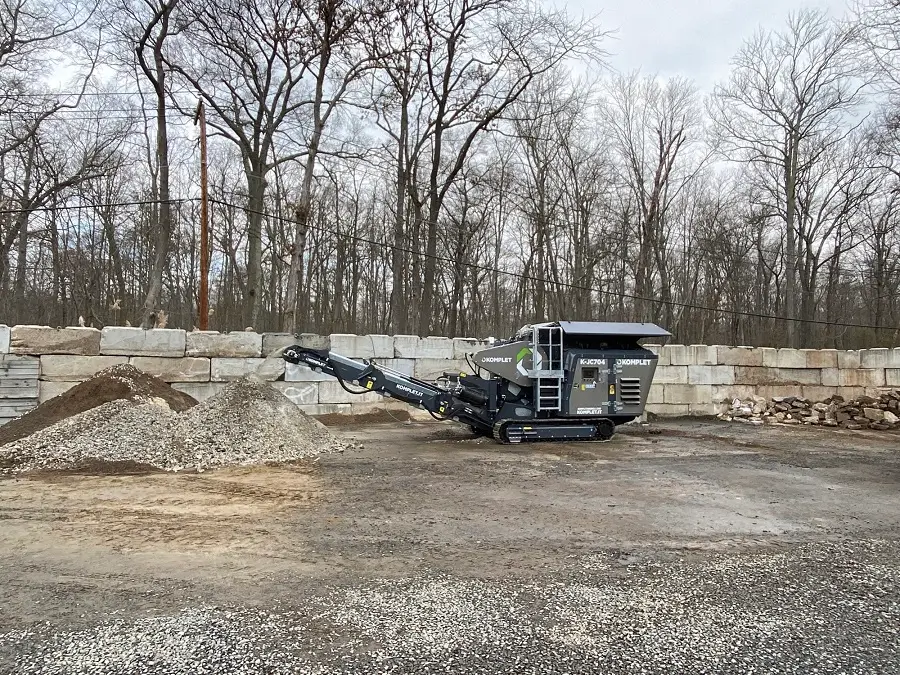
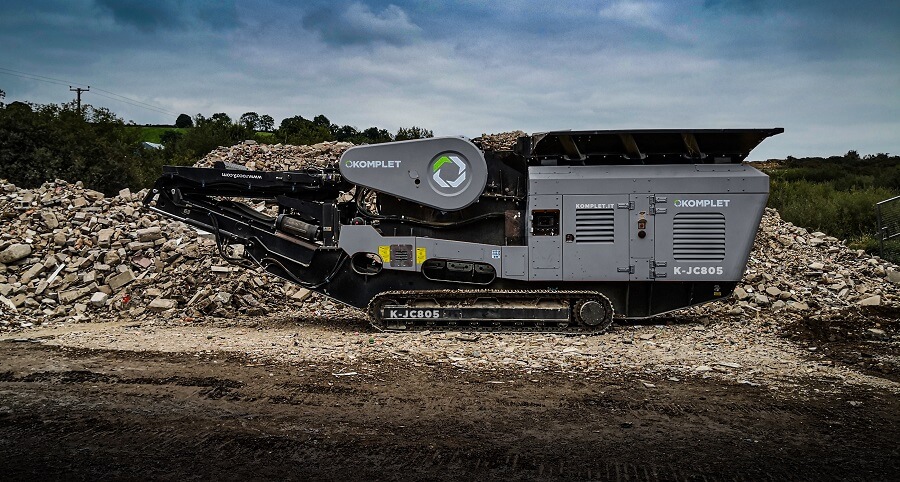
Komplet America’s compact equipment lineup is purpose-built for jobsite-scale on-site processing — crushers sized from the K-JC 503 to the K-JC 805, screeners from the Kompatto 221 to the Kompatto 124, the Krokodile PLUS slow-speed shredder, and the K-TC 460 tracked conveyor. The full lineup is stocked at the Hillsborough, NJ yard and supported through the Komplet-certified dealer and service network across North and Central America.
Learn more about Komplet’s compact crushers, screeners, the Krokodile PLUS slow-speed shredder, or review equipment financing options through Komplet Capital.
Ready to Cut Your Project Waste Costs?
- Call Komplet America at 908-369-3340 to discuss your typical C&D volume, local disposal costs, and equipment options
- Request a yard demonstration in Hillsborough, NJ — bring sample material to evaluate output before you commit
- Review Komplet America’s full equipment lineup
- Explore equipment financing through Komplet Capital — Section 179 eligible for U.S. tax purposes
- Find your local Komplet dealer for rental availability and regional support
Never enough.
Disclaimer: All operating, maintenance, and service guidance in this article is general in nature. Always refer to the official Komplet operator’s manual for the specific machine model and serial number, and follow OEM intervals and procedures. For warranty-protected work, contact Komplet America at 908-369-3340 or your authorized Komplet dealer.
Disclaimer: All financial illustrations, ROI references, savings descriptions, and market value references in this article are illustrative only. Actual financial returns vary based on operation type, material composition, local hauling and tipping costs, recovered material market values, equipment utilization, financing structure, and other factors. Komplet America makes no guarantee of specific cost savings, payback periods, market values, or financial returns. Customers should perform their own analysis with appropriate financial and tax advisors before making purchase decisions. Komplet Capital financing terms and rates are subject to credit approval and may vary.