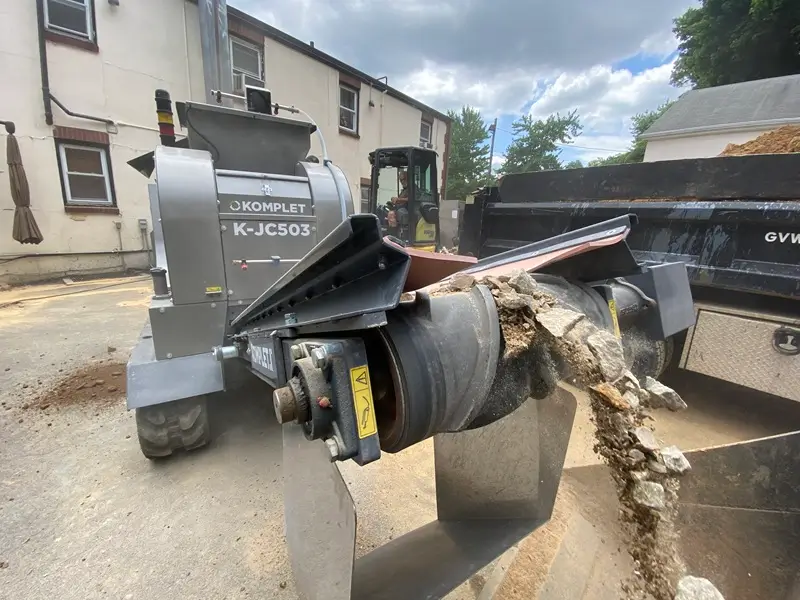

The rent-versus-buy decision is one of the most consequential capital allocation choices in any contractor’s equipment strategy. Get it right and the operation captures the full economic value of crushing capacity at the lowest sustainable cost. Get it wrong and the operation either ties up capital in equipment that doesn’t earn its keep or pays rental premiums that exceed what ownership would have cost. The decision is rarely about preference — it’s about usage patterns, project mix, market conditions, and capital availability, and the right answer changes as the operation grows.
This guide walks through how to evaluate the rent-versus-buy decision based on actual usage data, the specific economics of each path for crushers, screeners, and shredders, the third option many contractors overlook (financing-to-own through Komplet Capital), the threshold at which renting becomes more expensive than buying, and how Komplet America’s distribution model — through authorized rental houses and equipment dealers — fits both ends of the decision. Throughout: practical and focused on what produces the best after-tax economics, not just the lowest sticker price.
The Three Options (Not Two)
Most contractors frame this decision as a binary choice — rent or buy — but there are actually three options, and each fits a different usage pattern. Understanding all three is the starting point for getting the decision right:
Option 1: Rent (from a Rental House)
Rent equipment as needed from an equipment rental house. Pay daily, weekly, or monthly rental rates only when the equipment is in use. Important note for Komplet equipment specifically: Komplet America does NOT rent equipment directly to end-users — Komplet America’s distribution model places rental capacity with authorized rental houses across the country. To rent Komplet equipment, contact a Komplet authorized rental partner or rental house in your region.
Option 2: Buy with Cash (Outright Purchase)
Purchase equipment outright with cash or business funds. Full ownership from day one. No financing payments. Section 179 deduction in the year of purchase. The operation owns the equipment, the maintenance, the resale value, and the operational economics for the full ownership life.
Option 3: Finance-to-Own (Through Komplet Capital or External Lender)
Purchase equipment with structured financing — typically 36, 48, 60, or 72-month terms. Komplet Capital offers in-house financing with 100% financing for qualified buyers, 24-hour approvals, and no down payment options. Details at Komplet Capital financing. Pay a structured monthly payment that’s typically less than equivalent rental rates, build equity in the asset, and own the equipment outright at the end of the term.
The third option is the one most contractors overlook. Many rent because they assume buying requires cash they don’t have — when in fact financing-to-own often produces lower monthly cost than equivalent rental, plus equity buildup the renter never captures.
Decision Framework: How Usage Patterns Drive the Right Choice
The rent-versus-buy decision is fundamentally a usage-pattern decision. Three usage variables drive it:
Variable 1: Frequency of Use
How many days per year will the equipment actually be in operation? Not how many days per year you’ll have a project that could use it — how many days the equipment will be running, with feed material going in and product going out. This is the single most important variable.
- Less than 30 operating days per year: The equipment cost per operating day for ownership is too high to justify capital deployment.
- 30-90 operating days per year: Evaluate carefully — borderline. Often renting is still better unless the project mix favors ownership.
- 90-180 operating days per year: Buying typically wins, especially with financing. Rental rates accumulate to exceed financing payments.
- 180+ operating days per year: Buying clearly wins. Equipment running 6+ months per year is structurally cheaper to own than rent, regardless of financing path.
Variable 2: Duration of Each Project
Equipment used for short discrete projects has different rent-vs-buy economics than equipment used for sustained continuous production:
- Single-day or single-week projects: Mobilization, demobilization, and rental setup are short.
- Multi-week projects, occasionally: Monthly rental rates work well for projects in this duration range.
- Multi-month projects, multiple per year: Buy or finance. Rental rates compound on long-duration projects, and ownership becomes more economical.
- Continuous yard or aggregate operation: Continuous operation justifies dedicated equipment.
Variable 3: Predictability of Project Pipeline
How predictable is the project pipeline that will use the equipment? Is the work secured and recurring, or is it speculative and intermittent?
- Highly predictable, recurring work: Predictable utilization makes ownership economics clean.
- Moderate predictability, mixed pipeline: Evaluate financing-to-own or buy used to reduce capital exposure.
- Speculative or intermittent: Don’t tie up capital in equipment for work that may not materialize.
The ROI Math: When Buying Wins (and When It Doesn’t)
The break-even between rent-and-buy is roughly when annual rental cost exceeds the annualized cost of ownership (financing payment + operating cost + opportunity cost of capital). Below break-even, rental wins; above break-even, ownership wins. The math is straightforward when you have actual usage data:
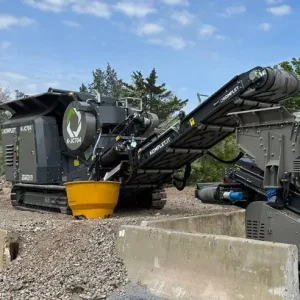
Example: K-JC 704 PLUS Compact Mobile Jaw Crusher
Illustrative scenario for a contractor evaluating rent versus buy on a K-JC 704 PLUS. Assumptions are illustrative and vary by region, operator, financing terms, and other factors.
Rental scenario:
- Daily rental rate: $1,200-$1,800/day
- Weekly rental rate: $4,500-$6,500/week
- Monthly rental rate: $13,000-$18,000/month
- Operator and fuel: separate, varies by operation
- Mobilization/demobilization: typically $1,500-$3,000 per round trip
Financing-to-own scenario:
- Monthly payment on 60-month financing through Komplet Capital: approximately $5,100/month (rate-dependent)
- Operating cost (fuel, maintenance, operator): approximately $4,000/month for typical use
- Section 179 deduction in year of purchase: full amount deductible in year placed in service (subject to all program requirements)
- Resale value at end of 60 months: typically 35-50% of original price
Comparison at 90 operating days per year:
- Rental cost (90 days × $1,500/day average): $135,000/year + mobilization × frequency
- Ownership cost (financing + operating × 12 months): approximately $109,200/year, with the equipment available 365 days for incremental work
- Net advantage to ownership: approximately $25,000+/year direct cost savings, plus equity buildup, plus availability for incremental work that wouldn’t justify rental but produces marginal revenue when equipment is already on hand
Break-even is generally somewhere between 30-60 operating days per year, depending on local rental rates and financing terms. Operations running below 30 days are clearly in rental territory; operations running above 60-90 days are clearly in ownership territory; the middle ground requires careful analysis of project pipeline and capital availability.
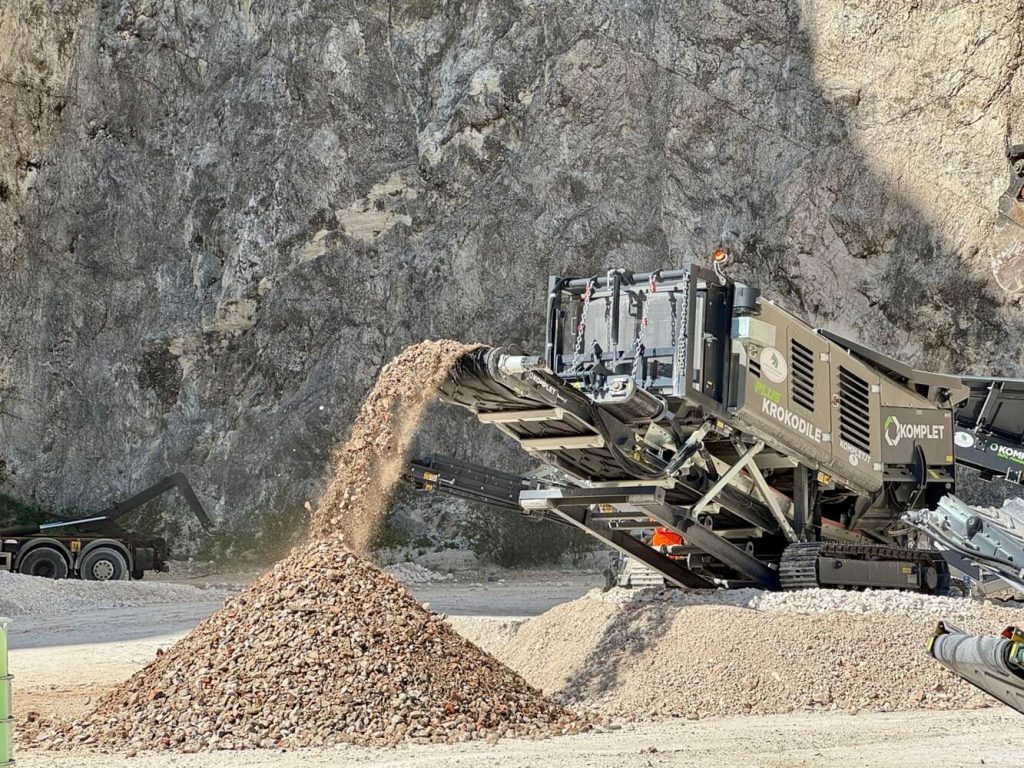
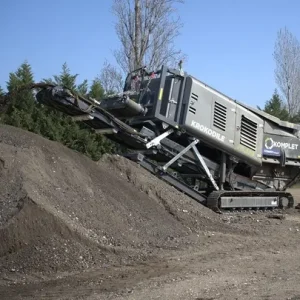
Example: Krokodile PLUS Slow-Speed Shredder
Slow-speed shredder economics work similarly to crusher economics, with one important difference: the available rental market for slow-speed shredders is much smaller than the rental market for crushers. Most regional rental houses don’t carry shredders. This means rental rates tend to be higher (less competition), rental availability tends to be lower (waitlists, equipment in use elsewhere), and the cost of mobilization tends to be higher (longer haul distances to find rentable equipment).
For operations with regular shredding needs — demolition contractors processing wood and mixed waste, recyclers processing C&D debris, contractors handling disaster cleanup work — the rental market is typically not deep enough to support pure-rental strategy. The Krokodile PLUS plus operating costs financed through Komplet Capital often produces lower lifetime cost than trying to rent shredder capacity through an under-supplied rental market. The shredder ROI math typically favors ownership at a much lower utilization threshold than crusher ROI math.
When Renting Is the Right Choice
Some operating profiles strongly favor renting, even for high-utilization users. The cleanest cases for renting:
Single Project, No Recurring Need
A contractor with a single specific project that needs crushing capacity for a defined duration, and no realistic pipeline of follow-on work. Rent for the duration, complete the project, and move on. Buying for a single project leaves the contractor with capital tied up in equipment they have no use for.
Trial Period Before Committing
A contractor evaluating whether to add crushing/screening/shredding to their service line, who wants to validate the operating model before committing capital. Rent for the trial period, evaluate actual demand and economics, then make an informed buy decision. Many Komplet customers go through this exact path — rent for 3-6 months, decide to buy, and the rental experience informs the buy decision.
Specific Equipment Needs Outside Normal Operations
A contractor who normally uses a specific crusher size but has an unusual project that needs a different size. Rather than buying a second crusher for the exception, rent the second size for the specific project. This is the classic ‘rent for peak capacity, own for base capacity’ strategy that produces the best economics for variable-volume operations.
Cash Flow Constraints That Make Financing Unworkable
If the operation can’t qualify for equipment financing, or if the operating cash flow can’t sustain monthly equipment payments, renting may be the only available option. Note: Komplet Capital offers 100% financing with 24-hour approvals, so this constraint is less common than contractors often assume — but it does apply to some operations.
When Buying Is the Right Choice
Continuous or Near-Continuous Use
Yards processing aggregate continuously, recycling operations running daily, contractors with sustained pipelines of demolition or civil work. If the equipment will be in operation for 90+ days per year, ownership math typically wins.
Multiple Project Sites Simultaneously
Contractors operating multiple project sites in parallel often need equipment available at any given site, on demand. Rental house lead times and equipment availability rarely match the responsiveness needed for multi-site coordination. Owned equipment is available the moment the site needs it.
Specific Equipment Configuration Required
If the operation has specific output requirements — DOT-spec aggregate, particular gradation needs, specific Tier 4 emissions configurations — owned equipment can be specified and configured to those requirements. Rental equipment is whatever the rental house has on the lot.
Tax Position Favors the Section 179 Deduction
For tax year 2026, the Section 179 maximum deduction is $2,560,000, with phase-out beginning at $4,090,000. Operations with sufficient taxable income to absorb the deduction may capture significant tax value from a year-of-purchase deduction that rental does not provide. Confirm specific eligibility with your CPA.
Long-Term Strategic Investment
Operations adding crushing/screening/shredding as a permanent service line — not a project-by-project capacity rental — should own. The strategic capacity becomes part of the operation’s identity, the operators learn the equipment, parts and service relationships develop, and the operation builds long-term operational knowledge. Rental doesn’t produce these durable assets.
How Komplet America’s Distribution Model Fits Both Sides
Komplet America’s distribution model is structured to serve both rent and buy customers, with different paths for each:
For Buyers
Direct sale through Komplet America (Hillsborough, NJ headquarters), through authorized Komplet equipment dealers, or through Komplet’s certified pre-owned program for buyers who want lower capital deployment than new equipment requires.
For Renters
Komplet America does not rent equipment directly to end-users. Rentals happen through authorized rental houses. To find a rental partner in your region, use the dealer locator at Find Your Komplet Dealer or call Komplet America at (908) 369-3340 for a referral.
For Rental Houses
Equipment rental businesses interested in joining Komplet’s rental network can apply through Become a Komplet Dealer. Komplet equipment is well-suited to rental fleet operations because of its compact transportability, single-operator design, and low maintenance requirements — all factors that produce better rental fleet economics.
Frequently Asked Questions
Does Komplet America rent equipment directly?
No. Komplet America is the U.S. distributor for Komplet SpA equipment, but it does not rent equipment directly to end-users. Rentals happen through authorized Komplet rental houses across the country. Komplet America can refer you to a rental partner in your region — call (908) 369-3340 for a referral.
How much does it cost to rent a mobile rock crusher?
Daily rental rates for compact mobile jaw crushers typically run $1,200-$2,500/day in U.S. markets, depending on size, market, and rental house pricing. Weekly and monthly rates offer better per-day economics. Mobilization fees (delivery and pickup) typically add $1,500-$5,000 per round trip. Specific rates vary by region — contact a Komplet authorized rental house for current pricing.
How many operating days per year justify buying instead of renting?
As a general rule of thumb, 60-90 operating days per year is the break-even zone. Below 30 days, renting clearly wins. Above 90 days, ownership clearly wins. The middle ground depends on rental rates, financing terms, project mix, and tax position.
Can I finance a Komplet rock crusher with no down payment?
Yes — Komplet Capital offers 100% financing for qualified buyers, with no down payment required, 24-hour approvals, and 36/48/60/72-month term options. Details at Komplet Capital financing.
Is rental cost tax-deductible?
Yes. Equipment rental costs are typically deductible as ordinary business expenses in the period incurred. Equipment purchases are typically deductible through Section 179 (up to $2,560,000 for tax year 2026), bonus depreciation, or regular MACRS depreciation depending on the structure. The tax treatment differs significantly between rent and buy — confirm with your CPA which path produces the best after-tax outcome for your specific tax situation.
What’s the resale value of a Komplet crusher after 5 years?
Compact mobile crushers from major manufacturers, including Komplet, typically retain 35-50% of original purchase price after 5 years of typical use, depending on hours, condition, market demand, and equipment configuration. This residual value is part of the ownership ROI calculation — equipment that retains value provides a partial return of capital at end-of-life that rental never produces.
Should I rent first to evaluate before buying?
Often a good strategy. Rental for a 1-3 month trial period validates the operating model, gives the operator equipment-specific experience, and reveals the actual project pipeline economics. Many Komplet customers follow this exact path — rent through an authorized rental house for 3-6 months, then convert to ownership through Komplet America once the operating model is validated.
Does Section 179 apply to financed equipment?
Yes. Section 179 deduction applies based on equipment placed in service during the tax year, regardless of whether the equipment was purchased with cash or financed. The full purchase price (subject to Section 179 limits) can typically be deducted in the year of purchase even when the equipment is financed. Confirm specific eligibility with your tax advisor.
Final Thoughts
The rent-versus-buy decision is fundamentally a usage-pattern decision wrapped in a tax and capital-allocation decision. Operations with sustained, predictable utilization typically come out ahead with ownership — particularly when financing-to-own through Komplet Capital captures the same monthly cost as rental but builds equity in the asset. Operations with intermittent, unpredictable, or single-project utilization typically come out ahead with rental from a Komplet authorized rental house. The middle ground requires honest analysis of the project pipeline, the local rental market, and the operation’s tax position.
The Conti family construction legacy that informs Komplet America’s approach to equipment dates to 1906, and the rent-versus-buy lesson from that lineage is straightforward: don’t tie up capital in equipment the operation doesn’t actually use enough to earn its keep, and don’t pay rental premiums on equipment the operation uses heavily enough to own outright. The variable separating profitable operations from break-even ones is rarely the equipment — it’s the discipline of matching the procurement strategy to the actual operating profile, and revisiting the decision as the operation grows.
To explore Komplet equipment for purchase, the full lineup is at Komplet equipment lineup. Pre-owned equipment is at Komplet’s pre-owned inventory. Komplet Capital financing is at Komplet Capital financing. To find a Komplet authorized rental house in your region, Find Your Komplet Dealer. To inquire about joining Komplet’s rental network, Become a Komplet Dealer. Or call Komplet America directly at (908) 369-3340.
Ready to Decide Between Renting and Buying?
- Pull your historical equipment utilization data — actual operating days per year, project mix, and pipeline visibility. Honest data is the foundation of the right decision.
- Call Komplet America at (908) 369-3340 to discuss your specific situation. The team can run a rent-vs-buy comparison with actual numbers for your operation.
- If renting: locate a Komplet authorized rental house at Find Your Komplet Dealer.
- If buying or financing: discuss financing through Komplet Capital at Komplet Capital financing — 100% financing, 24-hour approvals, no down payment options.
- Talk to your CPA about Section 179 — for tax year 2026, the maximum deduction is $2,560,000.
Never enough.
Disclaimer: ROI figures, payback timelines, rental rate ranges, and ownership cost examples shown above are illustrative only based on sample assumptions. Actual results depend on local market rental rates, financing terms, project mix, equipment utilization, and other factors. Komplet America makes no guarantee of specific financial returns.
Disclaimer: Rental rate ranges are illustrative and vary significantly by region, rental house, equipment configuration, and rental duration. Contact specific rental houses for current rates.
Disclaimer: Komplet America is an equipment distributor and does not rent equipment directly to end-users. Rentals happen through authorized rental house partners. Equipment rental terms, availability, and pricing are set by the individual rental house — Komplet America does not control or guarantee specific rental terms.
Disclaimer: Section 179 limits are 2026 figures based on the One Big Beautiful Bill Act of 2025 and adjust annually. Komplet America is an equipment distributor, not a tax advisor. Consult a qualified CPA before making decisions based on tax treatment.
Equipment prices are subject to change. Contact Komplet America at (908) 369-3340 for current pricing.