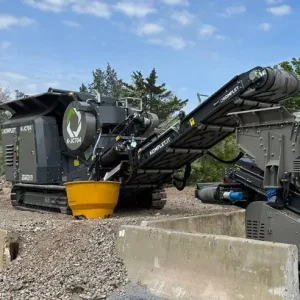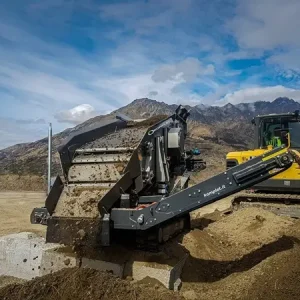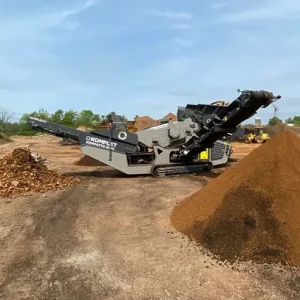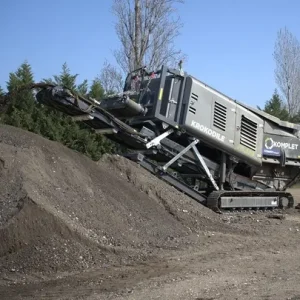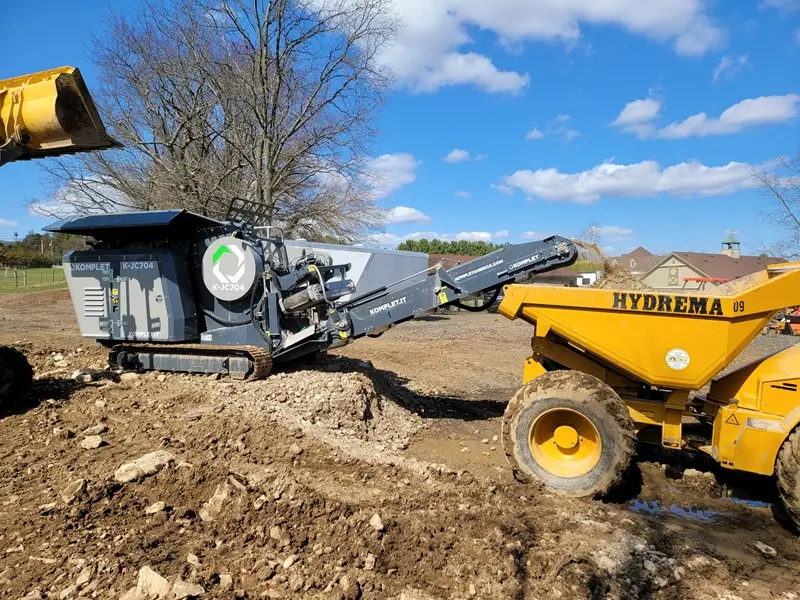

Operating a compact mobile concrete crushing machine efficiently combines safety discipline, proper feed management, OSHA compliance practice, and adherence to OEM-specified maintenance schedules. Operators who execute the workflow correctly produce premium spec aggregate at competitive cost; operators who don’t either damage equipment, waste fuel, accelerate wear, or create safety incidents that compound the operational cost beyond what the equipment economics can offset. The fundamentals aren’t complicated — but they require consistent execution across every shift.
This basic guide walks through efficient concrete crushing machine operation — pre-startup procedures, feed management, OSHA crystalline silica compliance, safety best practices, the standard productivity features that make compact mobile equipment efficient, and the maintenance discipline that keeps equipment producing rated economics. The guidance applies to the full Komplet America compact mobile jaw crusher lineup — though specific operational details vary by machine model and operators should always reference the OEM operator’s manual for their specific equipment.
Terminology Note: Concrete vs. Cement
Quick clarification — concrete crushing machines process CONCRETE (the hardened mixture of cement + aggregate + water that makes up structural slabs, foundations, and pavement) — not cement (the powdered binding material that’s an ingredient in concrete). Cement processing happens at cement plants using fundamentally different equipment (typically HPGR-style mills from manufacturers focused on cement plant equipment). Compact mobile concrete crushers like Komplet’s K-JC lineup handle the demolition, excavation, and recycling work that produces RCA from used concrete structures.
Pre-Startup Procedures
Site Inspection
Before each shift: walk around the equipment to inspect for visible damage, leaks, loose fasteners, debris in critical areas (jaw chamber, conveyor area, engine bay). Check ground conditions where the equipment is positioned — soft ground, recent rain, or unstable terrain may require repositioning before operation. Confirm clearance from overhead obstructions (power lines, building overhangs, tree limbs).
Pre-Operational Equipment Checks
Per OEM operator’s manual specifications: check fluid levels (engine oil, hydraulic fluid, coolant, fuel), inspect belt tension and alignment, verify all guards and safety covers are in place, test wireless remote control before crushing, verify magnetic belt operation if processing reinforced concrete. Always reference the OEM operator’s manual for the complete pre-startup checklist specific to your equipment model.
Operator Communication
Brief loader operators, ground crew, and any nearby workers on the day’s plan. Establish clear hand signals or radio communication protocols. Confirm everyone knows the location of emergency stop controls. For operations with multiple equipment running together (jaw crusher + screener + conveyor + loader), coordinate the workflow before startup.
PPE Verification
Standard construction PPE requirements: hard hat, safety glasses, hearing protection (concrete crushing generates significant noise), steel-toed boots, high-visibility clothing, work gloves. Respiratory protection may be required depending on dust exposure assessment — see OSHA crystalline silica section below.
Efficient Operational Practices
Feed Material Preparation
Pre-process oversized demolition material with excavator-mounted hydraulic breakers before feeding the crusher. Match feed size to jaw opening:
- K-JC 503 (19″ x 12″ jaw): recommended max feed approximately 9-1/2″ minus
- K-JC 604 (23″ x 16″ jaw): max feed approximately 12-3/4″
- K-JC 704 PLUS (27″ x 16″ jaw): max feed approximately 12-3/4″
- K-JC 805 (31″ x 21″ jaw): max feed approximately 16-3/4″
Pre-sort foreign objects (lumber, large plastic items, metal items beyond rebar) from feed material when practical. Komplet’s reverse jaw function handles occasional uncrushable obstructions, but frequent obstructions reduce throughput and accelerate wear.
Optimal Feed Rate
Match feed rate to crusher capacity. Overfeeding causes jams, stalling, and broken jaw plates; underfeeding wastes fuel and operator time. Real-world utilization typically runs 60-70% of rated capacity once operational reality (loading time, repositioning, breaks, weather delays) is factored in.
Ultrasonic Feed Sensor (K-JC 503)
The K-JC 503 includes a standard ultrasonic feed sensor that automatically regulates feeder belt speed based on chamber load — preventing overfeeding that would cause jams and underfeeding that would reduce throughput. Other Komplet jaw crushers offer this as an option. The ultrasonic sensor handles feed rate optimization automatically; the operator focuses on overall workflow management.
Jaw Setting Adjustment
Komplet jaw crushers feature hydraulically adjustable jaw setting via wireless remote — output size adjustment without manual tooling. Adjust jaw setting to match the target output spec for your customer or downstream process. The K-JC 503 specifically supports output range from 3/4″ to 3-1/4″ through hydraulic adjustment; larger Komplet jaw crushers offer similar adjustment ranges.
Continuous Monitoring
Watch for unusual sounds, vibrations, smoke, or output quality changes. Production monitoring through the day catches developing issues before they become equipment failures. Record approximate hours and material processed for service interval tracking.
Reverse Jaw Function for Uncrushable Material
All Komplet jaw crushers include reverse jaw function — clears uncrushable obstructions in seconds via wireless remote without requiring chamber entry. When the operator notices unusual stalling or sustained chamber pressure, the reverse jaw function clears the obstruction safely. NEVER enter the crushing chamber while the equipment is running, and follow OEM lockout/tagout procedures before any chamber entry for service.
OSHA Crystalline Silica Compliance
Concrete crushing generates crystalline silica dust. OSHA’s permissible exposure limit (PEL) is 50 ug/m3 averaged over an 8-hour time-weighted average. OSHA’s construction silica standard (29 CFR 1926.1153) applies to most concrete demolition and crushing operations. Compliance requirements include exposure assessment, engineering controls, written exposure control plan, training, and medical surveillance for affected workers.
Engineering Controls
All Komplet jaw crushers ship with standard water-spray dust suppression specifically engineered for OSHA crystalline silica compliance. The water-spray system applies water at the jaw discharge and conveyor transfer points where dust generation is highest. Engineering controls (like the standard dust suppression) should be the primary compliance approach.
Operational Best Practices for Silica Compliance
- Verify dust suppression operating at startup and throughout the shift — adequate water supply, functional spray nozzles, proper application coverage
- Position operators upwind of dust-generating areas when practical
- Maintain safe distance between non-essential personnel and active dust-generating areas
- Conduct periodic exposure monitoring per the operation’s written exposure control plan
- Provide respiratory protection when exposure assessment shows controls alone may not maintain compliance
- Document silica-related training for affected workers
Consult Compliance Resources
OSHA crystalline silica compliance is a complex regulatory area beyond the scope of this guide. Operations should consult the OSHA construction silica standard (29 CFR 1926.1153) directly, an industrial hygiene professional for exposure assessment, and a workplace safety attorney for compliance program development. The information here describes Komplet’s standard equipment features; it does not replace professional silica compliance program development.
Safety Best Practices
Wireless Remote Control Operation
All Komplet jaw crushers include wireless remote control — operator handles deployment, operation, jaw setting adjustment, conveyor positioning, and reverse jaw function from a safe position. Critical for safety: the operator stays clear of the crushing chamber, conveyor pinch points, and other moving parts while controlling operation remotely. Verify wireless remote function before crushing each shift.
Maintain Safe Distance from Moving Parts
All personnel must maintain safe distance from the crusher chamber, drive belts, hydraulic pistons, and conveyor pinch points during operation. Komplet’s wireless remote enables safe-distance operation; equipment lacking remote control would require closer operator presence with associated risk.
Lockout/Tagout for Service
Any service or maintenance work that requires reaching into moving parts, opening guards, or working under raised conveyors requires lockout/tagout per OSHA 29 CFR 1910.147. Follow OEM-specified lockout/tagout procedures specific to your equipment model. Key principle: equipment must be completely de-energized and locked out before any work that could expose personnel to stored energy or accidental startup.
Emergency Stop Controls
All Komplet equipment includes emergency stop controls. Operators and ground crew should know the location of all emergency stops before operation begins. Test emergency stop function at startup to verify proper operation.
Daily Safety Briefings
Brief shift on the day’s plan, equipment status, weather conditions, hazards specific to the day’s work, and any incidents from prior shifts. Document briefings per the operation’s written safety program. For larger operations, formal toolbox talks may be required by contract or insurance terms.
Scheduled Maintenance Approach
Compact mobile crushers like Komplet’s lineup require scheduled service intervals to maintain rated performance and equipment life. The specific maintenance schedule, procedures, and intervals are defined by the OEM operator’s manual for each machine model.
Reference the OEM Operator’s Manual
Every Komplet equipment ships with complete OEM operator’s manuals specific to each machine model. The manual specifies daily inspections, service intervals (typically based on operating hours), lubrication points, fluid changes, wear-part replacement procedures, and authorized service procedures. Operators and maintenance technicians should reference the operator’s manual for all maintenance work — the information here provides general guidance only.
Daily Pre-Shift Inspections
Visual inspection for damage, leaks, loose fasteners, debris. Fluid level checks per OEM manual. Belt tension and alignment verification. Function test of safety systems (emergency stops, guards). Test of wireless remote control. Dust suppression water supply verification.
Periodic Service Intervals
Per OEM-specified hour intervals (typically every 250-500 operating hours depending on procedure): engine oil and filter changes, hydraulic fluid checks, air filter inspection/replacement, fuel filter replacement, lubrication of grease points per OEM-specified schedule. Major service items (typically annually or per OEM-specified longer intervals) require dealer-trained technicians.
Wear Part Replacement
Jaw plates (the wear surfaces in jaw crushers — NOT ‘liners’ which is cone crusher terminology) require replacement based on wear monitoring and OEM-specified inspection intervals. Other wear parts (toggles, conveyor belts, hopper liners) replace per OEM specifications. Komplet America’s parts inventory is forecasted 12 months in advance, supporting fast wear-part availability when service items are needed.
Genuine Komplet Parts
Use genuine Komplet replacement parts to maintain equipment performance, warranty coverage, and operator safety. Aftermarket parts may not match OEM specifications, may compromise equipment performance, and may void warranty coverage. Komplet America’s authorized dealer network supplies genuine parts.
Service Documentation
Record service activities, hours at service, parts replaced, and any unusual findings. Service documentation supports warranty claims, operational analysis, and equipment resale value. For operations with multiple machines, consistent service documentation across the fleet helps identify patterns and forecast service requirements.
Operator Training and Skill Development
Trained operators produce more output per shift, identify developing issues earlier, and operate equipment more safely than untrained operators. Komplet equipment includes wireless remote control and standard productivity features that simplify operation, but proper training amplifies these benefits significantly.
OEM-Provided Training
Komplet America’s authorized dealers provide operator training as part of new equipment delivery and on-request training for additional operators. Training covers equipment operation, daily inspections, basic troubleshooting, safety procedures, and OEM-specified maintenance basics.
Continuous Skill Development
Even experienced operators benefit from periodic refresher training and updates on equipment changes, regulatory updates, and safety best practices. Operations with multiple operators benefit from cross-training so equipment operation isn’t dependent on single individuals.
Komplet America’s Compact Mobile Lineup
- K-JC 503 — up to 34 US tph, 19″ x 12″ jaw, 25 HP Tier 4 Final, ~7,496 lb. Tight-access urban demolition. Standard ultrasonic feed sensor.
- K-JC 604 — up to 55 US tph, 23″ x 16″ jaw, 55 HP, ~19,400 lb. Mid-range demolition.
- K-JC 704 PLUS — up to 90 US tph, 27″ x 16″ jaw, 74 HP, ~26,455 lb. Komplet’s best-selling crusher.
- K-JC 805 — up to 160 US tph, 31″ x 21″ jaw, 130 HP, ~49,600 lb. Largest jaw crusher in the lineup.
- K-IC 70 — up to 90 US tph, 25″ x 20″ inlet, 100 HP. Premium cubical secondary aggregate.
Frequently Asked Questions
What’s the most important thing to do before starting concrete crushing?
Site inspection, pre-operational equipment checks per OEM operator’s manual, operator/crew communication, and PPE verification. Skipping pre-startup procedures is the most common cause of preventable equipment damage and safety incidents. Reference the OEM operator’s manual for the complete pre-startup checklist specific to your equipment.
How do I know what feed size my crusher can handle?
Match feed size to jaw opening with appropriate pre-processing. K-JC 503 (19″ x 12″ jaw): max feed 9-1/2″ minus. K-JC 604 (23″ x 16″ jaw): max feed approximately 12-3/4″. K-JC 704 PLUS (27″ x 16″ jaw): max feed approximately 12-3/4″. K-JC 805 (31″ x 21″ jaw): max feed approximately 16-3/4″. Forcing oversized material through a crusher with insufficient jaw opening causes jams, broken jaw plates, and downtime.
Does my crusher need OSHA silica compliance equipment?
Yes — concrete crushing generates crystalline silica dust subject to OSHA’s permissible exposure limit of 50 ug/m3 over 8 hours. All Komplet jaw crushers ship with standard water-spray dust suppression specifically engineered for OSHA crystalline silica compliance. Operations should also have a written exposure control plan, exposure assessment, training program, and consult with industrial hygiene professionals for compliance program development.
How often does the equipment need maintenance?
Maintenance intervals follow OEM-specified schedules in the operator’s manual for each machine model. Daily pre-shift inspections; periodic service intervals typically every 250-500 operating hours; major service typically annually or per OEM-specified longer intervals. Reference the operator’s manual for your specific equipment — maintenance schedules vary by model.
Can I use aftermarket parts to save money?
Komplet America recommends genuine Komplet parts. Aftermarket parts may not match OEM specifications, may compromise equipment performance, may accelerate wear on adjacent components, and may void warranty coverage. The cost savings of aftermarket parts often disappear once accelerated wear or component damage is factored in. Genuine parts also support equipment resale value.
Do operators need formal training?
Yes — formal training significantly improves operational efficiency, equipment longevity, and safety. Komplet America’s authorized dealers provide operator training as part of new equipment delivery and on-request training for additional operators. OSHA may require documented training for silica exposure compliance regardless of operational training.
Where can I find the OEM operator’s manual for my Komplet equipment?
All Komplet equipment ships with complete OEM operator’s manuals. If you need a replacement copy, contact Komplet America at (908) 369-3340 or your local authorized dealer. Reference the operator’s manual specific to your machine model — operational details vary by equipment.
What’s the warranty on Komplet equipment?
All new Komplet equipment ships with a 1-year / 1,000-hour warranty (whichever comes first). Komplet America’s parts inventory is forecasted 12 months in advance, supporting fast wear-part availability when service items are needed. Authorized dealers across North and Central America provide local service support — call (908) 369-3340 for parts, service, or technical questions.
Final Thoughts
Efficient concrete crushing machine operation combines disciplined pre-startup procedures, correct feed material management, OSHA crystalline silica compliance, safety best practices, and adherence to OEM-specified maintenance schedules. The standard productivity features on Komplet equipment (ultrasonic feed sensor, wireless remote control, hydraulic jaw setting adjustment, reverse jaw function, standard dust suppression, magnetic separation, Tier 4 Final emissions compliance) simplify operation and support compliance — but they don’t replace operator skill, training, and consistent execution. Operations that get the fundamentals right produce premium spec aggregate at competitive cost; operations that skip the fundamentals pay through equipment damage, accelerated wear, safety incidents, or compliance issues.
Browse Komplet America’s compact mobile crusher lineup or call us to discuss equipment selection, training, and operational support for your specific concrete crushing operation.
Ready to Talk Concrete Crushing Operations?
- Call (908) 369-3340
- Email [email protected]
- Schedule a demo or request a quote
- Find your local Komplet dealer for rental availability
- Ask about our 1-year / 1,000-hour warranty and equipment financing options
Never enough — that’s how we approach service, support, and helping operations execute concrete crushing efficiently and safely.
Disclaimer: This article provides general guidance on concrete crushing machine operation, safety practices, and maintenance approach. The information here does not replace, supersede, or modify any guidance provided by the original equipment manufacturer (OEM). All operators and maintenance technicians should refer to the user manual and engine manual specific to their make and model of equipment for complete operational, safety, and maintenance procedures. OSHA crystalline silica compliance is a complex regulatory area; operations should consult OSHA standards directly, industrial hygiene professionals, and qualified safety/legal advisors for compliance program development. For technical questions about specific Komplet equipment operation, contact Komplet America’s service team at (908) 369-3340.