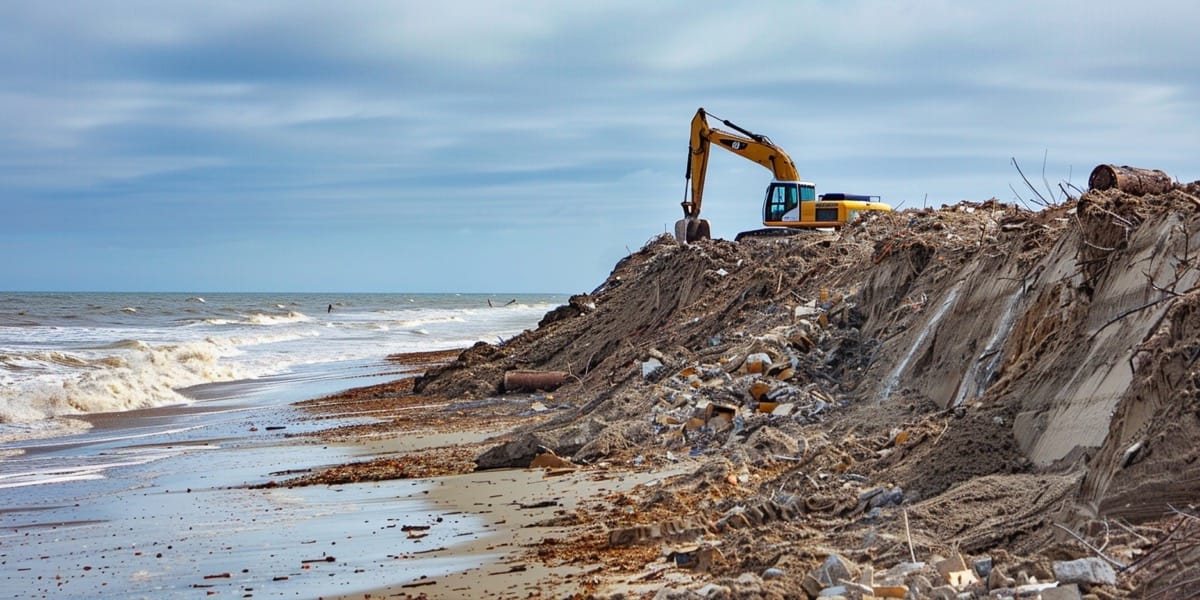

Hurricanes, tornadoes, floods, wildfires, and other major storms generate enormous volumes of debris that overwhelm normal waste-handling infrastructure. Damaged structural wood, broken concrete and asphalt, downed trees, drywall, plastics, mixed bulky waste — all of it has to be cleared before utilities can be restored, roads reopened, and communities returned to normal operation.
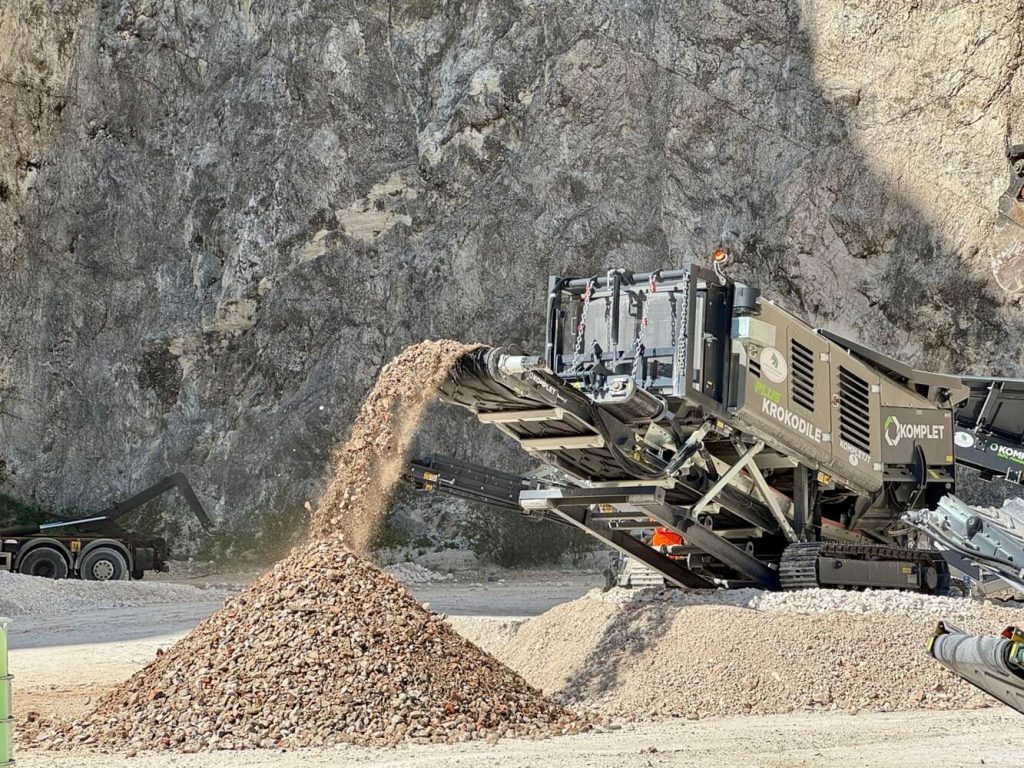
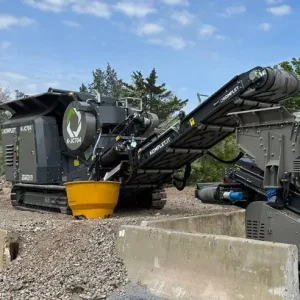
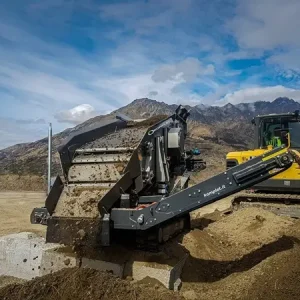
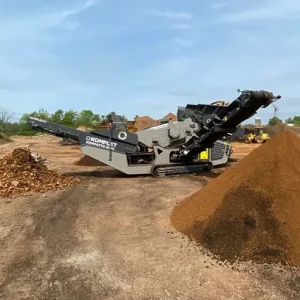
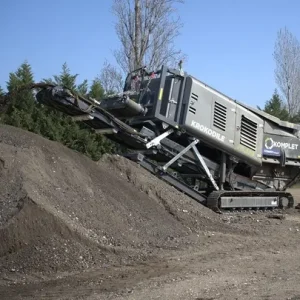
Mobile slow-speed shredders are practical equipment for the on-site phase of that work. Rather than hauling unprocessed bulky debris long distances to overwhelmed processing facilities, the equipment goes to the debris field. The Krokodile PLUS — Komplet America’s slow-speed mobile shredder — is built for that kind of mixed-material on-site processing.
The Role of Mobile Shredders in Disaster Cleanup
Disaster events leave behind debris fields that are by definition mixed, contaminated, and unpredictable. After a major storm, response and recovery teams typically face:
- Massive volumes — single events can generate millions of cubic yards of debris across the impact zone
- Mixed material streams — wood, concrete, asphalt, drywall, plastics, household debris, vegetation, and bulky waste all in the same loads
- Light contamination with embedded ferrous metal — fasteners, light rebar, fixtures, banding
- Time pressure — debris must be cleared to restore access, utilities, and normal operations
- Stressed regional disposal capacity — local landfills and transfer stations are typically overwhelmed after major events
On-site mobile shredding addresses the bottleneck. By volume-reducing debris at the staging area, fewer truckloads are required to move the same material, regional disposal capacity is preserved for genuine residue rather than bulky raw debris, and the recovery timeline accelerates.
How the Krokodile PLUS Improves Debris Management After Disasters
The Krokodile PLUS is purpose-built for the kind of mixed material processing that disaster recovery requires. Key characteristics that fit the application:
Wireless Remote Operation
Disaster sites are unpredictable — uncertain footing, debris fields, ongoing utility work, and other equipment in the area. The Krokodile PLUS is operated by wireless remote — operators stand outside the active machine zone and direct feed and discharge from a safe distance. Material is delivered to the hopper by a separate loader or excavator operator. This is a fundamental safety advantage in disaster conditions.
Quick-Change Shaft System for Mixed Material
Disaster debris is mixed by definition. The Krokodile PLUS supports two distinct shaft and tooth configurations that can be swapped to match the dominant material:
- C&D / Asphalt teeth and shafts — for concrete, asphalt, brick, masonry, and dense rubble
- Wood / Lightweight Waste teeth and shafts — for wood, drywall, plastics, mixed waste, and lighter C&D debris
In a multi-day disaster response, operators may run wood-heavy debris one day and concrete-heavy debris another. The shaft swap matches the equipment to the day’s feed rather than rejecting material the machine cannot handle.
Throughput on Disaster Debris
Published throughput figures under ideal conditions:
- Concrete and asphalt (C&D shaft): up to 175 US tons per hour
- Mixed waste (waste shaft configuration): up to 19 US tons per hour
- Plastics (waste shaft configuration): up to 18 US tons per hour
Disaster recovery throughput is typically lower than ideal because debris is mixed, contaminated, wet, and feed consistency is unpredictable. Plan capacity around realistic field conditions, not lab maximums.
Integrated Magnetic Separator
Disaster debris almost always includes embedded ferrous metal — nails, fasteners, light rebar, fixtures, banding. The Krokodile PLUS includes an integrated magnetic separator that extracts ferrous content from the discharge stream automatically. Captured material can be collected separately and recycled rather than landfilled.
Tracked Mobility
The Krokodile PLUS operates on a tracked chassis with hydraulic mobility on-site, and at 34,171 lb operating weight it transports between staging areas on a standard heavy-haul trailer. Multi-zone disaster operations can stage the machine at one location for days or weeks, then relocate as the recovery progresses.
Important Note: What the Krokodile PLUS Does and Does Not Process
The Krokodile PLUS handles a wide range of disaster debris — but it is not unlimited. Understanding the boundaries protects operators and equipment.
Materials It Processes Well in Disaster Recovery
- Wood debris — downed trees, framing lumber, fencing, decking, branches, brush
- Drywall and gypsum board
- Plastics and mixed lightweight waste
- Concrete, asphalt, brick, block, and masonry rubble (with the C&D shaft)
- Mixed C&D streams with multiple material types in one load
- Light embedded ferrous content — nails, fasteners, light rebar, banding (extracted by the magnetic separator)
Materials It Does Not Process
The Krokodile PLUS is not designed to shred metal as a primary material. Heavy ferrous content — clean steel scrap, intact pipe, structural rebar bundles, vehicle bodies, large appliances — should be removed before feeding. The integrated magnetic separator extracts ferrous content from the discharge; it is not a metal shredder.
Hazardous materials, contaminated soils, asbestos-containing material, and similar regulated waste streams require specialized handling and are outside the scope of any C&D shredder. Disaster recovery operations should follow incident-command guidance for separating regulated waste streams from general debris before feeding.
Practical Considerations for Disaster Deployments
Coordination with Incident Command
Disaster debris operations are typically coordinated through municipal, county, state, or federal emergency management. Permitting, staging area assignment, hours of operation, and disposal routing follow the local incident command structure. Coordinate with local authorities before mobilizing — and verify that on-site processing is permitted at the proposed staging location.
Site Selection
The processing area needs to be a level, prepared work area with safe approach for feed loaders or excavators, room for the discharge pile, and room for trucks to load and exit. Coastal staging areas, parking lots, and graded vacant lots can all work — but they need to be assessed before the equipment arrives.
Operator Availability
Trained operators are required during processing. Verify operator availability before mobilizing equipment, and confirm that any contracted operators are familiar with the Krokodile PLUS or have completed Komplet operator training. Untrained operators in disaster conditions are a safety hazard.
Maintenance Access in the Field
Disaster deployments are typically extended-duration, hard-use operations. Plan for fuel resupply, scheduled maintenance per the Komplet operator’s manual, wear-part inventory (teeth, shafts, hydraulic fluids, filters), and access to Komplet-certified service if non-routine repair is needed. Komplet America’s authorized dealer network covers North and Central America — for service or parts needs in a specific region, find your local Komplet dealer or call 908-369-3340.
Coastal and Wet Conditions
Disaster debris from coastal areas is often salt-contaminated and wet. Salt accelerates corrosion, and wet material can affect throughput and increase wear. For coastal deployments, plan for additional cleaning, inspection, and maintenance frequency per the Komplet operator’s manual guidance for marine-exposed environments.
Material Recovery in Disaster Recovery
Recovery is not the primary goal in disaster mode — clearing access is. But where recovery opportunities exist without slowing the response, they reduce pressure on regional disposal and recover value from what would otherwise be landfilled debris:
- Clean wood debris can become mulch, biomass feedstock, or composted material
- Concrete and asphalt rubble can become recycled aggregate (RCA) for road base, fill, or backfill — typically with downstream processing through a Komplet compact crusher and screener
- Ferrous content captured by the magnetic separator can be recycled at scrap metal facilities
- Volume reduction across all material types reduces pressure on regional disposal capacity
Specific recovery opportunities depend on local market acceptance and disaster-recovery program guidance — coordinate with incident command and local recyclers to confirm what outlets are accepting material during the response.
Frequently Asked Questions
Can the Krokodile PLUS process disaster debris with embedded metal?
Yes, with limits. Light embedded metal — nails, fasteners, light rebar fragments, banding — is handled by the C&D or wood/waste shaft, and the integrated magnetic separator extracts ferrous content from the discharge stream. Heavy structural rebar bundles, intact steel beams, vehicle parts, and large appliances should be removed before feeding.
How much disaster debris can the Krokodile PLUS process per hour?
Up to 175 US tons per hour on concrete and asphalt with the C&D shaft, up to 19 US tph on mixed waste, and up to 18 US tph on plastics with the wood/waste shaft, all under ideal conditions. Disaster recovery throughput is typically lower than ideal because debris is mixed, contaminated, and feed consistency is unpredictable.
How is the Krokodile PLUS operated in disaster conditions?
By wireless remote, the same as any other Krokodile PLUS operation. All shredding modes, shaft direction, hopper position, and discharge belt operation are controlled wirelessly. Operators stand outside the active machine zone — particularly important in disaster conditions where the surrounding environment is unpredictable.
Can the Krokodile PLUS be moved between staging areas during a recovery operation?
Yes. The Krokodile PLUS is mounted on a tracked chassis for jobsite mobility, and at 34,171 lb operating weight transports between locations on a standard heavy-haul trailer. For multi-area recovery operations, the machine can be staged at one location for days or weeks, then relocated as the recovery progresses.
Does Komplet America provide rental for disaster recovery deployments?
Rental availability varies by region and is offered through Komplet’s authorized dealer network. For disaster recovery operations, contact Komplet America directly at 908-369-3340 or find your local Komplet dealer for current availability.
What kinds of debris can the Krokodile PLUS NOT process?
Heavy clean steel scrap (intact pipe, structural rebar bundles, vehicle bodies, large appliances), hazardous materials, contaminated soils, asbestos-containing material, and other regulated waste streams require specialized handling and should not be fed to a general C&D shredder. Always follow incident command guidance for separating regulated waste streams from general debris.
What kind of operator training is required?
Operators must read the Komplet operator’s manual for the specific machine, complete hands-on training (from Komplet, the dealer, or an experienced site supervisor), and demonstrate competence with the wireless remote and emergency procedures before solo operation. For training options, call 908-369-3340.
What financing or rental options are available for emergency deployment?
Komplet Capital offers financing tailored to the equipment industry with terms typically up to 72 months. For emergency deployments, contact Komplet America at 908-369-3340 to discuss the fastest path to availability — purchase, financing, or rental through a regional dealer.
Final Thoughts
Disaster cleanup is brutal, time-pressured work where the right equipment can dramatically accelerate the recovery timeline. Mobile slow-speed shredding addresses the bottleneck — equipment goes to the debris, multi-material capability handles whatever a storm leaves behind, wireless remote operation keeps operators safe in unpredictable conditions, and on-site volume reduction relieves pressure on overwhelmed regional disposal infrastructure. The Krokodile PLUS is purpose-built for this kind of work.
Komplet America stocks the Krokodile PLUS at the Hillsborough, NJ headquarters and supports it through Komplet-certified service and the authorized dealer network across North and Central America. For disaster recovery deployments, the priority is getting the right equipment in the right place quickly — call 908-369-3340 to discuss your specific situation and the fastest path to availability.
Learn more about the Krokodile PLUS slow-speed mobile shredder, explore Komplet’s complete equipment lineup, or review equipment financing options through Komplet Capital.
Ready to Plan Your Disaster Recovery Equipment?
- Call Komplet America at 908-369-3340 to discuss disaster recovery deployments, equipment availability, or rental options
- Request a yard demonstration in Hillsborough, NJ — see the Krokodile PLUS process mixed debris before deployment
- Review Krokodile PLUS specifications and pricing
- Explore equipment financing through Komplet Capital — Section 179 eligible for U.S. tax purposes
- Find your local Komplet dealer for regional rental availability and disaster-response support
Never enough.
Disclaimer: All operating, maintenance, and service guidance in this article is general in nature. Always refer to the official Komplet operator’s manual for the specific machine model and serial number, and follow OEM intervals and procedures. Coastal and salt-water-exposed environments require additional cleaning, inspection, and corrosion-protection measures. For warranty-protected work, contact Komplet America at 908-369-3340 or your authorized Komplet dealer.
Disclaimer: Production rates and throughput figures (“up to” tons per hour) reflect maximum potential output under ideal conditions. Actual disaster-recovery throughput will vary based on material composition, contamination level, moisture content, salt exposure, operator experience, and field conditions. Komplet America makes no guarantee of specific throughput, recovery rates, or financial returns. Disaster recovery operations should follow incident command guidance for separating regulated waste streams (hazardous materials, asbestos, contaminated soils) from general debris before feeding any C&D shredder.