
Crushed concrete — recycled concrete aggregate (RCA) — is one of the highest-leverage materials in modern construction. Demolition concrete that would otherwise become a tipping fee becomes a saleable product, base material, fill, or drainage stone. The economics work for both the demolition contractor producing the material and the project consuming it: typically 30-50 percent cheaper than virgin crushed stone for most base and fill applications, with comparable or better performance when properly graded and compacted. The catch is that RCA is engineered material, not just rubble — and its actual performance depends on the feed material, the crushing process, the screening and quality control, and the application choice.
This guide walks through what crushed concrete actually is, the properties that distinguish it from virgin aggregate, the top applications where RCA performs as well or better than virgin material, the limitations contractors should be aware of, the equipment and process that produces consistent spec-quality RCA, and the practical tips for recycling concrete on-site or at a recovery yard. Throughout: the framing is practical and focused on what produces good RCA versus what produces material that won’t perform.
What Is Crushed Concrete (RCA)?
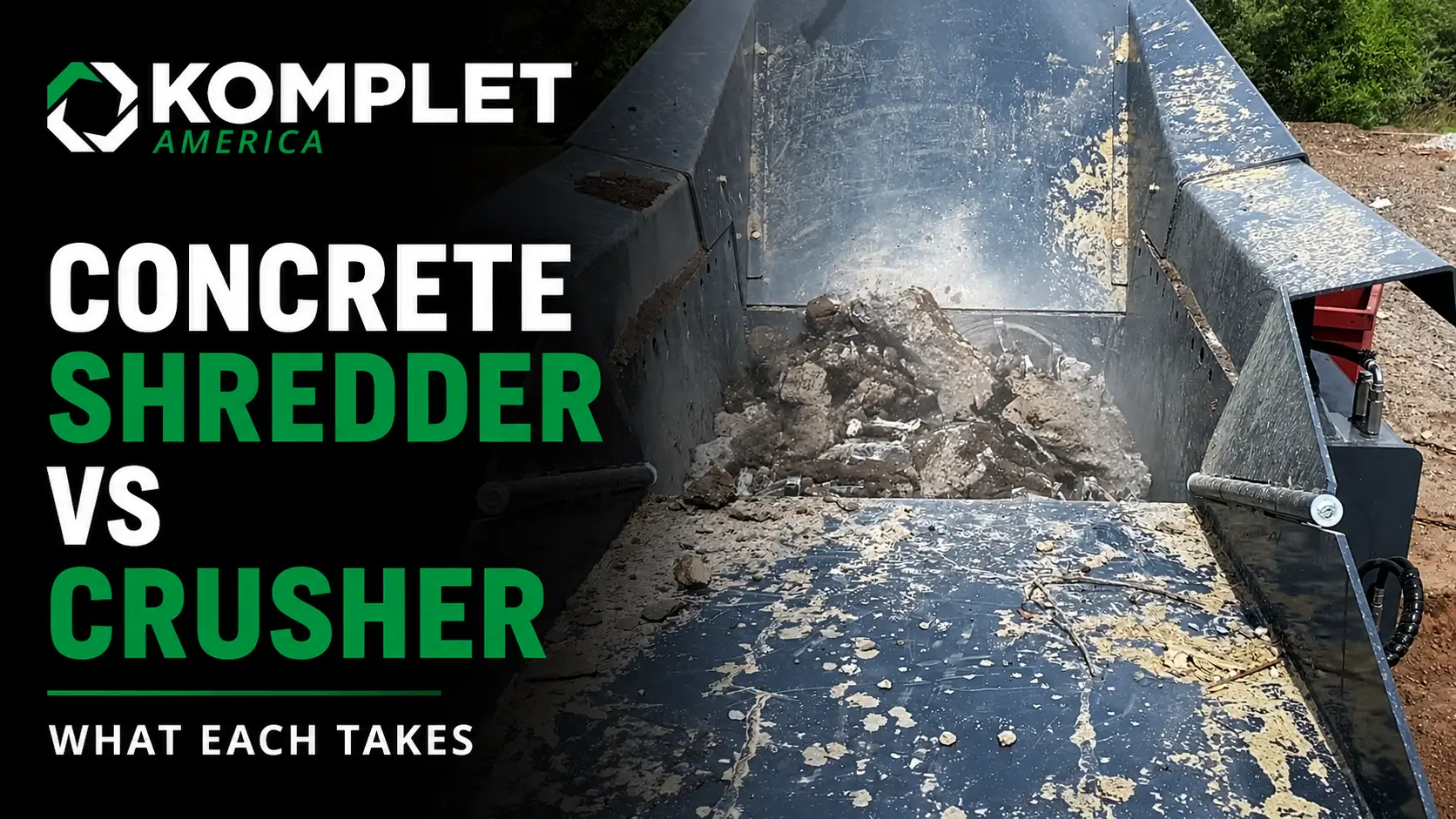
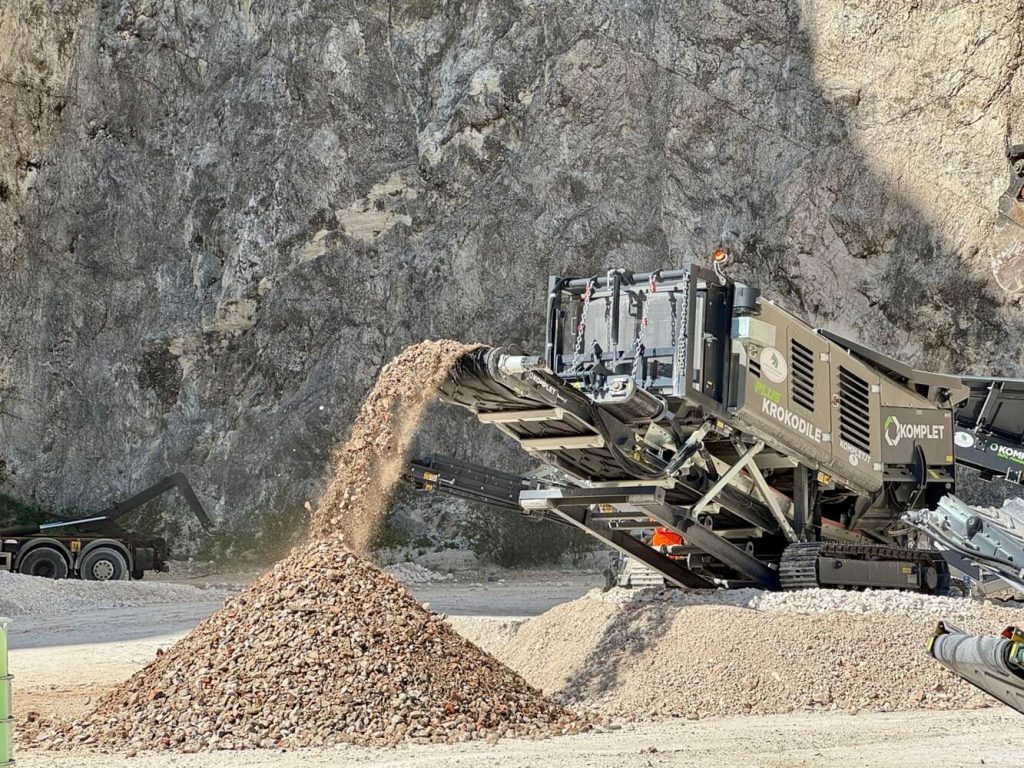
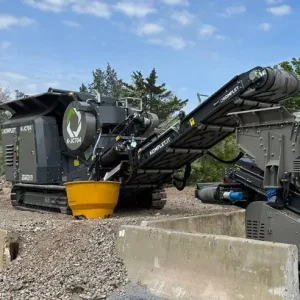
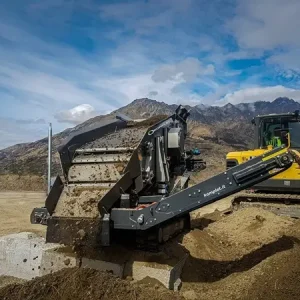
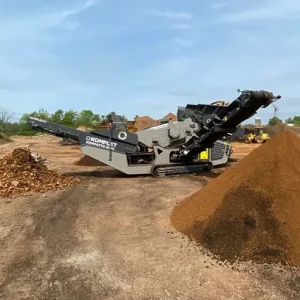
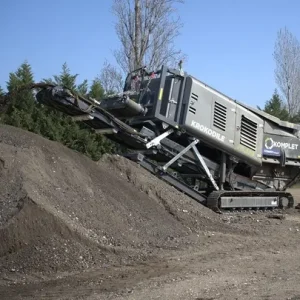
Crushed concrete is the product of mechanical reduction of demolition concrete back to spec-graded aggregate. The source material is typically slab concrete, foundation concrete, paving concrete, sidewalk concrete, structural concrete, and concrete with embedded rebar from building demolition, road removal, and infrastructure replacement projects. The processing chain is straightforward: a mobile jaw crusher reduces the demolition concrete to spec size; a magnetic separator captures rebar and other ferrous content for scrap recovery; and a vibrating screener separates the crushed output into spec-graded products (fines, ¾” minus, 1½” minus, riprap, etc.).
Note: crushed concrete (RCA) and reclaimed asphalt pavement (RAP) are two different products with different properties and applications. RCA is made from concrete; RAP is made from asphalt. They’re often processed with similar equipment, but they don’t substitute for one another and shouldn’t be co-mingled in stockpiles. Keep them separate from the moment they enter the processing chain.
RCA composition is typically 60-90% concrete (fractured aggregate, hydrated cement paste, embedded mortar) plus minor fractions of recovered demolition material — small percentages of rebar fragments not captured by the magnet, occasional brick or masonry, residual contamination from the demolition process. Quality RCA targets the highest possible concrete fraction by minimizing source contamination during demolition and during processing.
Properties of Crushed Concrete vs. Virgin Aggregate
RCA properties differ from virgin crushed stone in several measurable ways. Some of these differences matter for performance; others are cosmetic. The contractor evaluating RCA for a specific application needs to know which differences affect that application.
Density
RCA is typically 5-15% less dense than virgin aggregate, due to the porous nature of hydrated cement paste in the recycled material. The lower density means slightly different volumetric calculations for the same target tonnage, and slightly different compaction behavior in placed-and-compacted applications.
Water Absorption
Research studies have shown that RCA tends to be more porous than virgin aggregate, with water absorption typically 2-3 times higher. This affects performance in wet environments and freeze-thaw applications. Properly graded, well-compacted RCA with good drainage performs fine in most applications — but in areas with heavy freeze-thaw cycles or standing water, specifying the right gradation and base preparation matters more.
Compressive Strength
RCA has lower compressive strength than virgin aggregate when used as aggregate in new concrete mix — the older hydrated cement paste in RCA is the structurally weak component. For aggregate in new structural concrete, this matters; for base course, fill, drainage, and most non-structural applications, it doesn’t.
Creep
Recycled concrete aggregate has approximately 30-60% higher creep than virgin aggregate when used in new concrete mix. This is again a function of the contaminants and recycled cement paste content.
Permeability and Drainage
RCA’s higher porosity is actually advantageous in drainage applications — French drains, drainage fields, sub-base drainage layers. Where virgin aggregate would resist water passage, RCA permits it. For applications where drainage matters, RCA can be a better choice than virgin material.
Appearance
RCA has a more weathered, varied appearance than fresh-quarried aggregate. For exposed applications, this is sometimes a feature (decorative landscape stone with character) and sometimes a limitation (formal architectural applications expecting uniform color and shape). Most non-exposed applications don’t care about appearance.
Top Uses for Crushed Concrete (Where RCA Performs)
Crushed concrete handles a broader range of applications than many contractors realize. Beyond the obvious base-course uses, RCA performs well across multiple categories — structural and non-structural, exposed and buried, primary and secondary aggregate.
- Road Base and Pavement Sub-Base
RCA is widely used as base material under asphalt and concrete pavement, including in DOT-spec applications in many states. The higher porosity of RCA helps with sub-base drainage; the lower density means lower hauling cost per cubic yard placed. For pavement projects, RCA typically substitutes for virgin crushed stone at 30-50% lower cost per ton, with comparable structural performance when properly graded and compacted. Concrete aggregate and crushed asphalt are essential ingredients in constructing new roads — the road consists of multiple layers, and recycled aggregate fits the lower structural layers naturally.
- Track Ballast and Railway Base
Like the base layer in road construction, railway track ballast sits on top of a prepared soil subgrade and serves as the surface on which the rails, sleepers, and anchorage rest. Track ballast creates a stable surface for the rails and serves as a drainage element, allowing rainwater to seep under the track and prevent flooding. Traditionally made from natural crushed stone, gravel, sand, or clay, the ballast can be replaced with concrete aggregate at significant cost savings — using crushed concrete as a base material for railways significantly reduces construction and maintenance costs without ride quality or performance loss.
- Backfill, Structural Fill, and Excavation Restoration
RCA performs well as backfill behind retaining walls, around foundations, in trench backfill, and as engineered structural fill. The drainage characteristics that disadvantage RCA in saturated environments work in its favor for backfill applications, where positive drainage is typically a design goal.
- Drainage Fields and French Drains
RCA’s higher porosity makes it well-suited to drainage applications — French drains, foundation drains, drainage fields under landscape and athletic surfaces. Where virgin material would impede water movement, RCA permits it.
- Driveways, Parking Areas, and Light-Duty Surfaces
Crushed concrete works well as driveway material, parking lot base, walkway sub-base, and light-duty surfaces. The visual character (weathered appearance, varied tone) is often a feature for residential and rural driveways. Construction companies can sell their recycled materials for landscaping purposes, allowing homeowners and contractors to substitute RCA for virgin landscape stone at significant cost savings. Depending on the coarseness of the concrete aggregate, typical landscaping projects include parking lots, crushed concrete driveways, footpaths, and shoreline riprap.
- Pipe Bedding and Trench Backfill
RCA is frequently used as pipe bedding for utility trench installations and as trench backfill above pipe bedding. The drainage characteristics, the angular shape, and the cost savings versus virgin material all favor RCA in this application.
- Decorative Landscape Stone and Aesthetic Applications
Recycled concrete aggregate has a more weathered appearance than new concrete or natural stone, giving it unique aesthetic qualities that many homeowners and landscape designers appreciate. RCA also packs well with dirt to make retaining walls and other landscape structures, where the visual character contributes to the design.
The Limitations: Where RCA Doesn’t Fit (or Needs Specification)
RCA is engineered material, not just rubble, and its performance is application-specific. The contractor specifying RCA for a project should be aware of where it doesn’t fit, or where additional specification is needed:
- Aggregate in new structural concrete. RCA is generally not recommended for high-strength structural concrete. The lower compressive strength and higher creep affect structural performance enough that virgin aggregate is the standard choice.
- Saturated environments without drainage design. RCA’s higher water absorption affects performance in continuously wet environments. Specify drainage and gradation accordingly.
- Heavy freeze-thaw with poor drainage. Water absorbed into porous RCA expands when frozen, causing degradation. Where freeze-thaw cycles are severe and drainage is limited, virgin aggregate may perform better.
- Architectural and decorative applications expecting uniform appearance. RCA is visually variable. Where uniform appearance is design-critical, virgin material is the choice.
- Applications requiring certified specific aggregate properties. Some specifications (DOT, federal, certain industrial) require specific aggregate properties (specific gravity, absorption, abrasion resistance) that may or may not be met by a particular RCA stockpile. Verify against the spec.
How to Recycle Concrete On-Site or at a Recovery Yard
RCA quality is only as good as the feed material and the processing chain. Poorly sorted demolition debris produces poor-quality RCA — wood, plastic, gypsum, rebar scraps, and other contaminants degrade the recovered material. The discipline that produces consistent spec-quality RCA is straightforward but must be applied at every stage:
Tip 1: Sort the Demolition Material at Source
Source-separated concrete produces clean RCA. Mixed C&D debris produces contaminated RCA that needs additional processing. The cleanest source streams are slab concrete, foundation concrete, sidewalk concrete, and pure structural demolition concrete. Mixed-stream demolition (interior demolition, mixed building demolition with multiple material types) requires additional sorting before crushing, or accepts that the resulting RCA will be lower-quality.
Tip 2: Use the Right Equipment Combination
The most efficient way to recycle concrete on-site is with a paired crusher and screener system. An on-site mobile crusher like the Komplet K-JC 503 Mini Jaw Crusher has a 19″ × 12″ jaw chamber and can handle concrete chunks approximately 9-1/2″ minus and reduces them to ¾” output. Larger models scale up: the K-JC 704 PLUS has a 27″ × 16″ jaw chamber and handles concrete pieces approximately 12-3/4″ minus at up to 90 US tph; the K-JC 805 has a 31″ × 21″ jaw chamber and handles concrete material approximately 16-3/4″ minus at up to 160 US tph. Pair the crusher with a Kompatto vibrating screener to produce multiple spec-graded output piles from a single crushing run. The screener also pre-sizes feed material so the crusher doesn’t waste capacity on already-sized pieces.
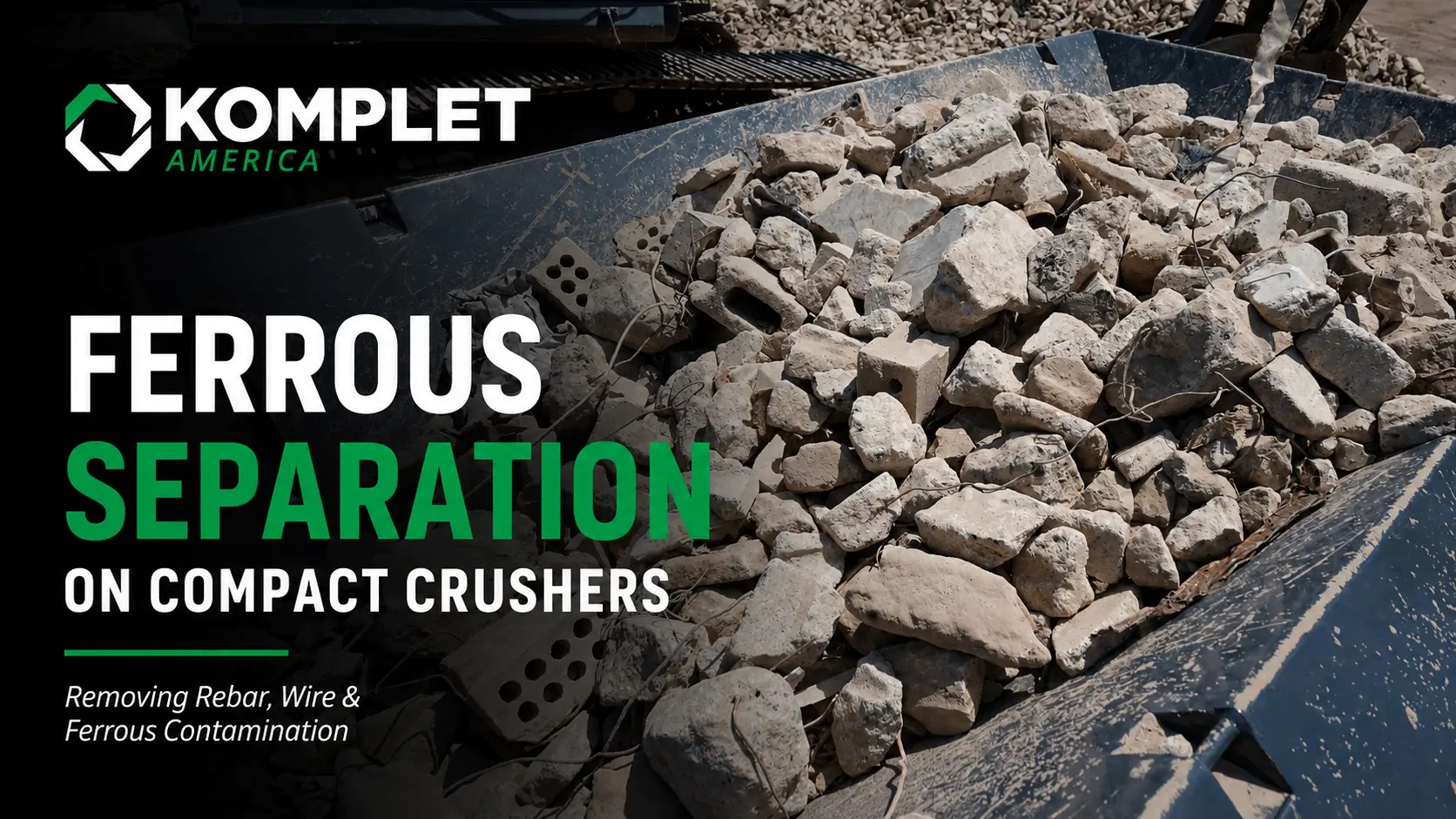
Tip 3: Capture Rebar and Ferrous Content
Most Komplet jaw crushers come standard with magnetic separators that automatically capture rebar and other ferrous content during crushing. The captured metal goes to scrap recovery as a separate revenue stream, and the cleaned RCA produces a higher-quality output. Don’t skip this step — uncaptured rebar in finished RCA degrades the product and creates downstream problems for any user.
Tip 4: Visual QC and Quality Control
RCA quality depends on visual quality control during processing. An operator should be watching the feed material going into the crusher and the output going out, removing visible contamination (wood, gypsum, plastic) when it appears. The cleanest RCA stockpiles are produced by operations with disciplined operator attention, not by the equipment alone.
Tip 5: Stockpile and Document Separately
Stockpile different gradations separately. Document the source material (which project, what feed quality), the crushing run details, and the gradations produced. Buyers — particularly DOT and engineered-fill buyers — will sometimes request documentation. Operations that can produce documentation command better pricing and serve more buyer categories than operations that can’t.
The Economic Case for Producing RCA
Recycling concrete is one of the highest-impact sustainability moves in construction, but it’s also one of the highest-impact economic moves. The EPA’s Sustainable Materials Management program reports that aggregate is the largest next-use category for C&D debris, with more than 455 million tons redirected from landfills in its most recent figures. For the demolition contractor or recycler producing RCA, the economics work in three directions:
- Avoided tipping fees. Concrete that gets processed into RCA doesn’t pay the $40-$100+/ton tipping fees of conventional disposal. On a 500-ton commercial demolition project in a $75/ton tipping market, that’s $37,500 in avoided cost.
- Avoided hauling costs. On-site processing eliminates the round-trip hauling miles to a distant landfill or recycling facility. For projects in landfill-distant markets, hauling savings can rival tipping fee savings.
- RCA sales revenue. Graded RCA (commonly sold as 2″ minus, ¾” minus, or #57 crushed concrete) competes directly with virgin crushed stone on most base and fill applications — often at 30-50% lower cost per ton. Contractors who produce more RCA than they can use on their own jobs sell the surplus to landscapers, municipalities, other contractors, and homeowners. For a contractor saving even $50 per square yard versus virgin material on landscape and fill work, the cumulative savings on a single project can be substantial.
Frequently Asked Questions
Is crushed concrete as good as virgin aggregate?
Application-specific. For base course, sub-base, fill, drainage, pipe bedding, and most non-structural applications, properly graded RCA performs comparably to virgin aggregate at 30-50% lower cost. For aggregate in new structural concrete, virgin aggregate is the standard. For decorative architectural applications expecting uniform appearance, virgin material is the choice. Most contractor and demolition use cases fall in the first category.
Can I make RCA from any concrete?
Most concrete works as feed material — slab, foundation, paving, sidewalk, structural, with rebar. The quality of the resulting RCA depends on the cleanliness of the feed (avoid heavy contamination from gypsum, wood, plastic) and the quality of the processing (good crushing, magnetic separation, screening, quality control). Heavily contaminated feed produces low-quality RCA regardless of equipment.
How does the cost of RCA compare to virgin crushed stone?
RCA typically prices 30-50% below comparable virgin crushed stone in regional markets. Specific pricing varies by region, gradation, and quality. For contractors producing their own RCA from project demolition material, the avoided cost of disposal plus the avoided cost of purchased aggregate often exceeds the equipment cost on an annualized basis.
What equipment do I need to recycle concrete on-site?
Minimum: a mobile jaw crusher with magnetic separator. Better: paired with a vibrating screener to produce multiple spec-graded products. Best: full processing line with crusher + screener + tracked mobile conveyor for stockpile management. Compact entry-level: K-JC 503 + Kompatto 221. Mid-size: K-JC 704 PLUS + Kompatto 5030 + K-TC 460.
Does Section 179 apply to RCA processing equipment?
Yes. Section 179 of the Internal Revenue Code allows businesses to deduct the full purchase price of qualifying equipment in the year placed in service. For tax year 2026, the maximum deduction is $2,560,000. Compact crushing and screening equipment qualifies. Confirm specific eligibility with your tax advisor.
Can RCA be used in new concrete mix?
Yes, with caveats. RCA can substitute for a portion of the aggregate in new concrete mix, but the lower compressive strength and higher creep limit the substitution percentage in structural applications. Most structural concrete continues to use virgin aggregate as the primary aggregate; RCA finds its highest-volume new-concrete applications in non-structural uses (landscape concrete, low-grade backfill concrete, sub-base concrete).
How do I know if my RCA meets DOT specs?
Test it. State DOT specifications publish gradation, density, absorption, and other requirements. Submit a sample to a certified testing lab to confirm spec compliance for the specific application and the specific state. Operations producing RCA for DOT-spec markets typically maintain testing relationships and run periodic compliance checks.
Can I sell crushed concrete to homeowners and landscapers?
Yes — and this is often the highest-margin application. Landscape stone, decorative gravel, driveway material, and walkway base all command meaningful pricing. RCA’s weathered appearance is a feature in this market segment, and the cost savings versus virgin landscape stone (often 30-50%) are competitive. Operations that build relationships with local landscapers and home improvement buyers can sustain steady RCA sales between commercial demolition projects.
Final Thoughts
Recycled concrete aggregate is one of the most economically and environmentally important materials in modern construction. It diverts demolition concrete from landfills, eliminates tipping fees, displaces virgin aggregate purchases, generates new revenue from saleable product, and earns sustainability credits in green building certification programs. For demolition contractors, recyclers, civil contractors, and aggregate producers, RCA is a structural product line — not a side business or a sustainability gesture.
The discipline that separates good RCA operations from poor ones is straightforward: clean feed material, the right equipment combination, magnetic separation for ferrous content, vibrating screening for spec gradation, visual quality control during processing, and disciplined stockpile and documentation practices. Done well, RCA is engineered material that competes with virgin aggregate on performance and beats it on price. Done poorly, it’s contaminated rubble that doesn’t sell and doesn’t perform. The variable is process, not luck.
To explore equipment for RCA production, the full crusher and screener lineup is at Komplet equipment lineup. Pre-owned equipment is at Komplet’s pre-owned inventory. Equipment financing through Komplet Capital is at Komplet Capital financing. Or call Komplet America directly at (908) 369-3340.
Ready to Start Producing Your Own RCA?
- Map the demolition material flow on your typical projects — concrete tonnage, current disposal cost, current aggregate purchase cost. Most contractors are surprised by the addressable cost.
- Call Komplet America at (908) 369-3340 to discuss equipment configurations matched to your project mix and production goals.
- Discuss financing structures at Komplet Capital financing — Komplet Capital offers 100% financing and standard term options.
- Talk to your CPA about Section 179 — for tax year 2026, the maximum deduction is $2,560,000.
- Find your local Komplet dealer at Find Your Komplet Dealer.
Never enough.
Disclaimer: All ROI, payback, savings, and revenue figures in this article are illustrative examples based on sample assumptions about volume, local pricing, material mix, and operating conditions. Actual results vary by region, project, equipment utilization, and other factors. Komplet America makes no guarantee of specific financial returns.
Disclaimer: RCA performance characteristics, applications, and specifications described are general in nature. Specific application requirements (DOT, structural, federal) should be verified through testing and specification compliance. Komplet America is an equipment distributor and does not guarantee specific RCA properties or application suitability.
Disclaimer: Section 179 limits are 2026 figures based on the One Big Beautiful Bill Act of 2025 and adjust annually. Komplet America is an equipment distributor, not a tax advisor. Consult a qualified CPA before making purchase decisions based on tax treatment.
Equipment prices are subject to change. Contact Komplet America at (908) 369-3340 for current pricing.