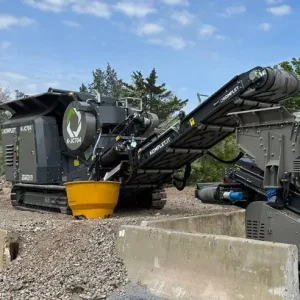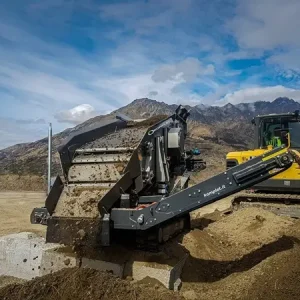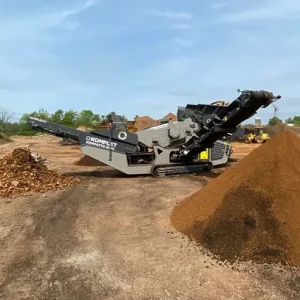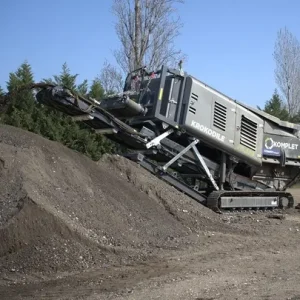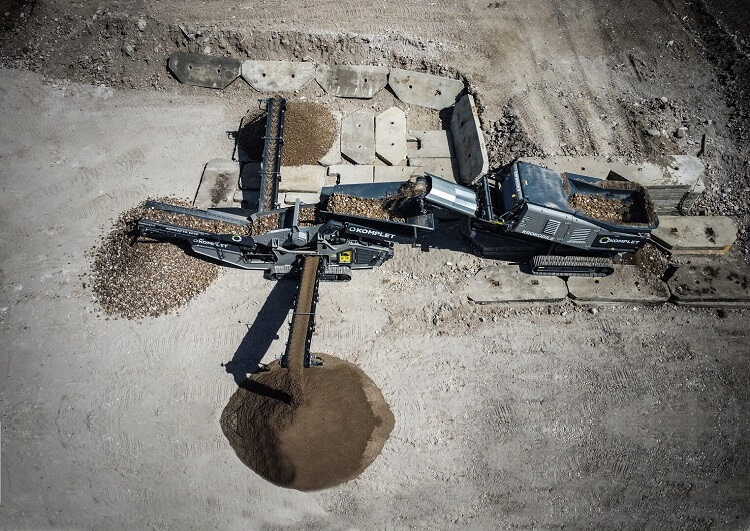

A scalper screen is a heavy-duty vibrating screen built to separate large, coarse material from finer product — the first line of size separation in most crushing and recycling circuits. If you’ve ever watched a mobile screener rock back and forth on a demolition site, pulling oversize rubble off a conveyor and dropping cleaner aggregate onto a stockpile, you’ve seen a scalper in action.
This guide explains what scalper screens actually do, how they work mechanically, what they’re made of, and how contractors use them alongside crushers to produce spec-ready aggregate. It’s written for operators, contractors, and buyers evaluating equipment — not for finance traders looking for “scalping” strategies (a completely different thing).
What Is a Scalper Screen?
A scalper screen — also called a scalping screen or scalper — is a vibrating screening machine designed to separate bulk material into two or more size fractions. The word “scalp” refers to the top fraction: the large, coarse, often oversized material that gets “scalped off” the top while everything smaller passes through the screen deck.
Unlike finish screens, which are used to produce multiple spec gradations for sale (1-inch, 3/4-inch, fines, etc.), scalpers are built for the rough, dirty first stage of separation. They handle wet, sticky, contaminated, or oversized feed that would overwhelm a finer screen — which is exactly why they’re the go-to machine for demolition debris, C&D recycling, topsoil, and blasted rock before a crushing stage.
Scalpers come in two main formats: a standalone mobile scalping screen (on tracks or a trailer), and an integrated scalper mounted ahead of a jaw crusher’s feed hopper to pre-screen fines before they hit the chamber.
How Does a Scalper Screen Work?
The mechanics are straightforward. A scalper has three essential parts: a feed hopper where raw material lands, a vibrating screen deck (or decks) with openings sized to let the desired product pass through, and discharge conveyors that carry each size fraction to its stockpile.
Here’s the sequence of what happens on a job site:
- A loader or excavator dumps raw material — demolition concrete, topsoil, rubble, mined rock — into the scalper’s hopper.
- An eccentric-weight shaft driven by a hydraulic or electric motor makes the screen deck oscillate rapidly (typically 700–1,000 RPM). The vibration keeps material moving across the deck and stops it from bridging or clogging.
- Smaller particles fall through the deck openings. Larger particles — the “scalped” fraction — ride across the deck and off the end.
- Conveyors carry each fraction to its own stockpile. A single-deck machine produces two fractions (oversize and undersize); a double-deck machine produces three (oversize, middle, fines).
Important: scalper screens separate material — they do not crush, break, or reduce it in any way. A particle that enters a scalper comes out the same size it went in; the screen just decides which stockpile it lands on. If you need to make material smaller, you need a crusher.
What Are Scalper Screens Made Of?
The structural frame of a scalper is heavy-gauge steel — typically welded structural steel plate, engineered to handle the impact of loaded material dumped from a height. The working surface, called the screen media, is what actually does the separating. The choice of media depends on the feed and the required product size.
Woven Wire Mesh
The most common scalper media — high-tensile steel wire woven into a rectangular or square mesh. Hardened spring steel wire is the industry standard for general aggregate and C&D applications. Specialty grades include stainless steel (for corrosive applications), oil-tempered wire (for extra wear life), and manganese wire (for highly abrasive feeds).
Perforated Steel Plate
Hardened steel plate with punched or drilled openings — stronger than wire mesh and able to handle heavier impact, but lower open area (meaning lower throughput for the same deck size). Common on primary scalper decks where incoming material includes large chunks that would damage wire mesh.
Manganese Steel Plate
Work-hardening manganese steel — the same alloy used for jaw crusher plates and blow bars. Used on heavy-duty scalper decks where feed material is large, abrasive, or both. Higher cost per square foot than wire, but dramatically longer wear life under punishing conditions.
Polyurethane and Rubber
Modular polyurethane or rubber panels — softer than steel, but surprisingly durable for fine screening and for applications where screen noise or particle degradation matters. Less common on scalpers (more common on finish screens), but used where feed is damp or sticky and blinding is a concern.
Important clarification: Aluminum is not used for scalper screen media. Aluminum is far too soft to withstand the impact and abrasion of industrial screening. Any scalper you encounter in demolition, recycling, or aggregate will use hardened steel, manganese, or polyurethane media — not aluminum.
What Do Scalper Screens Process?
Scalpers handle a wide range of material. The common factor: feed that’s coarse, dirty, or variable enough that it needs rough sorting before anything else can happen with it.
- Demolition concrete (with rebar and contaminants)
- Asphalt millings and RAP
- Blasted rock and aggregate from quarries
- Topsoil, compost, and overburden
- Construction and demolition (C&D) debris
- Recycled glass, brick, and ceramic
- Sand, gravel, and dredge material
- Mineral ore after primary blasting or crushing
Why Use a Scalper Screen?
On most crushing and recycling sites, the scalper’s job is to protect the more expensive downstream equipment and to maximize the value of the output material.
Protect the Crusher
A scalper placed ahead of a jaw crusher pulls out fines that are already smaller than the crusher’s closed-side setting — material that would pass through uncrushed anyway, taking up chamber space and wasting horsepower. Removing it up front increases crusher throughput, reduces wear, and lowers operating cost per ton.
Create Saleable Product in One Pass
Scalpers let contractors produce multiple sized products from a single feed stream. A double-deck scalper can turn mixed demolition debris into a saleable oversize fraction, a middle-grade aggregate, and a fines product — each going to its own stockpile and its own buyer. For many C&D recyclers, this single machine makes the difference between “waste” and “revenue.”
Handle Material Crushers Can’t
Wet topsoil, compost, mulch, sticky clay, and contaminated debris aren’t crusher feed — but they are scalper feed. For landscape contractors, topsoil processors, and composters, a scalper alone (no crusher) handles the whole job.
Mobility and Fast Setup
Modern mobile scalpers are track-mounted or trailer-portable. A compact unit moves between job sites on a standard trailer, sets up in minutes, and is ready to run before the loader operator finishes his coffee.
Komplet Mobile Scalper Screens
Komplet America offers three compact, track-mounted vibrating scalping screens — sized from tight-access urban jobs all the way up to heavy daily production. All three are self-propelled, trailer-portable, and built for on-site C&D recycling, topsoil, aggregate, and demolition work.
Kompatto 221 — Compact Entry-Level Scalper
The Kompatto 221 is one of the smallest self-propelled mobile screening plants on the market — a 25 HP diesel, 7′ × 3.5′ two-deck machine rated up to 90 US tph. Weighing just 7,275 lb, it pairs perfectly with the K-JC 503 or K-JC 704 Plus for tight urban sites and smaller contractor operations.
Kompatto 5030 — Heavy-Duty Mid-Tier Scalper
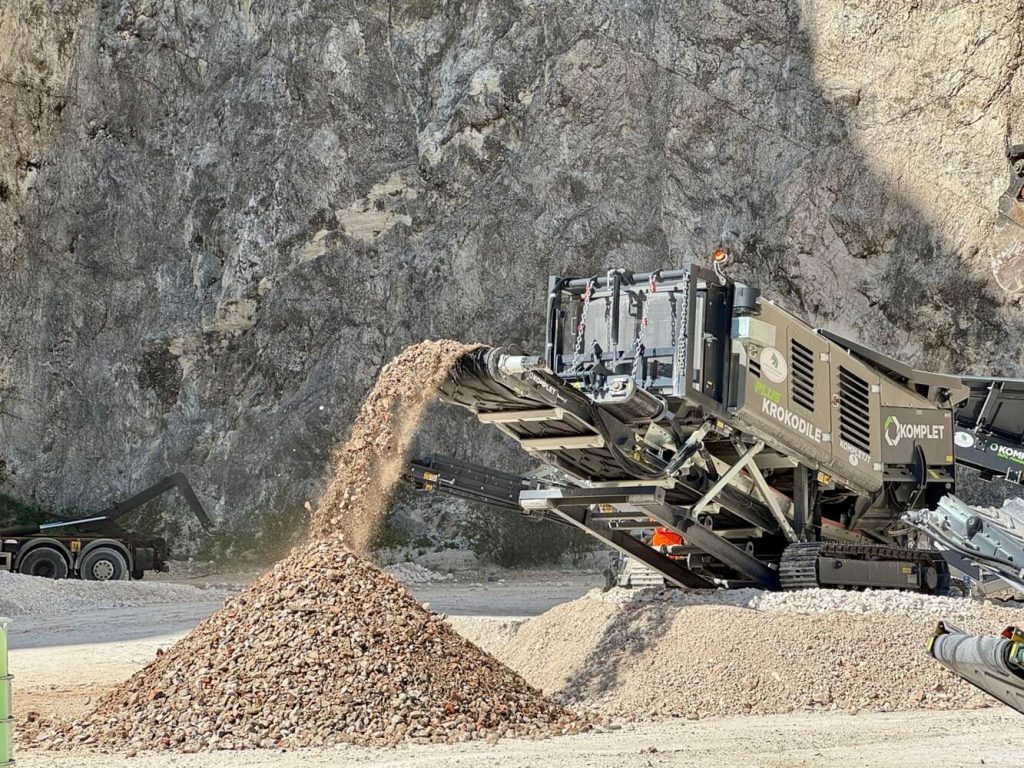
The Kompatto 5030 steps up to a 45 HP diesel and a heavy-duty sloping double-deck screen box (8′ × 3′2″ upper, 7′ × 3′2″ lower), rated up to 280 US tph. Its 3-way split configuration produces three spec-sized products simultaneously, and it handles steel mesh, punch plates, and reinforced bars depending on the feed. Pairs famously well with the Krokodile Plus shredder — our best-selling shredder-screener combination.
Kompatto 124 — Komplet’s Largest Scalping Screen
The Kompatto 124 is Komplet’s largest and highest-output vibrating scalping screen. With a 75 HP Tier 4 Final diesel, a heavy-duty incline double-deck screenbox (11.8′ × 3.7′ upper, 10.8′ × 3.7′ lower), and production rates up to 350 tph, it’s built for contractors, recyclers, and rental fleets that need serious throughput in a mobile package. At 37,038 lb, it still rolls on a standard trailer — but it handles the volume of a much larger stationary screen.
Trommel Screeners (K-TS 30 and K-TS 40)
For operations that need a rotating drum instead of a vibrating deck — common in compost, mulch, and soil screening — Komplet also offers the K-TS 30 and K-TS 40 portable trommel screens. Trommels and scalpers are different machines; we can help you figure out which one fits your application.
Scalper vs. Other Screen Types
Not all vibrating screens are scalpers. Here’s how to tell the difference:
Scalper vs. Finish Screen
A scalper handles the rough first cut — wet, dirty, oversized, contaminated feed. A finish screen (often a triple-deck machine) produces multiple precise spec gradations from pre-processed, relatively clean material. Most large producers run a scalper first, then a crusher, then a finish screen.
Scalper vs. Trommel
A scalper uses a flat or sloped vibrating deck. A trommel uses a rotating cylindrical drum. Trommels excel at screening sticky, damp material (compost, mulch, topsoil) that would blind a flat deck. Scalpers excel at higher throughput with drier, harder material (rock, concrete, asphalt). Different tools for different jobs.
Scalper vs. Grizzly
A grizzly (or grizzly feeder) uses fixed, parallel steel bars rather than a vibrating deck with defined openings. Grizzlies handle the very roughest primary scalping — removing huge oversize chunks before anything else. Most modern mobile scalpers include an integrated grizzly-style bar section at the feed end for the initial rough cut.
How to Choose the Right Scalper Screen
When evaluating a scalper, focus on five things:
- Feed material and size. Wet, sticky topsoil calls for a different machine than abrasive granite or rebar-laden concrete. Tell your equipment rep exactly what you’re screening — it drives every other decision.
- Required throughput. How many tons per hour do you need? Scalper capacity depends on deck size, openings, feed material, and moisture content. A machine rated for 150 TPH on dry aggregate may do half that on wet C&D debris.
- Number of product sizes needed. Single-deck = two products. Double-deck = three products. If you need four or more specs, you’re looking at a triple-deck finish screen rather than a scalper, or a scalper feeding a downstream finish screen.
- Are you moving between job sites weekly, monthly, or never? Compact track-mounted mobile units move on a standard trailer. Stationary or semi-portable units deliver higher capacity but don’t go anywhere without heavy hauling.
- Parts and service availability. A screen down waiting on screen media or a bearing is a screen making zero money. Verify that your dealer stocks parts domestically and can respond quickly.
Frequently Asked Questions
What does a scalper screen do?
It separates bulk material into size fractions. Large (oversize) material goes one way; smaller material falls through the deck openings and goes another way. A scalper does not crush, grind, or reduce material — it only separates.
Is a scalper screen the same as a vibrating screen?
A scalper is a type of vibrating screen — specifically, one built for rough, coarse separation of dirty or oversized feed. All scalpers are vibrating screens, but not all vibrating screens are scalpers (finish screens and dewatering screens are also vibrating screens).
Do I need a scalper if I already have a crusher?
Usually yes. A scalper ahead of the crusher removes fines that are already smaller than your target output size — freeing chamber space, reducing wear, and boosting throughput. Some mobile jaw crushers include an integrated scalper in the feed hopper for exactly this reason.
How many product sizes can a scalper produce?
A single-deck machine separates into two fractions (oversize and undersize). A double-deck produces three (oversize, middle, fines). For more gradations, you either run a finish screen downstream or use a different machine entirely.
What materials are scalper screens made of?
The frame is welded structural steel. The screen media — the working surface — is typically hardened spring steel wire mesh, perforated steel plate, manganese steel for heavy-duty applications, or polyurethane panels for fine or sticky material. Aluminum is not used for scalper media — it’s too soft.
Where do I buy a scalper screen?
From an authorized equipment dealer or directly from the manufacturer’s distributor. Mobile scalper screens are industrial equipment with price tags in the six-figure range — not retail products. You won’t find them at big-box hardware stores. In North and Central America, Komplet America is the exclusive distributor for Komplet’s full scalper screen lineup.
Final Thoughts
A scalper screen is the first, and often most profitable, piece of equipment on any serious crushing, recycling, or aggregate operation. It separates oversize from finished product, protects your crusher from wasted work, and turns raw material into multiple saleable stockpiles in a single pass. For contractors, demolition crews, topsoil producers, and recyclers, the right mobile scalper often pays for itself faster than any other machine in the lineup.
Komplet America’s compact scalper screens — the Kompatto 221, 5030, and 124 — are engineered for contractor-scale operations that need mobility, rugged construction, and the parts-and-service backing to keep uptime high. From the tight-access 221 up to the Kompatto 124 (Komplet’s largest mobile scalping screen, rated up to 350 tph), there’s a right-size machine for every operation. Browse our full screening equipment lineup, or reach out and we’ll help you figure out which machine fits your material and your throughput goals.
Ready to Talk Screens?
- Call 908-369-3340
- Email [email protected]
- Schedule a demo or request a quote
- Ask about our 1-year / 1,000-hour warranty and equipment financing options
Never enough — that’s how we approach service, support, and helping you get the right machine for the job.