
Buying stone crushing equipment is one of the most consequential capital decisions in any contractor’s equipment strategy. The wrong purchase ties up capital in equipment that can’t deliver rated production, doesn’t fit the project pipeline, or doesn’t match the actual material the operation handles. The right purchase produces operational economics that compound across years of service — eliminated tipping fees, eliminated hauling costs, recovered material revenue, and tax treatment that shortens after-tax payback timelines. The variable that separates the two outcomes is rarely the brand or sticker price; it’s the disciplined evaluation of factors specific to the operation before money changes hands.
This guide walks through the seven major factors to evaluate before buying stone crushing equipment — budget reality, primary features, material type and feed conditions, mobility profile, quality and total cost of ownership, mobile-vs-stationary positioning, and the financing and tax structure that determines after-tax economics. Throughout: practical and grounded in what produces good purchase decisions for compact mobile equipment, with specific reference to Komplet America’s lineup and distribution model.
Factor 1: Budget Reality vs. Operating Volume
Cost is one of the critical things to take into account when opting for a stone crusher. Evaluate your financial opportunities and the operating volume to figure out how much you can expect to spend on a stone crusher purchase. Cheap crushing equipment doesn’t always provide high operational performance and efficiency — and equipment that’s underpowered for the operation’s actual material throughput typically costs more in the long run than equipment correctly sized at the start.
Indicative pricing for compact mobile crushers in the U.S. market in 2026:
- K-JC 503 (25 hp; up to 34 US tph; 19″×12″ jaw).
- K-JC 604 (55 hp; up to 55 US tph; 23″×16″ jaw).
- K-JC 704 PLUS (74 hp; up to 90 US tph; 27″×16″ jaw). Komplet’s best-selling jaw crusher.
- K-JC 805 (130 hp; up to 160 US tph; 31″×21″ jaw). Largest jaw in the lineup.
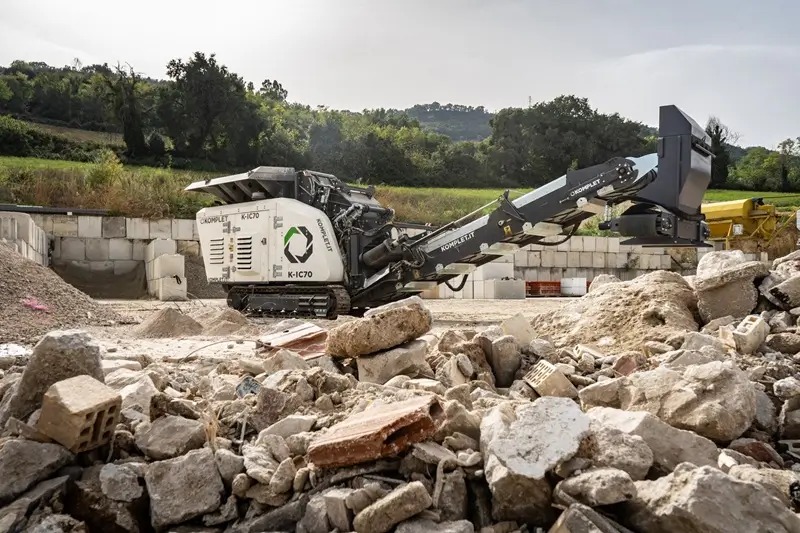
- K-IC 70 (100 hp; up to 90 US tph; cubical aggregate output). Compact mobile impact crusher.
Used compact mobile crushers typically price 30-50 percent below comparable new equipment, making certified pre-owned a common pathway for buyers wanting lower capital deployment than new equipment requires. Komplet’s pre-owned inventory inspects and refurbishes used units to meet operational standards, with documented service history.
Budget evaluation isn’t just sticker price — it’s monthly cash flow against operating returns. Komplet Capital financing offers 100 percent financing with 24-hour approvals and 36/48/60/72-month term options, structuring purchases at monthly payments that often align with the recovery economics the equipment generates. Buyers who frame the budget question as “can the operation produce monthly recovery economics that exceed the monthly equipment payment?” typically arrive at the right purchase decision more reliably than buyers fixated on absolute purchase price.
Factor 2: Primary Features and Functions
If you decide to buy crushing equipment online or through a dealer, pay attention to the fundamental features and functions of the machine. Some features of more expensive equipment may not be necessary for your specific operation — and conversely, cheap crushers often lack crucial functions that operations need to actually deliver rated production. Specific features to evaluate:
- Crushing chamber design — jaw plate dimensions, closed-side setting (CSS) range, hydraulic CSS adjustment capability, magnetic separator availability.
- Engine power and Tier 4 Final compliance — required for operation in regulated jurisdictions, government procurement, and urban project work.
- Throughput rating — the “up to” production rating reflects best-case ideal conditions. Plan for typical, not maximum.
- Fuel consumption — operating cost per ton over equipment life often exceeds the cost differential between low-fuel and high-fuel models.
- Transport dimensions and weight — determines what trailer is required and whether oversized-load permits are needed for relocations.
- Single-operator design — modern compact mobile crushers operate with one trained operator using remote-control capability.
- Maximum feed size — must accommodate the largest material the operation actually handles. Material larger than feed opening must be pre-broken before processing.
- Output size adjustability — hydraulically adjustable output range enables on-the-fly product specification changes without stopping production.
Feature mismatch is one of the most common reasons equipment purchases disappoint buyers. The equipment that’s too small for the operation creates bottlenecks; the equipment that’s too large for the operation consumes capital and operating cost that the project pipeline doesn’t justify. Match features to actual operation, not aspirational use cases that may never materialize.
Factor 3: Material Type and Feed Conditions
The type of rock or material you intend to process is a significant factor when purchasing a good crushing machine. Different materials subject the equipment to different kinds of stress, and the right machine for one material may be wrong for another. Specific material considerations:
Hard, Abrasive Material (Granite, Basalt, Quartz)
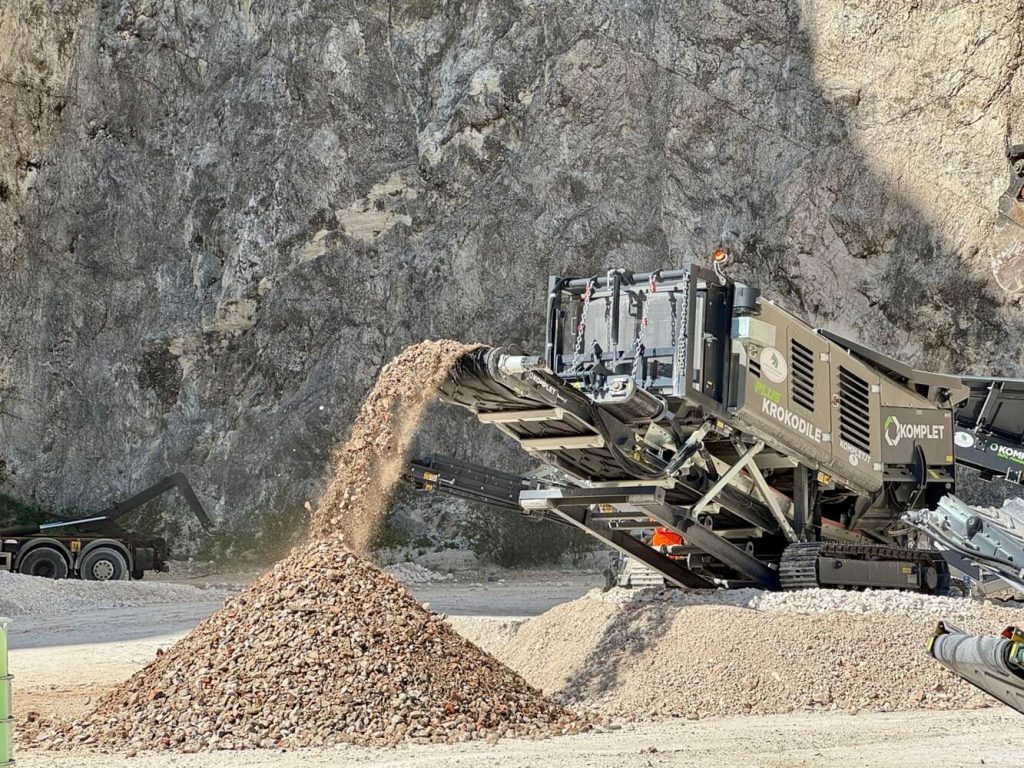
Pure jaw crusher territory. Compression-action jaw crushers handle hard abrasive material effectively because compressive force concentrates on material weak points without depending on impact energy. Equipment to evaluate: K-JC 704 PLUS, K-JC 805. Plan for shorter jaw plate service life (more frequent wear part replacement) than softer material applications.
Demolition Concrete with Rebar
Jaw crushers with magnetic separation. Compression action breaks concrete away from rebar rather than wrapping or jamming around it. The magnetic separator captures rebar after crushing, producing clean recycled concrete aggregate (RCA). Equipment: K-JC 503 through K-JC 805 with magnetic separator standard or near-universal option.
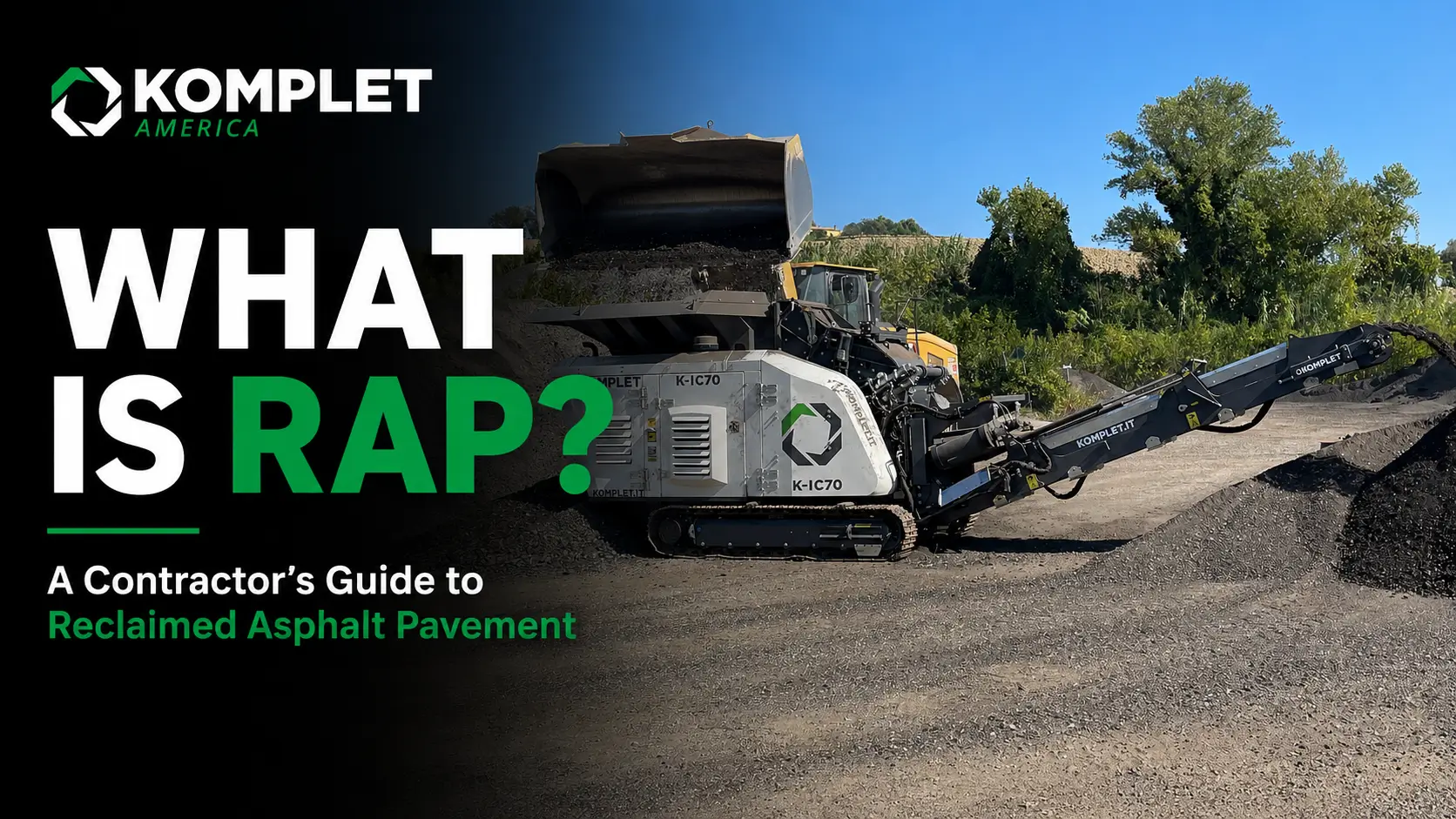
Recycled Asphalt Pavement (RAP)
Impact crusher territory. The K-IC 70 produces cubical RAP suitable for paving applications and DOT-spec material. Jaw crushers can reduce asphalt but produce variable shape; impact crushers produce more uniform aggregate suitable for asphalt mix.
Brick, Limestone, and Softer Aggregates
Either jaw or impact crushers handle these materials cleanly. Lower wear rates than hard abrasive material extends jaw plate or blow bar service life. The K-JC 503 mini jaw works well for small-volume operations; the K-IC 70 produces cubical aggregate for landscape and decorative applications.
Mixed and Variable Feed Material
Most demolition projects produce variable feed — concrete with masonry, asphalt with concrete, mixed material from different building elements. Equipment with adjustable settings (hydraulic CSS, adjustable output range) handles variability better than fixed-setting equipment. Jaw crushers across the K-JC series feature hydraulic CSS adjustment as standard.
Wet, Sticky, or Cohesive Material
Wet material can bind up jaw crushers; cohesive material may not size cleanly through compression action. For dominant cohesive feed (compost, wet topsoil), trommel screeners (K-TS 30, K-TS 40) handle the material better than crushers. For occasionally wet feed in primarily dry operations, jaw crushers handle the variability with reduced throughput when conditions warrant.
Factor 4: Mobility Profile
Mobile crushing equipment is exceptionally efficient in mining operations and extended construction projects, where operations move between locations or process material at remote sites. Unlike bulky, heavy stationary crushers, portable stone crushers allow operators to navigate and maneuver across various terrain types. The mobility evaluation:
- Multi-site mobile operations: All current Komplet equipment is tracked and self-propelled, designed for site-to-site movement on standard trailers. Transport dimensions matter — the K-JC 503 transports at 7,496 lb behind a standard pickup; larger models on heavy trailers without oversized permits.
- Single-yard operation: Mobile equipment works fine in fixed-yard operation. The mobility is unused but doesn’t penalize the operation. Stationary plant alternatives may make economic sense for high-volume single-location operations but not for the compact mobile market.
- Tight-access sites: Smaller equipment (K-JC 503, Kompatto 221) fits confined spaces that larger equipment can’t physically access. Urban construction, basement demolition, residential remodels, and confined renovation work all favor compact equipment.
- Quarry or mining floor operation: Tracked mobility allows the crusher to follow the working face — material moves shorter distances to the crusher rather than the crusher moving to a fixed position with material hauled to it.
The environment and operator skills also matter. Tight-access sites need smaller equipment regardless of how much capital is available. Skilled operators can extract more production from any given machine than untrained operators; equipment selection should account for the operator pool the operation actually has, not aspirational hires.
Factor 5: Quality and Total Cost of Ownership
The high quality of crushing equipment is the first pledge of longer serviceability, efficiency, and capacity. Cost-effectiveness is also a feature of high-quality equipment, even though initial purchase price is higher. Avoiding repairs and unscheduled downtime over the operational life is more economical than buying lower-quality equipment that requires frequent intervention.
Total cost of ownership variables to evaluate:
- Parts availability and OEM support: Equipment from manufacturers with established U.S. distribution networks and OEM parts pipelines produces lower lifetime cost than equipment that requires international parts shipping. Komplet America forecasts equipment and parts a year in advance to maintain in-stock parts inventory.
- Service network access: Authorized service technicians, certified training, and warranty support across the U.S. produce more reliable operational economics than equipment without dealer service infrastructure.
- Standard warranty coverage: Komplet equipment is sold with a standard 1-year / 1,000-hour warranty (subject to terms and conditions). Verify warranty terms at time of purchase.
- Resale value and depreciation pattern: Equipment from manufacturers with strong reputation for durability retains 35-50 percent of original purchase price after 5 years of typical use. Lower-quality equipment depreciates faster, reducing the ROI calculation on the back end.
- Maintenance access and complexity: Front-mounted bolts on jaw plates, hydraulic lift assist, and single-operator service capability dramatically reduce maintenance time over operational life.
- Operating cost per ton: Fuel efficiency, wear part service life, operator labor requirements, and routine maintenance hours combine into the actual cost-per-ton of operation. Calculate on a per-ton basis across operational life rather than fixating on purchase price.
Factor 6: Mobile vs. Stationary Equipment
Two types of crushing equipment serve the production line: stationary equipment fixed at one location, and mobile equipment that can be moved to the construction site. The choice depends on operational profile, project mix, and capital availability:
Mobile Equipment Advantages
- Designed for transportability — compact, often mounted on tracks or wheels, easily transported between sites
- Process material on-site, eliminating round-trip hauling to fixed processing facilities
- Integrate feeder, conveyor, crusher, and (sometimes) screen into a single mobile platform — reduces space requirements
- Compact structure fits limited-access sites that stationary plants can’t reach
- Versatile — same machine handles multiple project types and material variations
- Quick response and adaptability for emergency, disaster recovery, and unpredictable operational profiles
Stationary Equipment Profile
- Complete production line for large-scale projects with predictable material flow
- Higher throughput per dollar of equipment at very large scales (1,000+ tph)
- Long production cycles with no transfer requirements
- Mainly used in mining, large quarries, and major aggregate plants
- Significantly higher infrastructure investment (foundation, power supply, permitting)
- Less flexibility for operational changes or project diversification
Mobile equipment is gaining momentum in the construction sector because of flexibility, adaptability, and the ability to process material on-site. Stationary equipment remains the standard for the largest mining and quarry operations where throughput justifies the infrastructure investment. Most contractor-scale and recycler-scale operations come out ahead with mobile equipment economics.
Factor 7: Financing Structure and Tax Treatment
The financing and tax structure determines the after-tax payback economics of the equipment purchase. Three primary considerations:
Komplet Capital In-House Financing
Komplet America offers in-house financing through Komplet Capital — 100 percent financing for qualified buyers, 24-hour approvals, no down payment options, and 36/48/60/72-month term structures. Details at Komplet Capital financing. The structured monthly payment is often less than equivalent rental costs while building equity in the asset.
Section 179 Tax Deduction
For tax year 2026, the Section 179 maximum deduction is $2,560,000, with phase-out beginning at $4,090,000. The One Big Beautiful Bill Act of 2025 substantially raised these limits and restored 100 percent bonus depreciation for qualifying property placed in service after January 19, 2025. The full purchase price of qualifying compact mobile equipment can typically be deducted in the year placed in service, dramatically improving after-tax payback. Section 179 applies to both new and used equipment that is new to the buyer’s business, subject to all program requirements. Confirm specific eligibility with a qualified CPA.
External Financing Options
External lenders may also finance compact mobile crushing equipment. Buyers with established banking relationships sometimes prefer external financing for portfolio diversification or rate considerations. Komplet Capital and external financing aren’t mutually exclusive — buyers can compare rate and structure across both before committing.
Putting the Seven Factors Together: A Worked Example
Consider a mid-size demolition contractor evaluating a first crusher purchase. Annual demolition concrete tonnage: approximately 30,000 tons. Local tipping rate: $75/ton. Local aggregate replacement cost: $25/ton. Operations across 4-6 active project sites concurrently. Material mix: primarily slab and foundation concrete with rebar, occasional brick and masonry. Decision factors play out:
- Budget: at 30,000 tons/year, avoided tipping alone is approximately $2.25M/year. The K-JC 704 PLUS is well within the recovery economics envelope.
- Features: hydraulic CSS, magnetic separator, Tier 4 Final, single-operator design — all standard on K-JC 704 PLUS.
- Material: concrete with rebar = jaw crusher with magnet. K-JC 704 PLUS handles the feed cleanly.
- Mobility: 4-6 concurrent sites = tracked mobility essential. K-JC 704 PLUS transports on standard heavy trailer behind standard truck.
- Quality: Komplet’s U.S. distribution + OEM parts pipeline + 1-year/1,000-hour warranty supports lifetime economics.
- Mobile vs stationary: multi-site work = mobile only. Stationary plant doesn’t fit the operational profile.
- Financing: Komplet Capital structures payment within recovery economics; Section 179 captures full deduction in year of purchase.
Result: K-JC 704 PLUS purchase decision is strongly supported across all seven factors. After-tax payback typically lands in the 3-8 month range. The same disciplined evaluation produces different — but equally clear — answers for different operational profiles.
Frequently Asked Questions
How much does a stone crusher cost?
Compact mobile crushers in the U.S. market price range from low six figures to high six figure digits. See our crusher product pages for our latest pricing. Used certified pre-owned equipment typically prices 30-50 percent below new equivalents. Specific pricing varies by configuration, dealer location, and additional features.
What’s the most important factor when buying a crusher?
Match between equipment and material. The crusher that fits the actual feed material the operation processes — jaw crusher for hard rock and rebar concrete, impact crusher for cubical aggregate and asphalt — produces predictable production at reasonable wear cost. The wrong mechanism produces rapid wear, high operating cost, and disappointment regardless of brand or sticker price.
Should I buy new or used equipment?
Depends on capital availability and risk tolerance. New equipment offers warranty coverage, latest technology, and predictable performance. Used equipment offers 30-50 percent capital savings but requires due diligence on condition and history. Komplet’s Komplet’s pre-owned inventory addresses the due diligence concern through documented inspection and refurbishment.
Can I finance with no money down?
Yes — Komplet Capital offers 100 percent financing for qualified buyers, no down payment required, 24-hour approvals, and standard term options. Details at Komplet Capital financing.
How long does compact mobile crushing equipment last?
Properly maintained Komplet equipment typically delivers 10,000+ operating hours of useful life, with major components running longer with proper maintenance. Wear parts replace periodically based on hours and material abrasiveness. Documented maintenance compliance directly affects equipment longevity and resale value.
What’s the smallest crusher Komplet sells?
The K-JC 503 mini jaw crusher. 25 hp, 19″×12″ jaw, up to 34 US tph, 7,496 lb transport weight. Designed for small contractors, residential remodels, basement waterproofing, landscaping, and pool installation. Pre-owned units price below this for buyers wanting an even lower entry point.
Can compact mobile equipment handle quarry-grade work?
The largest compact mobile equipment (K-JC 805 at 160 tph) handles compact-scale quarry and mining work effectively. For very large-scale mining (1,000+ tph), stationary plant configurations are typically required. The compact mobile category targets contractor-scale, recycler-scale, and specialty applications rather than the largest mining operations.
What questions should I ask a dealer before buying?
Throughput at typical (not maximum) conditions, parts availability and lead times, warranty terms and coverage, training resources, financing options, trade-in or upgrade paths, service network coverage in your region, and reference customers in similar applications. Dealers willing to answer these questions thoroughly are typically the dealers worth buying from.
Final Thoughts
Buying stone crushing equipment is a structured decision, not a gut decision. The seven factors above produce repeatable evaluation logic that consistently identifies the right equipment for specific operations — and consistently identifies the wrong equipment regardless of how attractive the sticker price or feature set appears in isolation. Operations that apply this discipline, take time to evaluate honestly, and match equipment to actual project pipeline rather than aspirational use cases produce purchase decisions that pay back across years of service. Operations that skip the discipline produce purchase decisions that disappoint regardless of brand, dealer, or financing structure.
The Conti family construction legacy that informs Komplet America’s approach to equipment dates to 1906, and the equipment-buying lesson from that lineage is straightforward: don’t buy bigger than the operation needs (capital tied up in unused capacity), don’t buy smaller than the operation needs (production bottleneck and frustrated operators), and don’t buy the wrong equipment for the dominant material (the equipment will fail to produce spec product regardless of operator skill). The right equipment, financed appropriately, supported through OEM parts and authorized service, produces operational economics that compound across years of reliable service. The wrong equipment produces frustration and capital tied up in equipment that doesn’t earn its keep. The variable separating the two is rarely the equipment brand — it’s the discipline of evaluating fit before money changes hands.
To explore Komplet equipment for purchase, the full Komplet equipment lineup is available online, with Komplet’s pre-owned inventory for buyers wanting lower capital deployment than new equipment requires. For Komplet Capital financing structures, including 100 percent financing options. To find a Find Your Komplet Dealer in your territory. Or call Komplet America directly at 908-369-3340.
Ready to Make a Disciplined Equipment Purchase?
- Walk through the seven factors above against your specific operation. Honest data on project pipeline, material mix, and operational profile is the foundation of the right purchase decision.
- Call Komplet America at 908-369-3340 to discuss equipment configurations matched to your operation. The team can run sizing analysis with actual numbers for your specific application.
- Discuss financing through Komplet Capital financing — 100% financing, 24-hour approvals, no down payment options.
- Talk to your CPA about Section 179 — for tax year 2026, the maximum deduction is $2,560,000.
- Find your local Find Your Komplet Dealer for in-person equipment evaluation.
Never enough.
Disclaimer: ROI figures, payback timelines, project economics examples, and pricing references shown above are illustrative only based on sample assumptions. Actual results vary by region, project, equipment utilization, financing terms, and other factors. Komplet America makes no guarantee of specific financial returns.
Disclaimer: Equipment pricing is subject to change based on dealer location, configuration, and additional features. Prices do not include taxes, shipping, or installation fees. Contact Komplet America at 908-369-3340 for current pricing.
Disclaimer: Section 179 limits are 2026 figures based on the One Big Beautiful Bill Act of 2025 and adjust annually. Komplet America is an equipment distributor, not a tax advisor. Consult a qualified CPA before making decisions based on tax treatment.
Disclaimer: Komplet equipment standard warranty coverage is 1 year / 1,000 hours, subject to terms and conditions. Warranty coverage requires compliance with operator’s manual maintenance requirements. Confirm specific warranty terms at time of purchase.
All operating, maintenance, and service guidance is general in nature. Always refer to the official Komplet operator’s manual for the specific machine model and serial number, and follow OEM intervals and procedures.