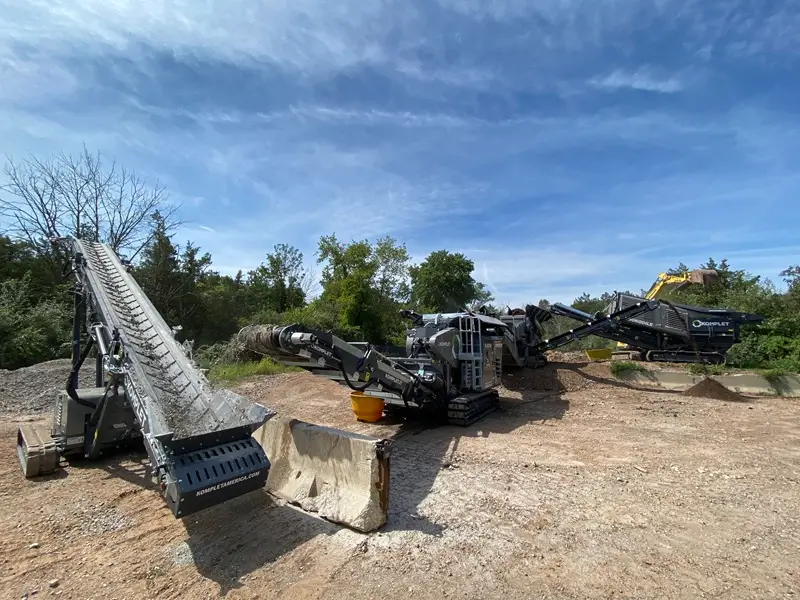

Every contractor has asked some version of this question: what’s the smartest piece of heavy equipment I can buy to actually make money back? The honest answer is that it depends on what you already do and what’s costing you money right now. But for a huge number of construction, demolition, excavation, and landscaping businesses, the answer is the same: a compact mobile crusher.
Here’s why — and here’s the math. This guide walks through the real revenue streams a crusher creates, typical payback timelines, the licensing and logistical considerations most people overlook, and how to choose the right machine for the scale of your operation.
Why Compact Crushers Consistently Win the ROI Question
Most heavy equipment helps you do a job faster. A crusher is different — it turns a cost center into a profit center. For demolition contractors, excavators, and concrete-recycling businesses, broken concrete and rubble are paying you twice to disappear: once in dump fees, and again when you buy virgin aggregate to replace the material you just threw away.
A compact crusher flips both sides of that equation on the same job:
- You stop paying dump fees (often $50–$150 per ton in urban markets)
- You stop buying virgin aggregate (often $20–$40 per ton delivered)
- You produce saleable recycled concrete aggregate (RCA) or reclaimed asphalt that you can use on your own next job or sell to other contractors
- You can offer on-site crushing as a service to other contractors, demolition crews, and municipalities
Very few pieces of heavy equipment create this many simultaneous revenue and cost-avoidance streams. That’s why compact crushers have one of the fastest payback timelines in the industry.
The Real ROI Math: What a Crusher Actually Earns
These are illustrative examples using industry-typical market ranges. Your numbers will vary based on region, material, market rates, and how hard you run the machine. Always build your own pro forma with local pricing.
Scenario 1: Demolition Contractor Eliminates Dump Fees
A mid-sized demolition contractor generates roughly 3,000 tons of concrete waste per year from tear-outs, foundations, and slab removal. At urban dump fees of $80/ton, that’s $240,000 a year in disposal costs.
Add a compact mobile jaw crusher to the operation:
- Eliminated dump fees: $240,000/year avoided
- Recycled output used in-house for base and fill (displacing virgin aggregate): ~$90,000/year avoided
- Operating cost (fuel, wear parts, labor): ~$60,000/year
- Net annual gain: ~$270,000/year
Against a compact mobile jaw crusher in the $250K–$400K range, payback runs 12–18 months — and the machine typically has a 10,000+ hour productive life. The savings compound every year after.
Scenario 2: Selling Recycled Aggregate
A concrete-recycling business produces 10,000 tons/year of RCA. At a market price of $12–$18 per ton for delivered graded material, that’s $120,000–$180,000 in annual revenue from the crushed product alone. Pair the crusher with a screener, and you can sell multiple spec grades (2″ minus, 3/4″ minus, fines) at different price points, raising the blended average.
Scenario 3: Mobile Crushing Service
Some owner-operators skip the recycling yard entirely and sell crushing as a service. A contractor might charge $15–$30 per ton to process another contractor’s demolition concrete on-site. At 300 tons/day and 200 billable days/year, that’s $900K–$1.8M in gross revenue from service work alone. Not every market supports this model, but in urban areas with high dump fees, demand for mobile crushing service is steady.
Scenario 4: Paired with a Screener or Shredder
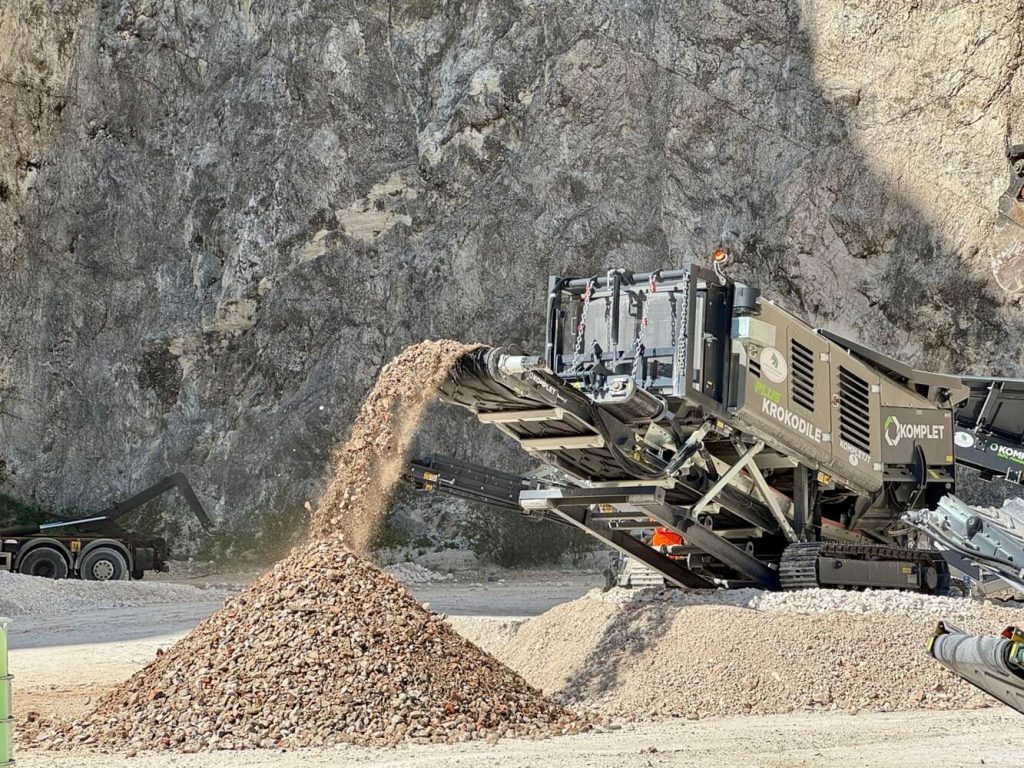
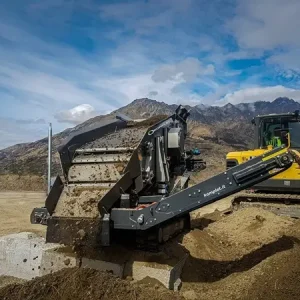
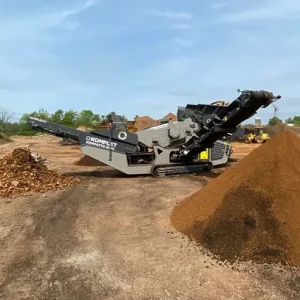
The highest-ROI setups often combine machines. A jaw crusher plus a screener like the Kompatto 5030 lets you produce multiple sized products from a single feed stream — and a Krokodile Plus shredder extends the revenue opportunity into wood waste, green waste, and mixed C&D debris that a crusher alone can’t handle. Each machine added to the lineup opens a new material stream you can monetize.
The Four Revenue Streams a Crusher Creates
1. Dump Fee Avoidance (Immediate)
Every ton you crush on-site is a ton you don’t pay to dump. In urban markets with tipping fees in the $60–$150/ton range, this alone is often the single biggest line-item saving on any demolition or excavation project.
2. Virgin Aggregate Displacement (Immediate)
RCA works as road base, sub-base, pipe bedding, and structural fill. Every ton of your own crushed material you use on your own job is a ton of virgin crushed stone you don’t have to buy from a supplier.
3. Material Sales (Ongoing)
Surplus crushed concrete, asphalt, or mulched material sells to other contractors, landscapers, municipalities, and homeowners. Rates vary by region but typically run $10–$20/ton for RCA delivered in small quantities.
4. Crushing Services to Other Contractors (Scalable)
Once you own the equipment, you can monetize idle hours by offering mobile crushing service to other companies that have concrete waste but not the equipment to process it. This is how many owner-operators turn a cost-saving tool into a full-time revenue engine.
How to Choose the Right Equipment for Your Operation
The right machine depends on what you’re processing, how much of it, and how often. Here’s how to think about scale.
For Smaller Contractors and Light Duty Applications
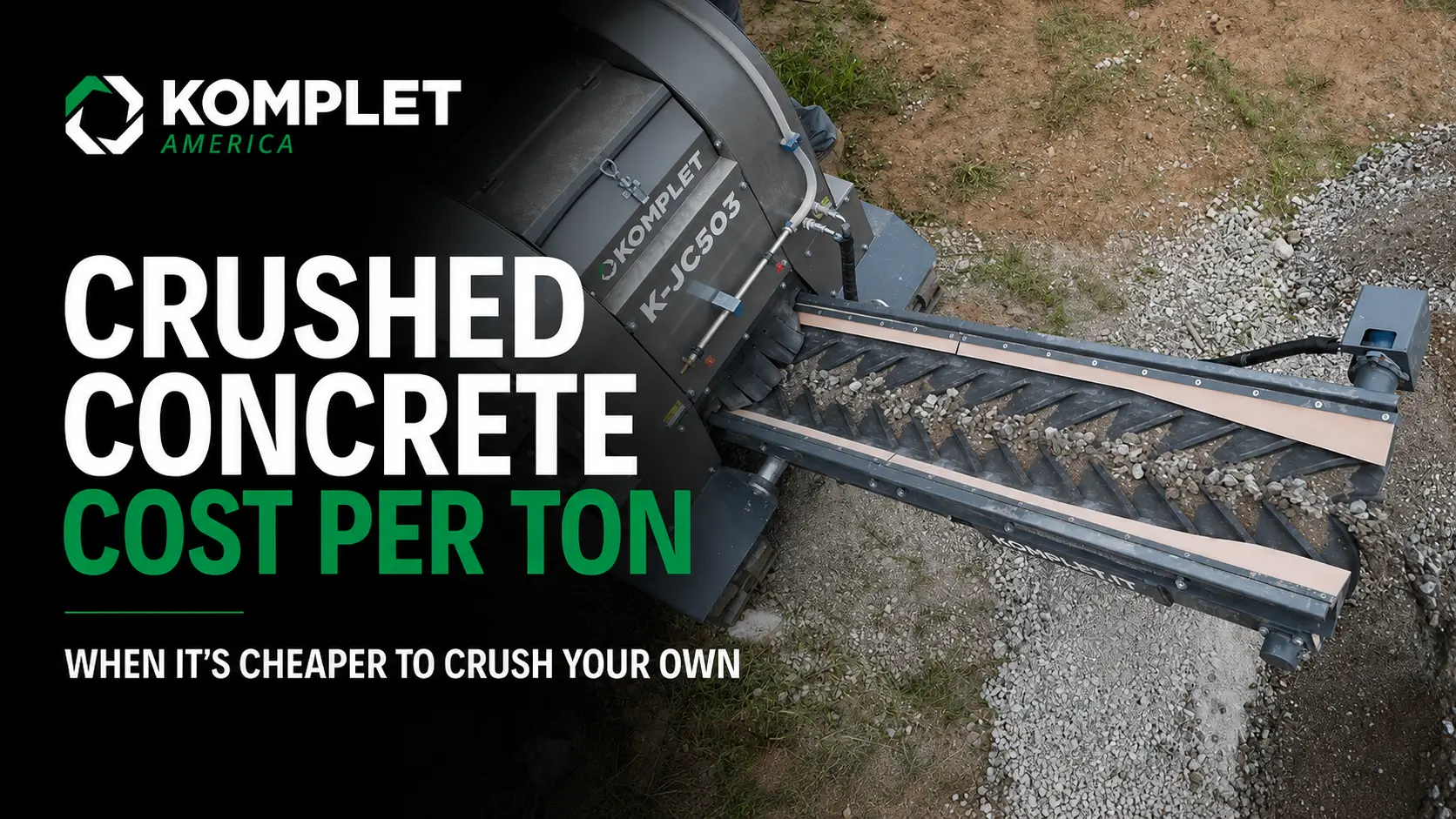
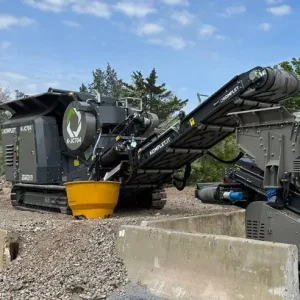
If you’re processing under 50 tons per day, the K-JC 503 mini jaw crusher is the entry point. It’s the smallest machine in the lineup, fits in tight spaces, and handles smaller-scale concrete and rock crushing without the capital outlay of a larger unit.
For Mid-Sized Operations
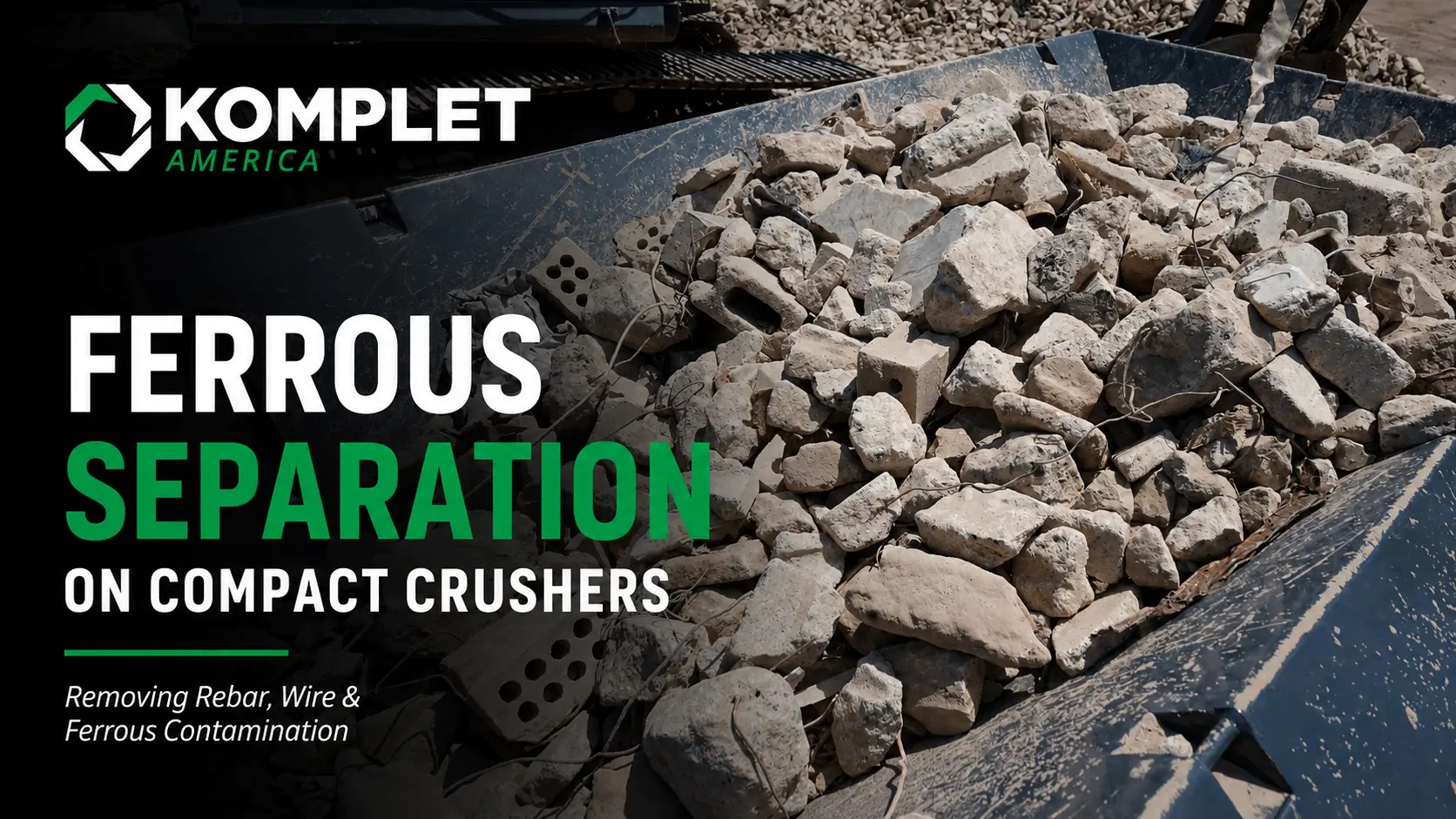
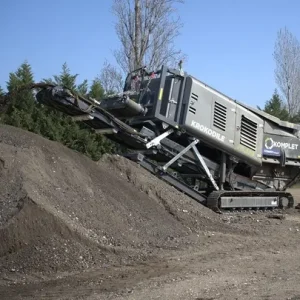
For most demolition contractors, excavators, and concrete recyclers, the K-JC 604 or K-JC 704 Plus is the sweet spot. These machines handle 50–100 tons per day, run reinforced concrete with rebar, and move between job sites on a standard trailer.
For Higher Throughput Operations
The K-JC 805 is the largest compact jaw crusher in the Komplet lineup, built for operations producing higher daily tonnage or handling larger feed sizes. It’s still trailer-portable, but brings significantly more throughput capacity.
For Asphalt and Softer Concrete Recycling
The K-IC 70 compact impact crusher is Komplet’s newest addition — purpose-built for asphalt recycling, softer concrete, and applications where cubical product shape matters (spec aggregate, base course). Pairs well with a jaw crusher in a two-stage setup.
Pair With a Screener or Shredder to Multiply Revenue
A crusher alone produces one gradation. Adding a screener lets you separate the output into multiple saleable sizes, which typically lifts average revenue per ton. Adding a shredder opens up wood, green waste, and mixed C&D debris as additional material streams.
Before You Buy: What Most People Forget
Permits and Licensing
Every state — and many municipalities — have rules about operating crushing equipment, stockpiling material, and selling aggregate. Common requirements include air-quality permits, noise ordinances, stormwater management, and facility permits if you’re running a permanent stationary yard. Mobile on-site crushing is generally easier to permit than a stationary recycling facility, but always check with your state DEQ/DEP and local authorities before investing.
Financing
You rarely need to write a check for the full machine price. Equipment financing spreads the cost over 4–7 years, and the monthly payment is often less than the monthly dump-fee savings the machine is already creating. Komplet America offers equipment financing options designed specifically for contractor cash flow.
Operator Training
A crusher isn’t hard to operate, but running one well is a skill. Expect a learning curve for new operators — feed rate management, CSS adjustments, wear-part recognition, and basic maintenance all matter for uptime. Good dealers include startup training with the machine; take them up on it.
Parts and Support Availability
Every crusher eats wear parts. Before buying any machine, confirm that the dealer stocks parts domestically and can get them to you in a day or two. A machine that costs $20K less but waits three weeks for a jaw plate shipment isn’t a bargain — it’s a liability during peak season.
Resale Value
A compact crusher with a known manufacturer, documented service history, and readily available parts holds resale value over its working life. When you factor an eventual resale into the total cost of ownership, a higher-quality machine often costs less per year of service than a lower-priced alternative. If you buy a crusher at $300K and sell it at year 8 for $120K, your net cost is $180K over eight years — $22,500 per year. Think in lifecycle terms, not sticker-price terms.
Frequently Asked Questions
How much does a compact mobile crusher cost?
New compact track-mounted jaw crushers range from around $150K for entry-level mini models to $450K+ for larger production machines. Most mid-size demolition and recycling contractors buy in the $250K–$400K range. Financing typically spreads this over 4–7 years.
How long does it take for a crusher to pay for itself?
Typical payback for contractors who were previously paying dump fees and buying aggregate is 12–24 months. Operators who use the machine as a service business (billing other contractors for on-site crushing) can pay back faster — sometimes under 12 months at high utilization. A machine that sits 90% of the time obviously takes longer.
Do I need a special license to operate a crusher?
Operator licensing requirements vary by state. Most don’t require a specific crusher license, but many states require permits for the crushing operation itself (air quality, stormwater, sometimes stockpiling). Start by calling your state environmental agency and your local municipal authority before you buy.
Should I buy new or used?
Both can work. Used machines from reputable dealers with documented service history are often a great value for contractors starting out. New machines come with full warranties and the latest features (hydraulic CSS, improved controls, lower emissions). Avoid used machines without service records — you’re buying somebody else’s problem.
Can I really make money just crushing my own demolition waste?
For an active demolition or excavation contractor generating 1,000+ tons of concrete waste per year, yes — almost certainly. Dump-fee savings alone usually cover the machine payment. The aggregate displacement and potential resale are pure upside on top of that.
What’s the best crusher brand for contractor-scale operations?
For compact, track-mounted, on-site crushing — the segment most contractors actually need — Komplet is among the leading options in North America. Komplet SpA has been building compact crushing equipment in Italy for 25+ years, and Komplet America stocks parts, offers training, and supports the full lineup with a dealer network across the US and Canada.
Final Thoughts: The Best Equipment to Buy Is the One That Pays You Back Fastest
The “best piece of equipment to buy to make money” isn’t a universal answer — but for contractors in construction, demolition, excavation, and recycling, a compact mobile crusher consistently delivers one of the fastest and most reliable ROIs in heavy equipment. It stops dump fees, displaces aggregate purchases, creates saleable product, and opens service-business revenue all at once.
Komplet America offers the full range — from the entry-level K-JC 503 to the higher-throughput K-JC 805 and the new K-IC 70 impact crusher, plus screeners, shredders, and conveyors to extend your revenue opportunity. Whether you’re adding your first crusher or expanding a fleet, we can help you run the numbers and pick the machine that fits your operation.
Ready to Run Your Own ROI Numbers?
- Call 908-369-3340
- Email [email protected]
- Schedule a demo or request a quote
- Ask about our 1-year / 1,000-hour warranty and equipment financing options
Never enough — that’s how we approach service, support, and helping you turn equipment into a revenue engine.
Disclaimer: All ROI, payback, and revenue figures in this article are illustrative examples based on sample assumptions about volume, local pricing, material mix, and operating conditions. Actual results vary significantly by region, market, material type, equipment utilization, operator skill, financing terms, and many other factors. Dump fees, aggregate pricing, fuel costs, hauling rates, and interest rates all change over time and by location. Komplet America makes no guarantee, warranty, or representation of specific financial performance or payback timelines for any particular operation. For a payback estimate based on your specific volume, material, and local market, contact us at 908-369-3340 to speak with our team.