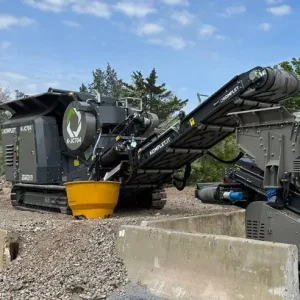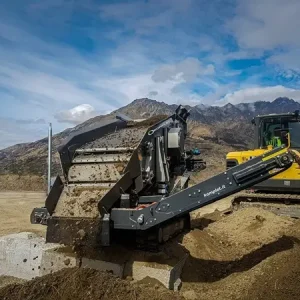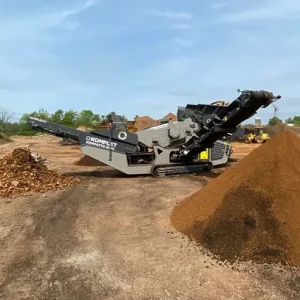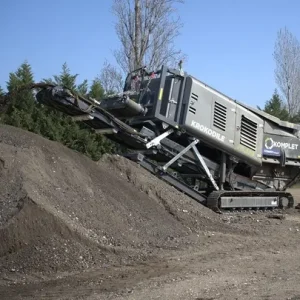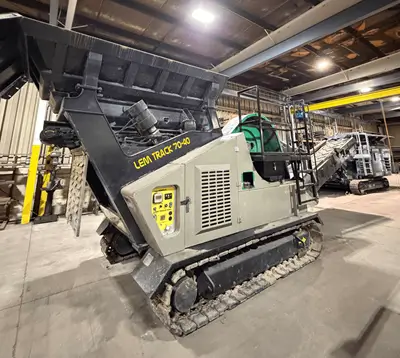

Buying a used rock crusher can save tens or hundreds of thousands of dollars compared with new equipment — or it can become an expensive lesson in due diligence if the wrong source, the wrong machine, or the wrong process produces an equipment purchase that doesn’t perform as expected. The contractors who consistently come out ahead on used equipment are not the ones who find the cheapest deals; they are the ones who match channel to buying experience, verify what needs verifying, inspect what needs inspecting, and avoid the predictable mistakes that turn capital savings into capital traps.
This guide covers four channels for buying used rock crushers in the United States — authorized dealers, equipment auctions, private sellers, and online marketplaces — with the advantages, risks, and right buyer profile for each. It then walks through the cost-savings case for buying used in the first place, the seven highest-leverage mistakes to avoid regardless of channel, the verification steps that protect buyers from fraud, and how Komplet America’s certified pre-owned program addresses many of the risk categories private-party purchases create. The goal is the same goal Komplet customers always have: equipment that produces real economics, supported across its operational life, with no surprises after the money changes hands.
Why Buy Used Rock Crushers? The Cost-Savings Case
Before evaluating where to buy used rock crushing equipment, it’s worth being explicit about why used purchases make economic sense in the first place. The case rests on three structural advantages over new-equipment purchases:
Substantial Capital Savings Versus New Equipment
Compact mobile rock crushers in the U.S. market range broadly from approximately $100,000 for the smallest jaw crushers to well over $500,000 for the largest mobile units. Used equipment in good condition typically prices 30 to 50 percent below comparable new equipment, depending on age, hours, condition, and market demand. A used compact jaw crusher that would price at $200,000-plus new can often be acquired in the $50,000–$150,000 range, depending on the specific model and condition. The capital saved can be redeployed into additional equipment, working capital, marketing, or operational reserves — turning a single purchase decision into measurable additional capacity.
Immediate Availability Without Manufacturing Lead Time
New equipment from any manufacturer typically carries a manufacturing or import lead time, often eight to sixteen weeks from order to delivery. For contractors with active project commitments or tight project schedules, that lead time is dead time. Used equipment is, by definition, already manufactured and available — the time between purchase decision and equipment in operation can be measured in days rather than months.
Proven Operational Track Record
New equipment is unproven equipment. Used equipment with documented service history is the opposite — a known performance record under known conditions, with a documented maintenance trail and predictable wear behavior. For an experienced operator evaluating a used machine, that track record is information no new-equipment purchase can offer. The construction equipment market continues to grow at meaningful rates, and used equipment increasingly serves as a reliable, well-supported alternative for cost-conscious buyers who want operational certainty without paying full new-equipment pricing.
The Four Channels for Buying Used Rock Crushers
Used rock crushing equipment changes hands through four primary channels in the U.S. market: authorized dealers, equipment auctions, private sellers, and online marketplaces. Each offers different combinations of price, risk, support, and verification — and each has a buyer profile it’s best suited for.
Authorized Dealers: The Safest Path
Authorized dealers represent the gold standard for buying used crushing equipment. These established businesses stake their reputation on every machine they sell, which translates to better quality control, ongoing support, and customer protection.
When you buy from an authorized dealer, you typically get:
- Pre-delivery inspection — equipment thoroughly tested and serviced before sale
- Documented maintenance history — complete records of repairs, hours, parts replaced, and usage
- OEM parts availability — direct access to genuine parts and technical support
- Financing options — established credit relationships and payment plans
- After-sale support — technical assistance, service network, and warranty coverage on certified pre-owned units
Dealers also understand the equipment they sell. They can match specific buyer needs to the right machine rather than simply moving inventory. This expertise helps buyers avoid costly mismatches between equipment capability and job requirements — buying a crusher too small for the work the buyer actually does, or too large for the production rate the buyer can sustain.
The trade-off is price. Dealer-sourced used equipment typically costs 10–20 percent more than auction or private-party equivalents. That premium buys the inspection, the documentation, the support, and the recourse if something is wrong. For most buyers, particularly those without deep mechanical evaluation experience, the premium pays for itself in reduced risk and ongoing operational support.
Equipment Auctions: High Risk, High Reward
Equipment auctions — both online platforms (Ritchie Bros., IronPlanet, AuctionTime, GovDeals) and live regional yards — move massive volumes of equipment quickly, creating opportunities for experienced buyers who can evaluate condition independently. The benefits are real:
- Lower prices — equipment often sells below market value, particularly at sparse auctions
- Large selection — multiple brands and models in one venue
- Fast transactions — quick purchase and pickup timelines
- Transparent pricing — competitive bidding produces a market-clearing price visible to all participants
The risks are equally real. Most auction equipment sells “as-is, where-is” with zero warranties or guarantees. Inspection time is limited, and bidders are competing against dealers and brokers with substantially more experience evaluating equipment condition under time pressure. Hidden problems surface only after payment and transport.
Additional auction challenges include unknown maintenance history (rarely documented at auction), limited operational testing (equipment may not be running or under load during inspection windows), buyer-arranged transportation logistics, and finality of sale (no recourse for problems discovered after purchase). Auctions work best for experienced contractors with mechanical expertise — buyers who can accurately assess condition and factor expected repair costs into bidding strategy. For buyers without that experience, the apparent savings rarely justify the risks.
Private Sellers: Buyer Beware Territory
Private sellers — other contractors, small businesses, individuals — sell equipment directly through online marketplaces (Craigslist, Facebook Marketplace, MachineryTrader, Equipment Trader), industry forums, and word-of-mouth networks. Private sales can deliver excellent value when the seller is a known reputable contractor downsizing or upgrading, and the equipment has documented history. The challenge is that the buyer takes on essentially all the risk of verification.
Private-sale challenges include:
- No warranty or guarantee — all sales final, zero protection
- Limited verification — seller claims are difficult to confirm independently
- No parts or support relationship — no ongoing technical assistance or OEM parts pipeline
- Scam potential — fraudulent listings, misrepresented condition, photo theft
- Title and lien issues — potential legal complications with equipment ownership not disclosed at sale
Private purchases require extensive due diligence: complete maintenance records, independent inspection by a qualified technician, ownership documentation verification (including UCC lien searches), and a structured purchase process that protects funds until the deal closes cleanly. Even with all that, buyers are taking on substantial risk without dealer support or auction process oversight.
Online Marketplaces: Convenience with Caution
Online marketplaces deserve a separate discussion because they cut across the other three channels — they may host listings from authorized dealers, auction-affiliated sellers, and private sellers all in one venue. The convenience is real: a buyer in any U.S. market can browse hundreds or thousands of listings without travel. The risk profile, however, is substantially different from in-person buying because the buyer typically cannot touch, test, or directly inspect the equipment before committing.
Online buying introduces a specific set of failure modes that don’t appear with local in-person purchases:
- Misrepresented condition — photos may be old, edited, or pulled from the internet rather than showing the actual unit for sale
- Fraudulent listings — equipment that doesn’t exist, sellers who don’t own what they’re listing, or duplicate listings of the same unit across multiple platforms
- Identity issues — anonymous or pseudonymous sellers with no verifiable business address or track record
- Payment scams — requests for wire transfers, gift cards, cryptocurrency, or ‘escrow services’ run by the seller themselves
- Shipping fraud — payment received, equipment never shipped, or different equipment shipped than what was listed
Online marketplaces are not inherently bad channels — they serve as a useful discovery tool. The discipline is treating an online listing as a starting point for verification rather than as a closed transaction. The seller verification, payment, and shipping practices below apply with particular force to any online purchase.
How to Verify a Used Rock Crusher Seller
Whether the channel is online marketplace, private sale, or any other route where the seller is not an established authorized dealer, structured verification protects the buyer from a substantial portion of the fraud risk in the used equipment market. Five steps that work consistently:
- Look for an Established Track Record
A seller with no review history, no business presence, and no traceable track record is a meaningful red flag. Search the seller’s name, business name, and listed address. Real businesses leave a footprint — Google Business profiles, BBB listings, industry references, social media presence, dealer association memberships. A complete absence of online presence on a five- or six-figure equipment listing is anomalous.
- Request a Live Video Walkthrough
Ask the seller to do a live video call with the equipment in real-time. Have them show the unit from multiple angles, the engine running, the serial plate, the maintenance log, and any specific concerns the listing has raised. A seller who refuses, cannot, or reschedules indefinitely is signaling something. A legitimate seller can typically produce a live video on short notice.
- Verify the Business Address
Use Google Maps to confirm the listed business address corresponds to a real commercial location. A residential address listed as a business address is not automatically a problem — many small contractors operate from home — but it warrants additional verification. An address that doesn’t exist, that maps to a vacant lot, or that maps to a UPS Store box is a meaningful red flag.
- Check for Brand Affiliations and Authorized Status
If the seller claims to be a dealer for a specific manufacturer or brand, verify directly with that manufacturer. Komplet America, for example, maintains an authorized dealer list at Find Your Komplet Dealer. Most reputable manufacturers do the same. A claimed affiliation that the manufacturer can’t confirm is a significant warning.
- Insist on Documentation Before Payment
Maintenance records, ownership/title documentation, equipment history, inspection results, photos with the date and location verifiable — all should be in the buyer’s hands before money moves. A seller who is reluctant to share documentation, or who provides only summaries rather than originals, is signaling either disorganization or something worse. Either way, that’s a buyer’s signal to slow down or walk away.
Red Flags When Browsing Online Listings
Specific patterns recur in fraudulent or low-quality listings often enough to be useful as filtering criteria. Any one of these is a reason to pause; multiple together is a reason to walk away regardless of how attractive the apparent deal looks.
- Price substantially below market. Equipment priced at half or less of comparable used equipment from established sources is rare for legitimate reasons. The most common cause is a scam — there is no equipment, the listing exists to capture deposits.
- Pressure to pay quickly. Legitimate sellers understand buyers need time to verify, inspect, and arrange financing. “Other buyers waiting,” “price doubles tomorrow,” “send deposit today” are pressure tactics that nearly always serve the seller’s interest at the buyer’s expense.
- Missing critical details. A legitimate listing includes model, year, hours, serial number, location, photographs from multiple angles, and basic specifications. Listings that omit fundamental information are either lazy or deliberately vague.
- Few or stock-quality photographs. A real piece of equipment can be photographed easily with a smartphone. Listings with one or two stock-quality images and no detail shots warrant suspicion.
- No verifiable contact information. A platform-internal messaging system without phone, email, or business address is not the same as actual contact. A legitimate seller can provide multiple contact channels.
- Wire transfer or gift card payment requests. These are essentially irreversible payment methods. Legitimate equipment transactions almost never require either. This is the single strongest red flag in online equipment fraud.
- Off-platform communications immediately. A seller who tries to move communication off the listing platform onto WhatsApp, Telegram, or personal email immediately is often trying to evade platform fraud detection.
Safe Payment and Shipping Practices
Payment Methods to Use
Once the seller is verified and the equipment is confirmed, payment method choice protects the buyer from the remaining transaction risk. Payment methods with built-in buyer protection are strongly preferred over methods without:
- PayPal Business with buyer protection — retains some recourse if the equipment isn’t as described
- Bank wire with escrow account — a third-party escrow holds funds until equipment arrives and is verified, releasing payment only when both parties confirm
- Standard bank wire to a verified business account — acceptable for verified, established sellers; not for first-time or anonymous transactions
- Equipment financing through a financing partner — the lender’s own due diligence adds a layer of verification before funds release
Payment Methods to Avoid
- Wire transfers to personal accounts, especially overseas. Effectively unrecoverable.
- Gift cards or store credit. Universal indicator of fraud. Legitimate equipment sellers never request these.
- Cryptocurrency to unverified wallets. Irreversible and untraceable.
- Cashier’s checks to unfamiliar parties. Difficult to recover if the transaction goes wrong.
Documentation at Purchase
Every used equipment transaction should produce a written bill of sale that includes:
- Seller’s full legal name and verifiable business address
- Buyer’s name and address
- Equipment make, model, serial number, year, and hours at sale
- Sale price and payment terms
- Date of sale and sale conditions
- Statement of seller’s ownership and freedom from liens
- Signed by both parties
Shipping and Delivery
Heavy equipment shipping typically requires a specialized heavy-haul carrier. Verify carrier insurance covers the equipment value during transit. Insist on tracking information from pickup to delivery, and on inspection at both pickup and delivery against the bill of sale specifications. The handover should match the documented condition — any discrepancies are documented at delivery, not after.
Seven Critical Mistakes When Buying Used Rock Crushers
Buyers make predictable mistakes when purchasing used crushing equipment, regardless of channel. The mistakes recur because they are committed under deadline pressure, inadequate experience, or excessive optimism about apparent deals. Avoiding these seven is more valuable than any single negotiation tactic.
Mistake 1: Skipping Maintenance History Verification
The single highest-leverage factor in any used equipment purchase is documented maintenance and service history. Equipment that has been maintained per OEM specifications across its operational life can deliver years of additional service after sale. Equipment that has been neglected or improperly serviced may have hidden damage that surfaces under load — long after the warranty discussion has ended.
Documentation to request before purchase:
- Service records with dates, hours at service, procedures performed, and parts replaced — covering the operational history if available
- OEM service interval adherence — were scheduled services performed at the correct hours per the OEM operator’s manual?
- Major repair history — engine work, hydraulic system repairs, structural repairs, electrical and electronic repairs, all documented with dates
- Parts source verification — were genuine OEM parts used, or aftermarket? Aftermarket parts may compromise performance and complicate future service
- Operator records — how many different operators? Trained operators? Documented operator training programs?
- Operating environment — what materials processed, what climate, what shift patterns?
Red flags in maintenance history: no documentation available (forces buyer to assume worst-case maintenance compliance), gaps in service intervals (missed services accumulate cumulative damage that may not show on inspection), frequent major repairs (may indicate an underlying chronic issue), and recently repaired components in a pattern of recurring problems (a ‘just rebuilt’ engine on a machine with chronic engine issues is a warning, not a reassurance).
Mistake 2: Inadequate Technical Inspection
Generic ‘look for wear and rust’ guidance is not adequate for a five- or six-figure equipment purchase. Compact mobile rock crushers have specific high-wear and high-failure-cost components that require targeted inspection from someone who knows what to look for.
Critical jaw crusher inspection items:
- Jaw plates condition — note the correct terminology: jaw crushers have jaw plates, not ‘liners’ (liners are cone crusher terminology). Measure remaining wear life and check for uneven wear patterns, cracks, or improper installation
- Toggle plate and cheek plate condition — these are sacrificial wear items but their condition tells the inspector how the machine has been operated
- Hydraulic system — leaks at fittings, cylinder rod condition, fluid color and contamination, hose condition
- Track condition (for tracked units) — track tension, track shoe wear, idler condition, sprocket wear
- Engine condition — start cold, listen for unusual sounds, check exhaust color, verify fluid levels and condition
- Electrical system and control panels — corrosion, modifications, jury-rigged repairs
- Structural condition — frame welds, especially around the chassis and crusher mounts; signs of stress cracks or improper repairs
Where the buyer doesn’t have the in-house expertise to evaluate these, hire a qualified independent equipment inspector. The inspection cost (typically a few hundred dollars) is trivial against the purchase price and can save tens of thousands in undisclosed problems.
Mistake 3: Skipping the Test Run
Never buy equipment without seeing it operate under load. Static inspections — a walk-around, a check of the spec plate, a moment of engine idle — miss critical problems that only appear during actual crushing operations. A jaw crusher that runs fine empty may chatter, vibrate excessively, or fail to maintain output size when crushing actual material. A test run with representative material reveals these problems before money changes hands.
Mistake 4: Ignoring Parts Availability
A bargain crusher becomes expensive when replacement parts are scarce, discontinued, or require international shipping with weeks of lead time. Verify parts availability for the specific make and model before committing — particularly on equipment from manufacturers no longer active in the U.S. market, or on older models the manufacturer has retired from active support. For Komplet equipment specifically, parts availability is forecasted 12 months in advance and supported across both current and prior-generation models, which is part of why Komplet certified pre-owned units retain their operational economics across years of service.
Mistake 5: Overlooking Hidden Costs
The purchase price is rarely the total acquisition cost. Factor in heavy-haul transportation from seller location to buyer location (often $2,000–$10,000 depending on distance and equipment weight), immediate repairs to address deferred maintenance discovered after purchase, missing or non-functional components (radios, attachments, manuals, spare parts), setup and commissioning expenses, and any modifications required to make the equipment compliant with current emissions or safety standards. A ‘cheap’ auction purchase often costs significantly more than its winning bid after these are factored in.
Mistake 6: Buying on Price Alone
The lowest purchase price rarely delivers the best value. Total cost of ownership includes the purchase price plus repairs, downtime cost, fuel efficiency, parts cost, operator productivity, and resale value at end of ownership. A slightly more expensive machine in better condition, with documented history and parts support, can produce dramatically lower total cost of ownership than a cheaper machine with hidden problems and no support.
Mistake 7: Neglecting Service History
Equipment without documented service history is a gamble — and not a small one. Documented service records prove the previous owner invested in keeping the machine operational. Their absence proves nothing about whether maintenance happened, but does prove the seller cannot demonstrate that it did. The default assumption with no records should be that maintenance was minimal, which means the buyer should price accordingly or walk away.
Why Komplet America’s Certified Pre-Owned Program Stands Out
For buyers who prefer the cost savings of used equipment without the risk profile of open-market private-party purchases, Komplet America’s certified pre-owned program offers a structured alternative. Available units are listed at Komplet’s pre-owned inventory. The program addresses each of the major risk categories that buyers face with non-dealer purchases:
- Documented service history — equipment with verifiable maintenance records, prior service performed at authorized Komplet dealers where applicable, and confirmed maintenance compliance
- Komplet-certified inspection — each unit inspected and serviced by Komplet-certified technicians before listing
- OEM parts availability — Komplet America forecasts parts inventory 12 months in advance and stocks current and prior-generation parts at the Hillsborough, NJ headquarters
- Authorized service network — Komplet-certified service technicians available across the U.S. dealer network for ongoing support
- Capital savings versus new — typically 40–70 percent below comparable new-equipment pricing, depending on model, hours, and condition
- Komplet Capital financing — the same in-house financing available on new equipment is available on certified pre-owned, with 100 percent financing options, 24-hour approvals, and standard term options
- Section 179 eligibility — certified pre-owned equipment, as ‘new to your business,’ is eligible for Section 179 tax deduction the same as new equipment, subject to all program requirements and confirmed with your tax advisor
Inventory rotates as units sell. The selection at any given time is limited and units move quickly. Buyers interested in specific models or specifications should check listings regularly or call the Hillsborough headquarters at 908-369-3340 to discuss what’s available and what’s expected to come into inventory.
Frequently Asked Questions
How much can I save buying a used rock crusher versus new?
Used rock crushers in good condition typically price 30–50 percent below comparable new equipment, with certified pre-owned units at the lower end of capital savings (40–70 percent off comparable new-equipment pricing for some Komplet certified pre-owned units, depending on model and condition). The exact savings depend on equipment age, hours, condition, market demand, and channel — auction equipment typically saves more on price but adds risk; dealer-sold certified pre-owned saves slightly less on price but adds documentation and support.
What’s the most important thing to verify before buying a used crusher?
Documented maintenance and service history. It’s the single highest-leverage factor in predicting how the equipment will perform after purchase. A machine with full OEM-compliant service records is fundamentally a different purchase than the same model without records, regardless of how the two compare on price.
Can I get financing on a used rock crusher purchase?
Yes. Komplet Capital — Komplet America’s in-house financing — offers 100 percent financing for qualified buyers, 24-hour approvals, and 36/48/60/72-month term options on both new and certified pre-owned equipment. Details at Komplet Capital financing. External lenders may also finance used equipment depending on the specific transaction.
Is a used rock crusher eligible for the Section 179 tax deduction?
Yes — Section 179 applies to both new and used equipment, provided the equipment is new to your business and meets the other Section 179 requirements (more than 50 percent business use, placed in service during the tax year, etc.). For tax year 2026, the Section 179 maximum deduction is $2,560,000. Specific eligibility and outcomes depend on individual circumstances; confirm with a qualified tax advisor before basing purchase decisions on tax treatment.
Should I buy from an auction or a dealer?
Depends on buyer experience. Experienced contractors with mechanical expertise who can independently evaluate equipment condition and factor expected repair costs into bidding strategy can often do well at auctions. Buyers without that experience generally do better with authorized dealer purchases, where the inspection, documentation, and ongoing support are part of the package. The 10–20 percent dealer premium typically pays for itself in reduced risk for first-time or non-mechanical buyers.
How can I tell if an online listing is fraudulent?
Combine multiple verification steps: confirm the seller’s business address with Google Maps, verify any claimed brand affiliations directly with the manufacturer, request a live video call with the equipment, check seller review history and online presence, and watch for red flags (price far below market, pressure to pay quickly, missing details, requests for wire transfers or gift cards, off-platform communications). Any single red flag is reason to slow down; multiple together is reason to walk away.
What payment methods are safest for used equipment purchases?
PayPal Business with buyer protection, bank wire with third-party escrow, standard bank wire to verified business accounts of established sellers, or equipment financing through a financing partner that conducts its own due diligence. Avoid wire transfers to personal accounts (especially overseas), gift cards (universal fraud indicator), cryptocurrency to unverified wallets, and cashier’s checks to unfamiliar parties.
Does Komplet America certify and warranty pre-owned equipment?
Komplet America’s certified pre-owned program includes inspection by Komplet-certified technicians, documented service history, OEM parts support, and access to the same authorized service network as new equipment. Available certified pre-owned inventory is at Komplet’s pre-owned inventory. Specific warranty terms vary by unit and should be confirmed at the time of quote — call 908-369-3340 for current inventory and warranty details.
Final Thoughts
Used rock crushers can produce excellent operational economics — substantial capital savings versus new equipment, immediate availability without manufacturing lead time, and proven operational track record from documented service history. The contractors who consistently come out ahead on used purchases match channel to buyer experience, verify what needs verifying, inspect what needs inspecting, and avoid the predictable mistakes that turn capital savings into capital traps.
For experienced contractors with mechanical expertise, equipment auctions and well-vetted private sales can deliver meaningful savings. For everyone else — and particularly for first-time used-equipment buyers — authorized dealers and certified pre-owned programs offer the better risk-adjusted return. The 10–20 percent premium versus auction or private-party pricing typically pays for itself in inspection, documentation, and ongoing support through the operational life of the equipment.
The Conti family construction legacy that informs Komplet America’s approach to equipment dates to 1906 and runs on a single principle: done once, done right. That principle applies to used equipment purchases as much as it applies to new ones. Verify the seller. Verify the equipment. Document the transaction. Pay safely. Plan for total cost of ownership, not just purchase price. Done well, a used rock crusher is the most capital-efficient way to bring crushing capacity into a contractor’s operation. Done poorly, it’s an expensive mistake. The variable is process, not luck.
To explore Komplet America’s certified pre-owned inventory, visit Komplet’s pre-owned inventory. For new equipment options, the full lineup is at Komplet equipment lineup. For financing through Komplet Capital, Komplet Capital financing. To find a Komplet authorized dealer in your territory, Find Your Komplet Dealer. Or call Komplet America directly at 908-369-3340.
Ready to Buy a Reliable Used Rock Crusher?
- Browse Komplet America’s certified pre-owned inventory at Komplet’s pre-owned inventory — units inspected, documented, and backed by the same OEM parts and service network as new equipment.
- Call Komplet America at 908-369-3340 to discuss specific models, current availability, and what’s expected to come into certified pre-owned inventory.
- Discuss financing structures at Komplet Capital financing — Komplet Capital offers 100 percent financing, 24-hour approvals, and standard term options on certified pre-owned equipment.
- Talk to your CPA about Section 179 eligibility before committing to a used equipment purchase. Section 179 applies to used equipment that is new to your business, subject to all program requirements.
- Find your local Komplet dealer at Find Your Komplet Dealer if direct contact with a dealer in your territory is more convenient than calling the New Jersey headquarters.
Never enough.
Disclaimer: ROI figures, capital savings percentages, payback timelines, pricing references, and savings examples shown above are illustrative only. Actual results depend on equipment condition, hours, age, regional market conditions, financing terms, project mix, operator skill, and project-specific factors. Komplet America makes no guarantee of specific financial returns. Customers should perform their own analysis based on local market conditions and specific equipment under consideration.
Disclaimer: Information about purchasing used equipment, seller verification, payment methods, and shipping practices is general in nature and not legal, financial, or trade compliance advice. Specific transactions vary, and buyers should consult qualified legal, financial, and inspection professionals as appropriate before committing to a purchase. Komplet America is not responsible for the outcomes of equipment transactions conducted through channels other than Komplet America’s certified pre-owned program.
Disclaimer: Section 179 tax deduction eligibility depends on individual circumstances, business income, entity structure, prior depreciation positions, state conformity, and other factors. Komplet America is an equipment distributor, not a tax advisor. Always consult a qualified CPA or tax professional before making purchase decisions based on tax treatment. Section 179 limits adjust annually and are subject to legislative change.
Disclaimer: Komplet America certified pre-owned equipment program terms, available inventory, warranty coverage, and pricing are subject to change. Specific unit warranties and program terms should be confirmed at the time of quote. Contact Komplet America at 908-369-3340 or visit kompletamerica.com/pre-owned-equipment/ for current information.
Equipment prices are subject to change based on dealer location, availability, and any additional features or customizations. Prices do not include taxes, shipping, or installation fees, which may apply depending on your region.