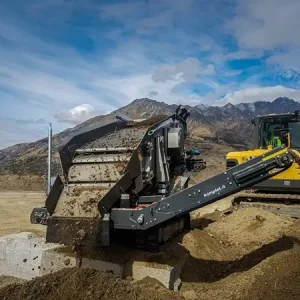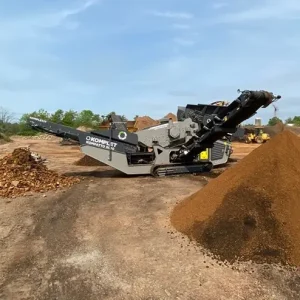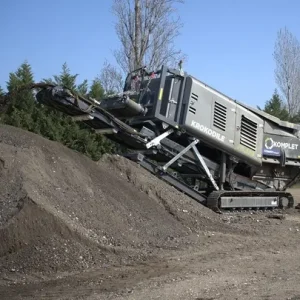

Reclaimed asphalt pavement is the most recycled material in the country, and most contractors handling it discover the same two surprises. The first is that asphalt breaks more easily than concrete. The second is that it costs more in wear parts anyway.
Both are true at once, and understanding why is most of what separates an operation that makes money on millings from one that keeps replacing jaw plates and wondering where the margin went. This article covers which machine processes RAP and why, what asphalt does to wear parts and how to plan around it, how the material behaves differently in July than in March, and what the finished product is actually good for.
Refer to the operator’s manual prior to operating any Komplet machinery.
What People Mean by an Asphalt Crusher
There is no such thing as a dedicated asphalt crusher in the way there are dedicated asphalt plants. What exists are crushers configured and operated for asphalt, and the configuration choices are what matter.
Asphalt arrives in two forms and they present two different problems. Millings come off a milling machine already reduced, usually sized and often needing screening more than crushing. Slab and chunk asphalt comes from full-depth removal, tear-outs and pavement demolition, arriving in pieces that need real size reduction. A machine that suits one does not automatically suit the other.
Knowing which you have is the first decision. Everything below assumes slab or chunk material unless it says otherwise.
Why RAP Breaks Easily and Wears Fast Anyway
Hardness and abrasiveness are different properties, and asphalt is the clearest example of why that distinction matters on a jobsite.
Low hardness
Asphalt is a bituminous binder holding aggregate together. The binder is soft, and the bond fails readily under compression, which is why a jaw crusher fractures RAP with less effort than it takes to break concrete. Operators often notice the machine sounds like it is working less hard on asphalt, and it is.
High abrasiveness
What the binder is holding is virgin aggregate, and that aggregate carries the silica content that drives wear. Abrasion is largely a function of silica, and once the binder gives way, the crushing surfaces are working directly against the same hard, angular stone that was in the original mix.
The result is counterintuitive but consistent. RAP is more abrasive than concrete and wears jaw plates faster, even though it is easier to break. Concrete is generally an easy crushing material with relatively low abrasion. Crews moving between concrete recycling and asphalt work should expect a shorter interval between jaw plate flips or changes on the asphalt side, and should stock wear parts accordingly rather than being surprised mid-job.
This is the single most common misconception about RAP, and it is worth stating plainly because planning around the wrong assumption is what turns a profitable millings operation into a break-even one.
Jaw, Impactor or Shredder
Three machine types process asphalt and they are not interchangeable. The right one depends on what you are feeding and what the product is for.
Jaw crushers
A jaw crusher is the workhorse for reducing slab asphalt to a usable size. It is forgiving of dirty and unprepared feed, it handles the mixed material that comes off a tear-out, and it is the lower wear cost option per ton on abrasive material. Jaw crushers are generally worked to about six to one, so a six inch piece comes down to roughly an inch. The lineup runs from the K-JC 503 through the K-JC 604, K-JC 704 PLUS and K-JC 805.
What a jaw will not give you is particle shape. Jaw product tends to be elongated and slabby, which is fine for base and fill and a problem for anything with a shape requirement.
Impact crushers
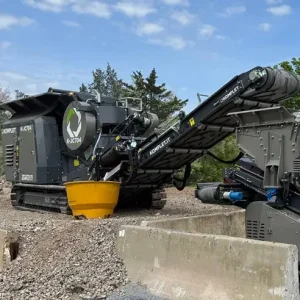
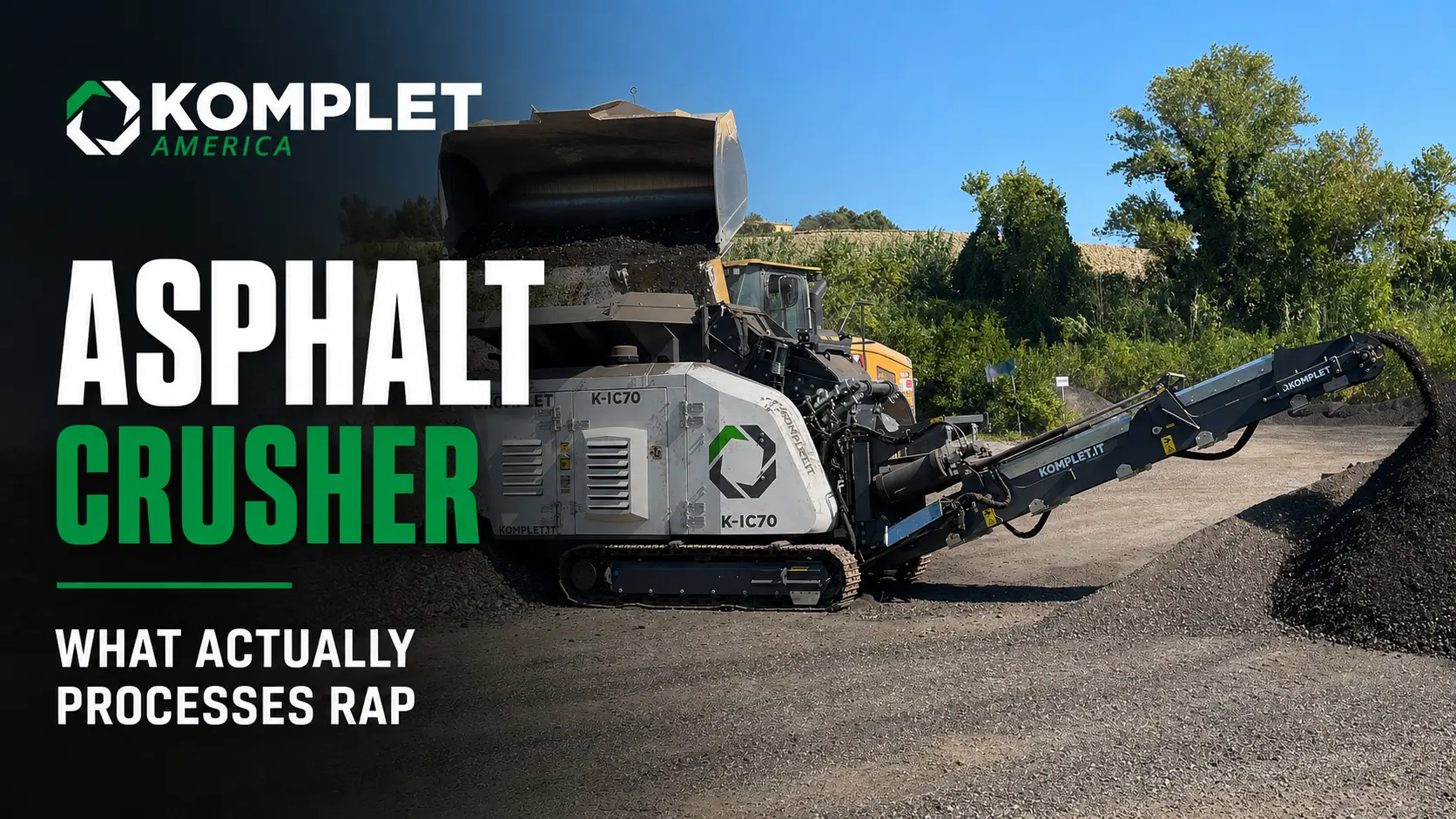
The K-IC 70 compact impact crusher fractures material by striking it rather than squeezing it, which produces a finer, more cubical product and reaches considerably higher reduction, commonly cited between eight and twelve to one. For RAP being reduced for reuse in a mix, or for material that has to meet a shape or gradation specification, the impactor is the machine that gets there in one pass.
The tradeoff is wear, and on asphalt it is a significant one. That is covered in its own section below.
Slow-speed shredders
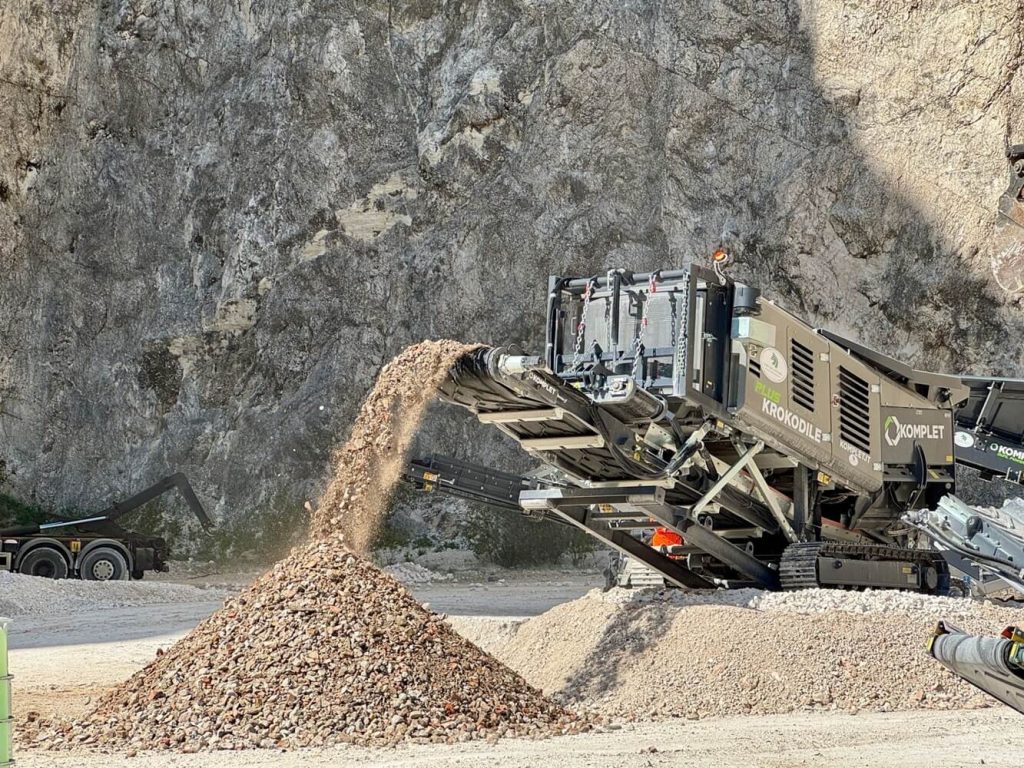
Full-depth removal produces slabs that will not fit any compact crusher’s feed opening. The Krokodile PLUS processes asphalt with the C&D and asphalt shaft configuration, using high torque at low speed to reduce oversized slab material to something a crusher accepts. On sites where the constraint is the size of what comes out of the ground rather than the size of the finished product, that is the missing machine. The distinction between the two is covered in our post on shredders and crushers.
Blow Bar Wear on Asphalt
If you run an impactor on RAP, blow bar selection is the largest single operating cost decision you will make, and the metallurgy involves a tradeoff that cannot be avoided.
The two families
Martensitic bars run at roughly 500 Brinell. They are tough, they tolerate steel and tramp metal in the feed, and they resist cracking. What they do not do is last in abrasive material, where they wear noticeably faster.
Chrome and high chrome bars run around 650 Brinell. They offer far better wear resistance in abrasive material, which is exactly what RAP is. What they will not tolerate is steel. They are brittle, and a piece of rebar or tramp metal entering the chamber can crack or break a bar rather than wearing it.
What that means for RAP specifically
High chrome is the recommended blow bar for reclaimed asphalt, because RAP is abrasive and, unlike demolition concrete, it does not normally contain reinforcement. Pavement has no rebar in it. That combination, abrasive material with no steel, is precisely the condition chrome bars are designed for.
The qualifier matters. Full-depth removal can bring up more than pavement. Utility patches, cast iron valve boxes, manhole frames, guardrail hardware and whatever else was buried in the shoulder all end up in the pile if nobody is watching. Running chrome bars on feed that has not been controlled is how a wear part decision becomes a repair.
Getting more out of a set
- Control the feed. Steel is the thing that ends a chrome bar early, and it comes from the pile, not from the pavement
- Rotate or turn bars on the OEM schedule rather than running them to failure, since a worn bar crushes less efficiently and loads the rest of the machine
- Watch wear pattern across the bar length, since uneven wear usually points to feed being delivered to one side rather than across the rotor
- Match the bar to the job rather than to the machine, because a fleet running mixed demolition one week and millings the next may justify two sets
- Keep spares on hand. Wear items for current models are stocked in Hillsborough, detailed on the parts and support page
Jaw Plates on Asphalt
The jaw crusher equivalent is simpler because there is no metallurgy decision to make in the field, but the planning still matters.
Expect shorter plate life on RAP than on concrete at comparable production. Jaw plates on the K-JC 503, K-JC 604 and K-JC 704 PLUS are reversible, meaning each set carries two working lives, so the practical planning unit is the flip rather than the replacement.
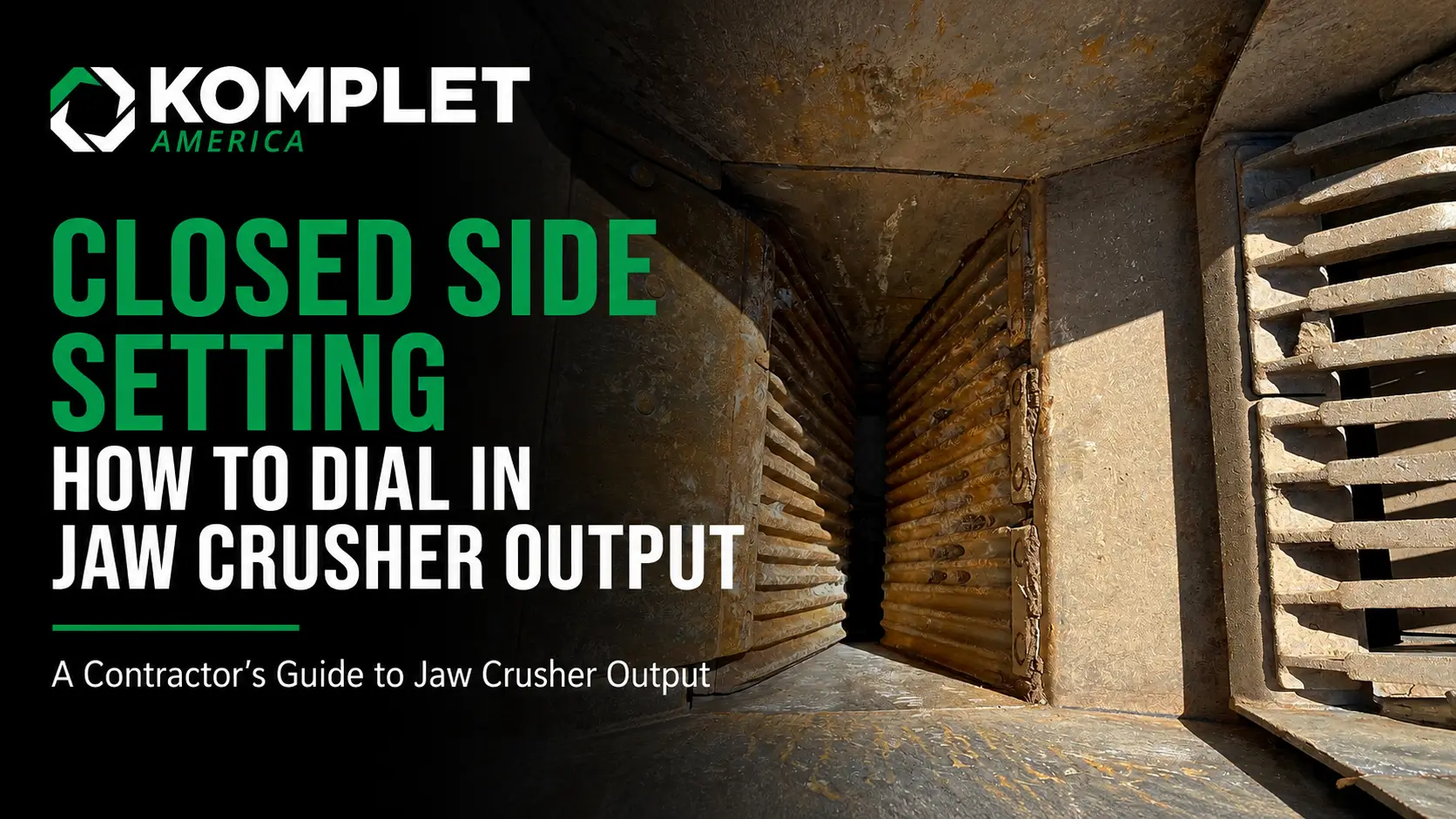
Plate wear also opens the effective setting over time, which means the product coarsens at a setting that used to be right. Re-check and record the setting after any flip or change. The mechanics of that are covered in our post on closed side setting and jaw crusher output.
Heat, Stickiness and the Chamber
Asphalt is the one common feed material whose behavior changes substantially with the weather, and crews that crush it year round learn this the hard way in July.
Bitumen softens as temperature rises. Warm RAP becomes tacky, clings to chamber surfaces and conveyor belts, packs in the discharge area and can bridge lower in the chamber rather than at the feed opening. The same pile that ran clean at fifty degrees behaves differently at ninety-five.
Working with it rather than against it
- Open the setting slightly in hot conditions rather than fighting packing at the setting that worked when the material was cool
- Run in the cooler part of the day where the schedule allows, which is the simplest fix available and costs nothing
- Use the reverse jaw function for clearing sticky buildup and blockages on models equipped with it, including the K-JC 604, K-JC 704 PLUS and K-JC 805
- Avoid stockpiling warm crushed RAP in deep piles, since it will consolidate and may need to be broken up again
- Watch belt buildup, since material clinging to a belt affects tracking and the discharge point long before anyone notices it on the pile
Moisture works the opposite way and helps here, which is one of the few situations in crushing where damp material is easier to run than dry.
Millings Are a Screening Problem
Material arriving as millings is usually already at or near the size you need, and running it through a crusher is often the wrong call. It consumes capacity, adds wear, and produces fines you may not want.
What millings normally need is sizing and separation, which is screening work. The Kompatto 221 and Kompatto 5030 both handle asphalt material, with the 5030 able to work as a scalper ahead of a crusher or as a sizing screen after it. The full screening range is on the screeners page.
Where millings do need crushing is when they have consolidated in the stockpile, which happens with time and heat. In that case the crusher is breaking up a pile rather than reducing pavement, and a lighter setting usually suffices.
What the Product Is Good For
The end use decides the specification, and the specification decides the machine and setting.
- Base and subbase under driveways, parking areas and roads, which is the most common use and the least demanding on gradation
- Shoulder material and unpaved road surfacing, where crushed RAP compacts well and holds together
- Cold patch and temporary repair material
- Feed back into a hot mix plant, which is the most demanding use and the one with real gradation and shape requirements
Anything headed into a specified application is governed by the specification rather than by general practice, and state requirements for RAP content and gradation vary. Verify against the agency spec that applies to your work. More on the material itself is in our contractor’s guide to reclaimed asphalt pavement.
Sizing the Operation
Three questions settle most equipment decisions on asphalt work.
- What arrives? Millings point toward screening. Slab and chunk point toward crushing, and oversized slab points toward shredding first
- What does the product have to meet? Base and fill are forgiving and a jaw crusher serves. Shape or gradation requirements point to an impactor
- How much of your year is asphalt? A crew running RAP occasionally can absorb higher wear on whatever machine they own. A crew running it as a main line of work should configure wear parts around asphalt specifically
Where the answer is a machine rather than a setting change, equipment financing through Komplet Capital and pre-owned equipment are both worth a look, and the reduction ratio post covers how to work out whether one machine or two is required.
Frequently Asked Questions
Is asphalt harder on a crusher than concrete?
On wear parts, yes. Asphalt is softer and breaks more easily than concrete, but it is more abrasive, and abrasion rather than hardness drives wear. RAP wears jaw plates faster than concrete does. Crews should plan on shorter wear part intervals on asphalt work.
What is the best crusher for asphalt?
A jaw crusher for reducing slab and chunk asphalt to base material, because it is forgiving of dirty feed and cheaper per ton on abrasive material. An impact crusher where the product needs a cubical shape or a tighter specification, such as material going back into a hot mix. A slow-speed shredder ahead of either where the slabs are too large to feed.
What blow bars should I run on RAP?
High chrome is the recommended choice for reclaimed asphalt. RAP is abrasive, which is where chrome bars perform, and pavement normally contains no reinforcement, which is the condition chrome bars require since they will not tolerate steel. If the feed may contain utility hardware or other tramp metal, that changes the calculation.
Can you crush asphalt millings?
You can, but often you should not. Millings usually arrive at or near the size needed and what they require is screening rather than crushing. The exception is millings that have consolidated in a stockpile, where a crusher is breaking up a pile rather than reducing pavement.
Why does asphalt clog my crusher in summer?
Bitumen softens as temperature rises, so warm RAP becomes tacky, clings to chamber surfaces and belts, and packs in the discharge area. Opening the setting slightly, running in the cooler part of the day, and using the reverse jaw function on models equipped with it are the usual responses.
Does a jaw crusher produce spec asphalt aggregate?
Not on shape. Jaw crusher product tends to be elongated and slabby, which is acceptable for base, shoulders and fill but not for applications with a particle shape requirement. An impact crusher produces the cubical product those applications need.
How large a piece of asphalt can a compact crusher take?
It depends on the feed opening of the machine, and shape matters as much as measurement, since a long slab can bridge across an opening it technically fits. Full-depth removal often produces material beyond what any compact crusher will accept, which is where a shredder or breaking the slabs down at the pile comes in.
Is crushed RAP good for driveways?
It is a common and well established use. Crushed reclaimed asphalt compacts well and binds under traffic and sun, which is why it holds together better than loose aggregate on unpaved surfaces. Requirements vary by jurisdiction, so verify local rules before placing it.
Final Thoughts
Asphalt rewards operators who plan for what it actually is rather than what it feels like. It feels easy, because it breaks easily. It is not easy, because the aggregate inside it is grinding away at your wear parts the entire time.
Get the machine right for the form the material arrives in, get the wear parts right for the abrasion, and adjust for the weather, and RAP is one of the better materials to build a recycling operation around. There is a steady supply of it, the product has real uses, and the alternative for most contractors is paying to haul it away.
Komplet America is the official North and Central American distributor of Komplet compact crushing, screening, shredding and conveying equipment. For asphalt work that means the jaw crusher line for reduction, the K-IC 70 compact impact crusher for cubical spec product, the Krokodile PLUS for oversized slab, and the Kompatto screeners for sizing millings. See the crushers page and screeners page for the full range.
Ready to Process Your Own Millings?
- Call Komplet America at 908-369-3340 and describe the form your asphalt arrives in
- Compare machines on the crushers page
- Stock wear parts ahead of the season through parts and support
- Explore terms through Komplet Capital on the equipment financing page
- Find your local dealer for a demo at find a dealer
Never enough.
Disclaimer: All operating, maintenance, and service guidance in this article is general in nature. Always refer to the official Komplet operator’s manual for the specific machine model and serial number, and follow OEM intervals and procedures. For warranty-protected work, contact Komplet America at 908-369-3340 or your authorized Komplet dealer. Improper service or non-OEM parts may void warranty coverage and create safety hazards.