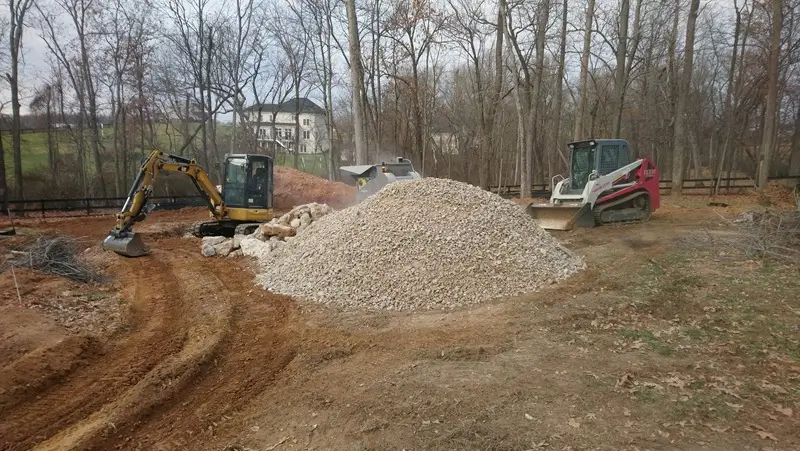

If you’re researching gravel crushers, you’re typically asking some version of the same fundamental questions: how do they work, what do they cost, which one fits my operation, and what should I know before signing a purchase order? This guide is built around those questions — not as a marketing brochure, but as a practical reference for excavation contractors, road builders, aggregate producers, demolition operators, and quarry managers making real equipment decisions in 2026.
Below: what a gravel crusher actually does, the only two crusher types most operations need, what gravel crushers cost, the operational realities most brochures don’t mention, and how Komplet America’s compact mobile crusher lineup fits real-world gravel processing operations.
What Is a Gravel Crusher and What Does It Actually Do?
A gravel crusher is a machine that mechanically reduces the size of feed material (rock, gravel, recycled concrete, asphalt) into smaller pieces suitable for spec-aggregate use — road base, drainage stone, concrete mix aggregate, fill material, and similar construction applications.
The term “gravel crusher” is somewhat imprecise. Three different scenarios commonly get called gravel crushing:
Scenario 1: Crushing Oversize Stone Into Gravel
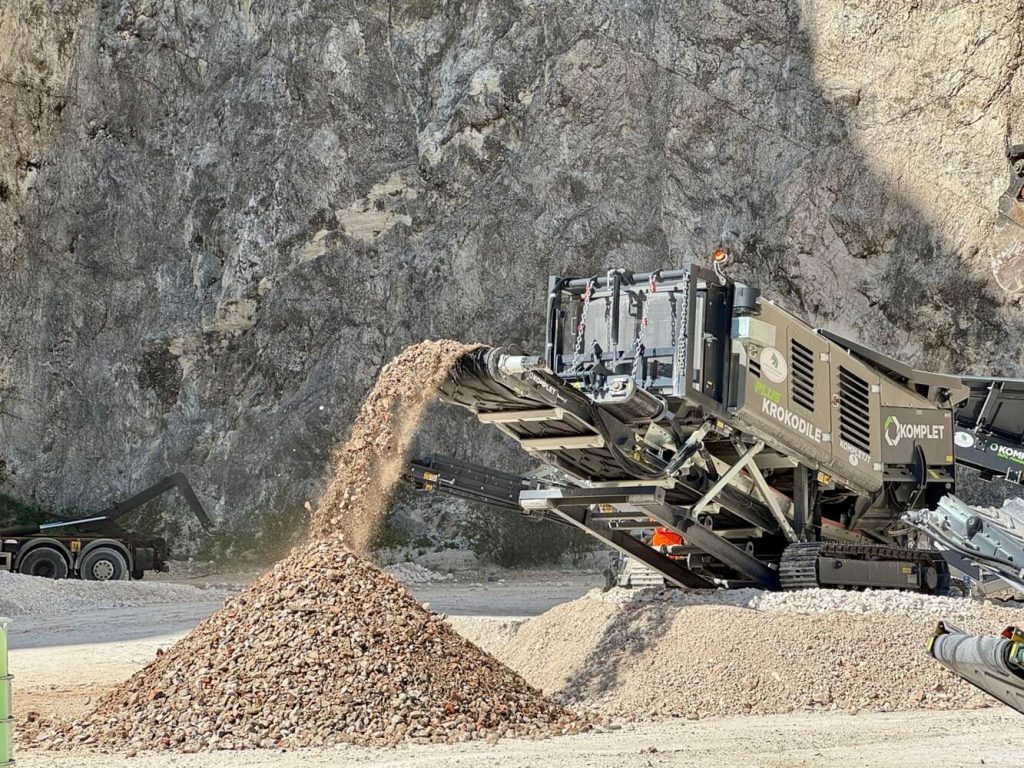
Quarry-run stone, blasted rock, or excavated boulders are too large for direct use. A jaw crusher reduces them to gravel-size pieces (typically 3-6″ output), which then get screened into spec sizes. This is the most common professional application of a “gravel crusher.”
Scenario 2: Reducing Pit-Run Gravel Oversize
Pit-run or river gravel typically contains some oversize material (boulders or large cobbles) that can’t be sold or used directly. A small jaw crusher running occasionally handles the oversize while the bulk of the material goes straight to the screener. This is partial-use crushing — the machine doesn’t run constantly.
Scenario 3: Producing Cubical Aggregate from Already-Crushed Stone
Some applications (concrete mix aggregate, asphalt mix designs) require cubical particle shape that jaw crushers don’t naturally produce. An impact crusher serves as a secondary stage, taking jaw crusher output and reshaping it for premium spec markets.
Knowing which scenario describes your operation is the foundation of every other equipment decision.
The Two Crusher Types Most Gravel Operations Need
Jaw Crushers — The Primary Crushing Workhorse
A jaw crusher uses a moving jaw plate that swings against a fixed jaw plate, applying compressive force to fracture material between them. The fractured pieces fall through the bottom of the chamber. Jaw crushers are mechanically simple, mechanically robust, and tolerate variable feed conditions — including oversized rocks, abrasive material, and embedded metal contamination (like rebar in demolition concrete).
For gravel processing, jaw crushers handle:
- Quarry-run blasted rock
- Oversize cobbles in pit-run material
- Excavated rock from site preparation
- Demolished concrete (with rebar removal via integrated magnetic belt)
- Mixed natural stone from various sources
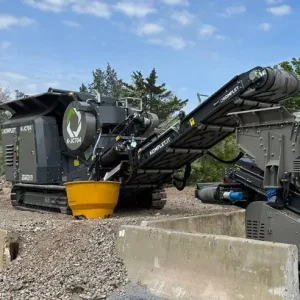
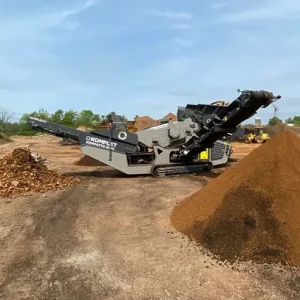
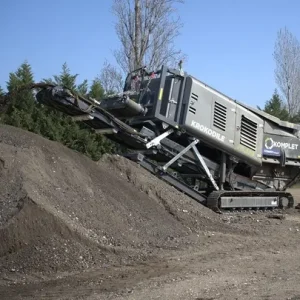
Komplet’s jaw crusher lineup covers everything from compact tracked machines for tight access through quarry-scale production: K-JC 503, K-JC 604, K-JC 704 PLUS, and K-JC 805. We cover specifics below in the lineup section.
Impact Crushers — For Cubical Premium Aggregate
An impact crusher uses a high-speed rotor with hardened steel bars (“blow bars”) that strike feed material against fixed impact plates inside the chamber. The repeated impacts fracture material and produce a notably cubical (more rounded) particle shape compared to jaw crushers. This matters specifically for end markets that require cubical aggregate — concrete batch plants and asphalt mix plants both prefer cubical particles for optimal mix-design performance.
Komplet’s K-IC 70 compact impact crusher — up to 90 US tph, 100 HP, launched at WOC 2024 — fills this role for operations producing premium aggregate. Many operations run a jaw crusher (primary) feeding an impact crusher (secondary) for the highest-quality cubical output.
What About Other Crusher Types?
Cone crushers, gyratory crushers, and high-pressure grinding rolls (HPGRs) exist in the broader industrial crushing world — they’re typically used in large fixed-installation mining and cement operations producing very fine product. For compact mobile contractor and aggregate-producer scale work, jaw + impact covers virtually all real-world gravel processing requirements. Komplet specifically focuses on jaw and impact crushers because those are the right tools for the customer base we serve.
Komplet America’s Crusher Lineup for Gravel Operations
Compact Mobile Jaw Crushers
Each jaw crusher in the lineup serves a distinct operation size with consistent core features: magnetic belt for ferrous metal separation, reverse jaw function for clearing uncrushable material, dust suppression standard for OSHA compliance, wireless remote control, and self-propelled tracked mobility.
- K-JC 503 — up to 34 US tph, 19″ x 12″ jaw, 25 HP, ~7,496 lb. Smallest crusher; built for tight-access urban work and small contractor operations.
- K-JC 604 — up to 55 US tph, 23″ x 16″ jaw, 55 HP, ~19,400 lb. Mid-range mobile crusher.
- K-JC 704 PLUS — up to 90 US tph, 27″ x 16″ jaw, 74 HP, ~26,455 lb. Komplet’s best-selling crusher — the workhorse for typical contractor-scale and mid-size aggregate operations.
- K-JC 805 — up to 160 US tph, 31″ x 21″ jaw, 130 HP, ~49,600 lb. Largest jaw in Komplet America’s lineup, for high-volume aggregate producers and serious quarry-scale work.
Compact Mobile Impact Crusher
- K-IC 70 — up to 90 US tph, 25″ x 20″ inlet, 100 HP, ~28,600 lb. For producing cubical aggregate suitable for concrete and asphalt mix designs, or as a primary crusher where cubical output matters.
The Screener Pairing You Probably Need
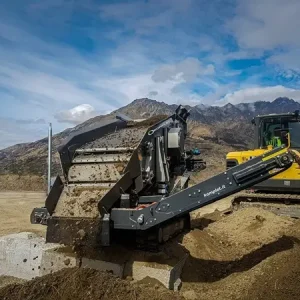
A crusher alone produces undifferentiated crushed material. To produce saleable spec sizes (3/4″ base, 1-1/2″ drainage, #57 stone, etc.), you need a vibrating scalping screen paired with the crusher. Komplet’s Kompatto vibrating scalping screens — the Kompatto 221 (up to 90 US tph), Kompatto 5030 (up to 280 US tph, best-seller), and Kompatto 124 (up to 350 tph, largest) — pair directly with the jaw and impact crushers to produce two or three spec sizes from a single workflow.
What Does a Gravel Crusher Cost?
Pricing varies by region, configuration, and current market conditions. Visit our product pages for latest pricing. Pre-owned and rental options are available through Komplet’s authorized dealer network. Find your local Komplet dealer or call (908) 369-3340 for current pricing and rental availability.
Total Cost of Ownership Considerations
Equipment purchase price is just one component of total cost. Realistic budgeting also includes:
- Wear parts — jaw plates, impact bars, mesh, and screen rubber. Hard abrasive feeds (granite, basalt) wear parts faster than soft material (limestone, RCA). Budget approximately $1-$3 per ton of throughput for wear parts on average abrasive applications.
- Fuel — typically 1-3 gallons of diesel per hour during operation, depending on machine size and load.
- Operator labor — usually one operator per machine for typical gravel processing.
- Routine maintenance — daily walkarounds, weekly mesh inspection, scheduled engine and hydraulic service per OEM specs.
- Transport between sites — trailer rental or contracted heavy-haul service.
- Financing cost — interest on financed equipment.
How Most Operations Justify the Capital
The math typically works through one or more of: (1) avoided dump fees from on-site recycling (often $50-$100/ton in major metros — frequently the largest economic driver), (2) avoided aggregate purchases when crushed material substitutes for purchased gravel, (3) gravel sales revenue (typical pricing $15-$35 per ton depending on spec size and region), and (4) Section 179 tax deduction (up to $1.22M of new equipment fully deductible in year of purchase, 2024 limit). Many contractors structure Komplet Capital financing so monthly payments are fully covered by avoided dump fees alone.
How to Choose the Right Gravel Crusher
Six factors determine the right machine for your operation. Address each before specifying.
1. Maximum Feed Size
The largest piece you’ll feed should be no more than about 80% of the jaw gape, so it sets the minimum jaw size. Maximum feed for Komplet’s lineup: K-JC 503 ~9-1/2″; K-JC 604 ~12-3/4″; K-JC 704 PLUS ~12-3/4″; K-JC 805 ~16-3/4″. Anything larger needs pre-breaking with an excavator-mounted hydraulic breaker.
2. Throughput Target
Match throughput to your operation: under 50 US tph = K-JC 503 or K-JC 604; 50-150 US tph = K-JC 704 PLUS (most popular contractor scale); 150+ US tph = K-JC 805 (quarry-scale).
3. End Product Spec
Aggregate base material → primary jaw + screening is sufficient. Premium concrete or asphalt mix aggregate → add the K-IC 70 impact crusher for cubical shape. Riprap or oversized drainage stone → primary jaw, no secondary needed.
4. Mobility Requirements
Single-site operation: any setup works. Multiple sites: tracked self-propelled with hydraulic conveyors and wireless remote (Komplet’s standard configuration) is essential. Frequent transport: the K-JC 704 PLUS at ~26,000 lb is the most transport-friendly mid-range option.
5. Material Hardness and Abrasivity
Hard abrasive feeds (granite, basalt, quartzite) wear parts faster and benefit from higher-horsepower crushers. Softer materials (limestone, RCA) wear slower and run on smaller machines economically. For abrasive operations, plan more frequent jaw-plate replacement and budget the wear-part cost.
6. Capital and Financing
Komplet Capital offers 24-hour credit approval, 100% financing, and 3-6 year terms. Bad credit is not an automatic disqualifier. Section 179 tax deduction applies to new equipment purchases.
What Crushed Gravel Is Used For
Knowing your end market shapes equipment selection. The major commercial uses of crushed gravel:
- Road and parking lot base material — typically 3/4″ minus or 1-1/2″ minus crusher run. Highest-volume application.
- Driveway base and surface — same crusher run sizes as road base. Heavy demand from rural and agricultural property owners.
- Drainage applications — typically #57 (3/4″ to 1″) or #67 (1/2″ to 3/4″) stone. Septic, foundation drainage, French drains.
- Concrete mix aggregate — #57 and #67 stone meeting concrete spec. Premium market requiring cubical particle shape.
- Asphalt mix aggregate — specific gradations for hot-mix asphalt. Cubical particle shape essential.
- Pipe bedding and trench backfill — drainage stone size for utility installations.
- Riprap and shoreline armor — large stone (4-12″+) for erosion control.
- Landscape and decorative — pea gravel, decorative gravel, hardscape applications.
Frequently Asked Questions
How does a gravel crusher actually work?
A jaw crusher uses a moving plate swinging against a fixed plate to apply compressive force; material fractures between the plates and falls through the bottom. An impact crusher uses a high-speed rotor with hardened bars striking material against impact plates, producing fractured cubical pieces. Both are effective for gravel processing — jaw for primary reduction, impact for cubical premium output.
What size gravel can a Komplet jaw crusher produce?
Output size is set by the closed side setting (CSS) of the jaw and the screen mesh installed downstream. Typical jaw crusher output is 3-6″ pieces. Pairing with a Kompatto scalping screen produces multiple spec sizes simultaneously: 3/4″ minus base, 1-1/2″ drainage, #57 stone, fines, and oversize, depending on which mesh sizes are installed.
Can a gravel crusher handle hard rocks like granite?
Yes. Komplet jaw crushers handle hard abrasive feeds — granite, basalt, quartzite, hard slag — within their throughput ratings. Hard material wears jaw plates faster than softer rock (limestone, sandstone, RCA), so plan for more frequent wear-part replacement on abrasive operations. The reverse jaw function clears uncrushable material; the magnetic belt recovers tramp metal.
Do I need both a crusher and a screener?
Almost always yes — for commercial operations. A crusher alone produces undifferentiated crushed material. A screener separates that output into spec sizes (3/4″ base, drainage stone, fines) that customers actually buy. A single-machine setup that crushes without screening produces material that’s harder to sell at premium prices. The crusher + screener combination is the right answer for almost every commercial gravel operation.
Can I rent a gravel crusher to test the economics?
Yes. Komplet works through a dealer and rental network across North and Central America. Find your local Komplet dealer or call (908) 369-3340 to connect with a rental partner. Many partners offer rent-to-own arrangements where rental payments credit toward eventual purchase.
How long does a gravel crusher last?
With proper maintenance and OEM parts, Komplet jaw crushers routinely operate productively for 10,000+ hours over 10+ years. Wear parts (jaw plates, mesh) are replaced periodically as consumables. Major components (engine, hydraulic system, frame) typically last the working life of the machine with routine service per the OEM manual.
What’s the warranty on Komplet equipment?
All new Komplet equipment comes with a 1-year / 1,000-hour warranty. Komplet America’s parts inventory is forecasted 12 months in advance, supporting fast wear-part availability when service items are needed. Authorized dealers across North and Central America provide local service support.
Final Thoughts
Selecting a gravel crusher is straightforward when you know what to ask: feed size, throughput target, end product spec, mobility requirements, material hardness, and capital position. Most commercial gravel operations need a primary jaw crusher (sized to throughput) plus a vibrating scalping screen (sized to output spec mix). Premium operations producing for concrete or asphalt mix designs add an impact crusher for cubical output. The right combination of compact mobile equipment turns raw rock or pit-run gravel into multiple spec sizes that customers actually buy.
Komplet America’s lineup — from the K-JC 503 for tight-access work through the K-JC 805 for quarry-scale production, plus the K-IC 70 impact crusher and the Kompatto 221, 5030, and 124 vibrating scalping screens — covers the full spectrum of contractor and aggregate-producer gravel processing operations. Browse the full crusher lineup and screener lineup to compare specs, or call us and we’ll help you spec the right combination for your feed material, output target, and throughput goals.
Ready to Talk Gravel Crushers?
- Call (908) 369-3340
- Email [email protected]
- Schedule a demo or request a quote
- Find your local Komplet dealer for rental availability
- Ask about our 1-year / 1,000-hour warranty and equipment financing options
Never enough — that’s how we approach service, support, and helping you spec the right gravel crusher for your operation.
Disclaimer: All cost, pricing, ROI, payback, and revenue figures in this article are illustrative examples based on sample assumptions about volume, regional pricing, material specifications, and market conditions. Actual results vary significantly by region, market, material type, equipment utilization, operator skill, financing terms, and many other factors. Equipment pricing, gravel pricing, dump fees, fuel costs, wear-part costs, and interest rates all change over time and by location. Komplet America makes no guarantee, warranty, or representation of specific financial performance, payback timelines, or business outcomes for any particular operation. For current pricing and a payback estimate based on your specific volume, material, and local market, contact us at (908) 369-3340 to speak with our team.