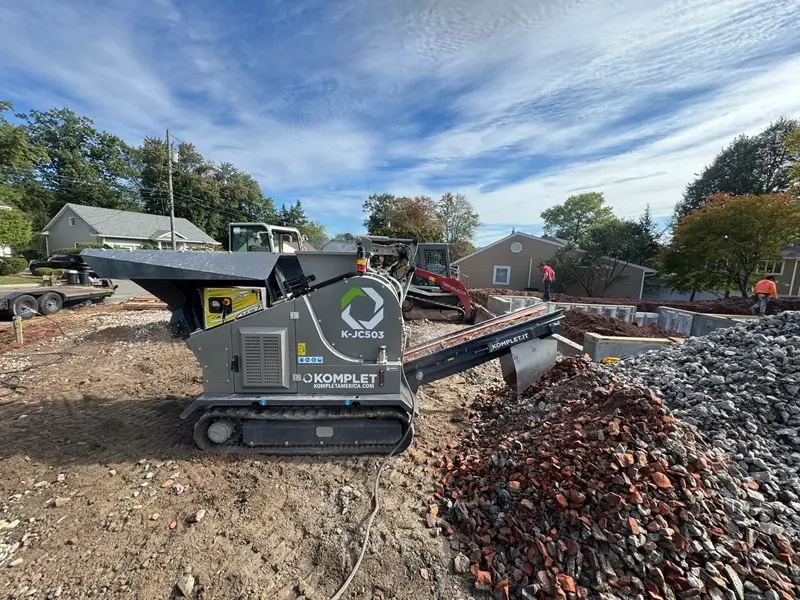

Compact mobile crushing, screening, and shredding equipment serves a much broader range of industries than the construction-focused stereotype suggests. Anywhere material reduction is required — breaking large material into smaller spec product, separating mixed material into sized streams, or shredding bulky waste into compact volume — the same engineering principles apply, and increasingly the same compact mobile equipment categories serve the work. The contractors, recyclers, and operators who match equipment to their actual industry needs (rather than buying generic equipment and forcing it to fit) consistently produce better project economics and stronger competitive positions than those who don’t.
This guide walks through the major industries that depend on rock crushers, screeners, and shredders — the construction and demolition core, the recycling and aggregate operations, the specialty applications most contractors don’t think about, and the cross-industry trends accelerating equipment adoption. Throughout: practical and grounded in the actual operational economics of each industry, with specific Komplet equipment recommendations for each.
What Is Rock Crushing Equipment?
Rock crushers are heavy machines designed to break various natural and man-made stone materials into smaller particles. Concrete, asphalt, basalt, marble, sandstone, granite, brick, and other hard materials are the primary feed material for rock crushing equipment. Material typically passes through the machine’s jaws (compression-action jaw crushers) or impact aprons (impact crushers) and exits as spec-graded smaller material into a discharge bin or onto a stockpile via conveyor.
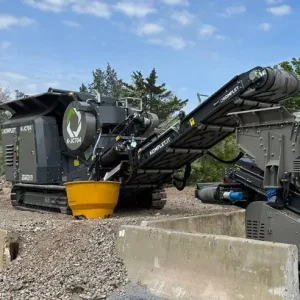
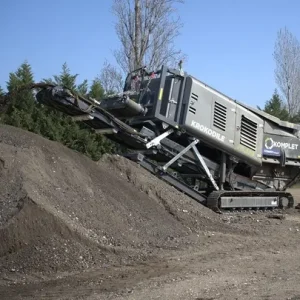
Modern compact mobile crushers — including Komplet America’s range — package quarry-grade crushing capability into contractor-scale equipment. Track-mounted, single-operator-controlled, transportable on standard trailers behind standard trucks, the compact mobile lineup brings industrial crushing capability to industries and operating profiles that couldn’t previously justify stationary plant economics.
The Core Industries: Construction, Demolition, Recycling
Construction
The construction industry is rock crushing equipment’s largest market, and for good reason. New construction projects need aggregate at every stage: foundation prep, structural fill, base course under concrete and asphalt, drainage layers, pipe bedding, and trench backfill. Construction sites that produce or handle material on-site capture the value that off-site purchasing leaves on the table — eliminated tipping fees, eliminated hauling costs, and access to material specifications that match the project’s actual needs.
Modern construction projects also face increasing pressure on noise and dust, particularly in urban contexts. Compact mobile crushers designed for urban construction — quieter, lower-emissions, smaller-footprint than traditional crusher plants — fit projects in residential and commercial zones where larger equipment cannot operate. Komplet’s compact lineup specifically targets these conditions: confined urban sites, basement demolitions, and confined renovation work.
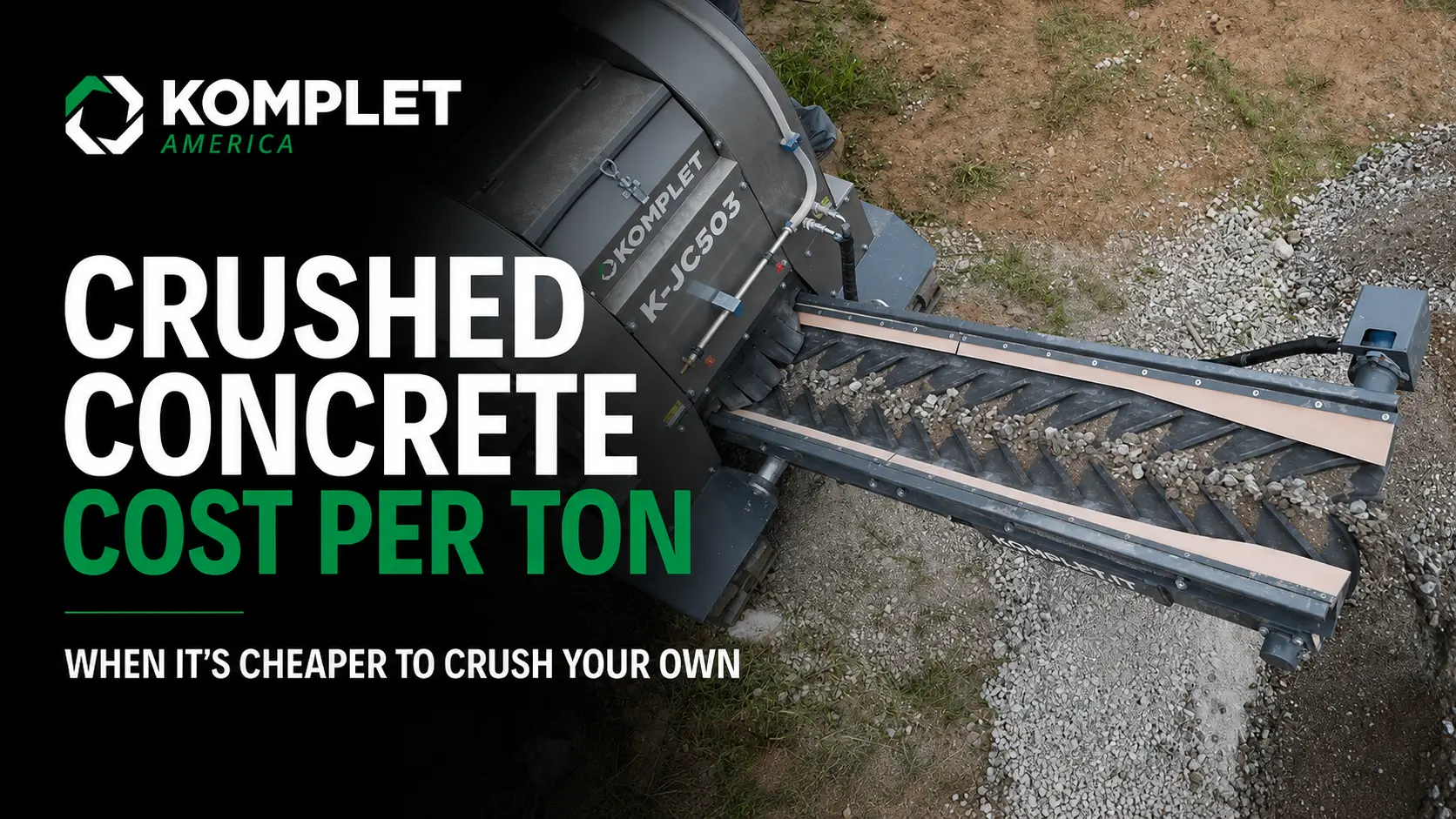
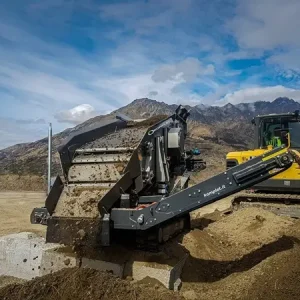
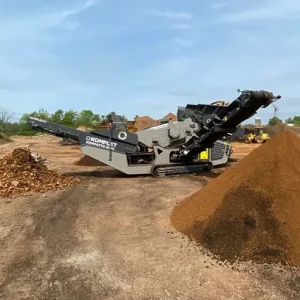
Typical Komplet equipment for construction: K-JC 503 mini jaw crusher (limited-access sites), K-JC 604 (mid-size construction), K-JC 704 PLUS (general construction), and Kompatto 221/5030 screeners (sized aggregate output).
Demolition
Demolition is one of the highest-return applications for compact mobile crushers because demolition projects produce both the input material (slab concrete, masonry, asphalt) and the disposal cost in the same project. Crushing demolition concrete on-site eliminates the tipping fees ($40-$100+/ton in major US metros) AND eliminates the cost of buying replacement aggregate. Demolition contractors with on-site crushing capability typically produce 30-50% better project margins than demolition contractors hauling everything to a landfill.
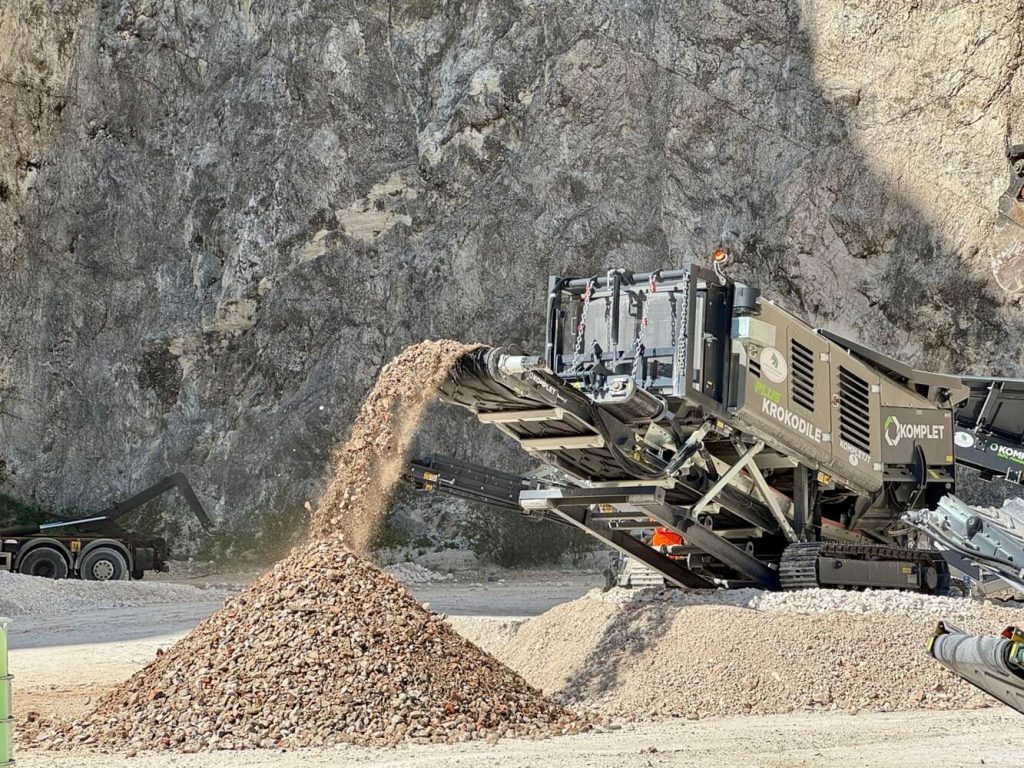
Demolition projects also produce mixed-material waste streams — concrete and rebar, brick and mortar, masonry block — that benefit from both crushers AND magnetic separation (standard on most Komplet jaw crushers) AND occasionally shredders for soft material content (wood framing, drywall, plastic). The Krokodile PLUS slow-speed shredder rounds out the demolition equipment lineup by handling the mixed-soft-waste fraction that crushers don’t process.
Typical Komplet equipment for demolition: K-JC 704 PLUS (most common), K-JC 805 (large demolition), Krokodile PLUS shredder (mixed waste), Kompatto 5030 screener (sizing recovered material).
Recycling and Aggregate Recovery
Recycling is the fastest-growing industry segment for compact mobile crushers, screeners, and shredders. Construction and demolition (C&D) recycling operations process incoming material streams from multiple project sites into spec-graded recovered products — recycled concrete aggregate (RCA), reclaimed asphalt pavement (RAP), recovered scrap metal, and mixed-stream materials for diversion-credit reporting. The economic case for recycling is straightforward: process costs are lower than virgin material extraction costs, and regulatory drivers (LEED certification, mandated diversion percentages, landfill capacity constraints) increasingly favor recovered materials in the construction supply chain.
Recycling operations typically run continuous or near-continuous schedules, which makes the equipment ROI math straightforward. Stationary recycling yards run multiple equipment categories in parallel (crusher + screener + shredder + conveyor); mobile contract recyclers move equipment between project sites for on-site processing.
Typical Komplet equipment for recycling: K-IC 70 impact crusher (DOT-spec aggregate), K-JC 704 PLUS or K-JC 805 (volume), Kompatto 5030 or Kompatto 124 screener (large-format sizing), Krokodile PLUS shredder (mixed waste streams), K-TC 460 conveyor (stockpile management).
Industrial and Specialty Applications
Mining and Aggregate Quarries
Rock crushing equipment is widespread in the current mining industry, particularly in compact-scale operations and specialty quarries. Mining crushers are typically larger and more abrasion-resistant than construction crushers, but the compact mobile category has grown substantially as smaller mining operations and specialty quarries seek alternatives to full stationary plant economics. Komplet’s K-JC 805 (160 tph) competes effectively in compact-scale quarry applications, particularly for limestone, sandstone, granite, and similar quarry rock types.
Mining-specific factors: feed material is typically pure (single-source, no contamination), throughput requirements are high, abrasive wear rates are higher than construction applications, and regulatory environment includes MSHA compliance for U.S. mining operations.
Road and Highway Construction
DOT-spec aggregate production, asphalt millings reduction (RAP), road base material, and pavement sub-base material all depend on crusher and screener combinations. The K-IC 70 impact crusher is purpose-built for cubical aggregate output and DOT-spec material — particularly important for asphalt mix and structural concrete applications where aggregate shape affects performance.
Public-works contractors and DOT subcontractors increasingly run their own crushing operations rather than buying aggregate from suppliers, capturing the price differential between produced and purchased material on every project mile.
Landscaping and Aggregate Sales
Landscaping contractors, garden centers, and landscape suppliers move significant aggregate volumes — decorative gravel, walkway stone, riprap, fill, and base material. Operations that produce their own crushed material (from local rock or recycled concrete sources) capture margin that aggregate-purchase operations don’t. Recycled concrete aggregate has weathered visual character that landscape applications often prefer over uniform virgin material.
Typical Komplet equipment for landscape supply: K-JC 503 or K-JC 604 (smaller scale), Kompatto 221 (sizing into multiple grades).
Composting and Organic Material Operations
Trommel screeners process compost, mulch, topsoil, and other cohesive material that doesn’t size well on vibrating screeners. The K-TS 30 and K-TS 40 trommel screeners specifically target this market — composting facilities, mulch producers, soil mix operations, and biomass processing. Different equipment category than rock crushers, but same compact mobile design philosophy.
Industrial Recycling and Specialty Material Recovery
Beyond construction-side recycling, several specialty industries use compact mobile crushers and shredders: glass recycling, ceramics processing, gypsum recovery, plastics volume reduction, electronic waste processing (with appropriate setup), and industrial waste minimization. The Krokodile PLUS slow-speed shredder is particularly well-suited to mixed-material industrial waste streams because of its tolerance for embedded contamination (metal, hard inclusions) that would damage high-speed grinders.
Disaster Recovery and Emergency Response
Hurricane debris cleanup, tornado response, wildfire recovery, and other disaster recovery operations generate massive volumes of mixed material that needs reduction before disposal or recovery. The Krokodile PLUS slow-speed shredder has been deployed across multiple disaster recovery operations specifically because it handles the mixed material streams (storm debris, vegetation, building debris) that disaster zones produce. Compact mobile equipment also meets the practical requirements of disaster response — transportable to remote or affected areas, deployable quickly, operable by a single trained operator.
Agricultural and Rural Operations
Farms with substantial aggregate needs (gravel road maintenance, drainage improvements, building pad preparation, livestock surface treatments) increasingly use compact crushers to produce their own aggregate from local rock sources or recycled concrete. The K-JC 503 mini jaw crusher fits this market specifically — small enough to fit in agricultural equipment fleets, mobile enough to relocate between farm areas, simple enough for farm-staff operation.
Government, Municipal, and Public Works
Cities, counties, public works departments, and state DOTs use rock crushing equipment for their own infrastructure work — road maintenance, drainage improvements, public-facility construction, demolition of municipal buildings. Government procurement processes typically favor equipment with documented total-cost-of-ownership and reliable parts/service support, both of which favor authorized-dealer relationships like Komplet America’s distribution model.
Why Industries Use Komplet Compact Mobile Equipment
Across all the industries above, the reasons operators choose compact mobile equipment over stationary plant alternatives or larger mobile equipment categories cluster around five themes:
- Mobility and Site-to-Site Transportability
Compact mobile equipment moves between sites on standard trailers behind standard trucks, without specialized transportation, route permits, or oversized-load escorts. For contractors operating multiple project sites, multi-site coordination is impossible without site-mobile equipment. The K-JC 503 at 7,496 lb transports behind a standard pickup. Larger Komplet jaw crushers up to the K-JC 805 transport on standard heavy trailers.
- Reduced Hauling and Disposal Cost
On-site processing eliminates the round-trip hauling miles to a distant landfill or recycling facility, eliminates tipping fees on processed material, and eliminates the cost of buying replacement aggregate. The economic impact compounds across project life — for typical commercial operations, the avoided cost categories often exceed the equipment cost on an annualized basis.
- Single-Operator Design
Modern compact mobile crushers — including all current Komplet equipment — are designed for single-operator operation. Track movement, hopper feed, output discharge, and basic safety controls are operable by one trained operator with remote-control capability. This dramatically reduces operating cost per ton compared to crew-intensive stationary plant operations.
- Tier 4 Final Emissions Compliance
All current Komplet equipment sold in the United States meets EPA Tier 4 Final emissions standards for non-road diesel engines. This matters for regulated jurisdictions, government procurement, urban project work, and corporate sustainability reporting requirements. Older equipment without Tier 4 Final compliance is increasingly restricted from work in regulated markets.
- Compact Footprint for Tight Sites
Compact mobile equipment fits in confined spaces — basement demolitions, urban renovations, residential lots, parking garages, alleyways. Where traditional crusher plants couldn’t physically operate, compact mobile equipment fits and produces. This expands the addressable market for equipment owners — projects that wouldn’t justify a larger crusher’s mobilization can use compact mobile equipment economically.
Industry Trends Accelerating Equipment Adoption
Sustainability and Green Building Certification
LEED v4 awards Materials and Resources credits for documented C&D waste diversion and for recycled content use in new construction. Operations with on-site material recovery capture both — diversion credits and recycled content credits. Sustainable building certification programs increasingly include recycling-friendly provisions that influence general contractor and owner equipment specifications.
Mandatory Diversion Requirements
Many state, county, and municipal jurisdictions mandate minimum C&D waste diversion percentages on commercial construction and demolition projects — typically 50-75% diversion. On-site material recovery provides measurable, documented diversion that contributes to compliance.
Landfill Capacity Constraints and Rising Tipping Fees
Available landfill capacity has been declining for decades, particularly in densely populated regions. The result is not just higher tipping fees but also longer haul distances. The economic gap between disposal and recovery widens year over year — and equipment that captures recovery value becomes more economically valuable each year.
Section 179 Tax Treatment
For tax year 2026, the Section 179 maximum deduction is $2,560,000, with phase-out beginning at $4,090,000 in total qualifying purchases. The One Big Beautiful Bill Act of 2025 substantially raised these limits and restored 100% bonus depreciation for qualifying property placed in service after January 19, 2025. The tax treatment dramatically improves after-tax payback timelines on equipment purchases.
Frequently Asked Questions
Which industries use rock crushers most?
Construction, demolition, and recycling are the three largest industries by usage. Mining (particularly compact-scale and specialty quarries), road and highway construction, landscaping, and aggregate recovery follow. Specialty applications include disaster recovery, agricultural operations, and government/municipal work.
Do shredders serve different industries than crushers?
Significant overlap, with some industry-specific differences. Crushers handle hard material (concrete, asphalt, brick, masonry, virgin rock); shredders handle soft material (wood, drywall, plastic, mixed waste). Industries with both feed material types — demolition contractors, C&D recyclers, disaster recovery operations — typically run both. Industries with primarily one feed type often run just one. The Krokodile PLUS slow-speed shredder is unique in handling both hard rubble (with the C&D shaft) and soft material (with the wood/lightweight shaft) — bridging both equipment categories.
Are Komplet crushers suitable for mining operations?
Yes, for compact-scale and specialty mining applications. The K-JC 805 (130 hp, 160 tph) handles compact-scale quarry and mining work effectively. For very large-scale mining (1,000+ tph), stationary gyratory or large cone crusher plants are typically required. Komplet’s lineup targets the compact mobile market, which fits a substantial portion of the mining industry but not the largest operations.
What’s the smallest industry that justifies buying a rock crusher?
Operations with 30+ operating days per year typically justify buying. Below that threshold, renting from an authorized Komplet rental house often produces better economics. The smallest industry segments that consistently justify ownership include small-to-mid-size demolition contractors, mid-size landscape suppliers, regional recycling operations, and farms or rural properties with substantial aggregate needs.
Can the same equipment serve multiple industries?
Yes — that’s a key advantage of compact mobile equipment. A K-JC 704 PLUS purchased for demolition work serves equally well in construction, recycling, road construction, and landscape supply applications. Operations that diversify across multiple industry segments capture more equipment utilization and stronger project pipelines than single-industry operators.
Does Komplet equipment meet U.S. emissions standards?
Yes. All current Komplet equipment sold in the United States meets EPA Tier 4 Final emissions standards for non-road diesel engines. This applies to the K-JC, K-IC, Kompatto, K-TS, Krokodile, and K-TC product lines.
How does Komplet equipment compare to larger crusher manufacturers?
Komplet equipment occupies the compact mobile crusher segment — purpose-built for contractor-scale, recycler-scale, and specialty operations rather than competing with full stationary plant manufacturers. The compact mobile category is growing faster than the stationary plant category, driven by mobility, urban applicability, and on-site processing economics.
What industries should consider shredders specifically?
Demolition contractors with mixed-waste streams, C&D recyclers, disaster recovery operations, organic waste and composting facilities, plastics recycling operations, agricultural waste reduction, and any operation processing mixed soft-and-hard material that crushers alone can’t handle. The Krokodile PLUS is well-suited to all of these applications because of its dual-shaft system (C&D plus wood/lightweight) and its tolerance for embedded contamination.
Final Thoughts
Compact mobile crushers, screeners, and shredders serve a remarkably broad range of industries — far broader than the construction-focused stereotype suggests. The unifying theme across all the industries that benefit from this equipment is a structural cost differential between buying material or paying disposal versus producing or recovering material on-site. Where that differential exists at meaningful scale, compact mobile equipment captures it; where it doesn’t, equipment purchase economics don’t work regardless of industry. The contractors and operators who match equipment to their actual industry needs and project economics consistently outperform those who don’t.
The Conti family construction legacy that informs Komplet America’s approach to equipment dates to 1906, and the industry-applicability lesson from that lineage is straightforward: the same engineering principles that produce reliable equipment in one industry produce reliable equipment in adjacent industries. Compact mobile crushers built for construction also serve demolition, recycling, mining, and landscape supply. Slow-speed shredders built for C&D serve disaster recovery, organic waste, and industrial recycling. The platform is consistent; the application breadth is the variable. The operator who recognizes that their industry isn’t excluded — and that the equipment fits more applications than they initially expected — typically captures more economic value from the same capital purchase than the operator who limits themselves to a single application.
To explore Komplet equipment for your specific industry, the full lineup is at Komplet equipment lineup. Pre-owned equipment is at Komplet’s pre-owned inventory. Equipment financing through Komplet Capital is at Komplet Capital financing. To find a Komplet authorized dealer in your region, Find Your Komplet Dealer. Or call Komplet America directly at 908-369-3340.
Ready to Discuss Equipment for Your Industry?
- Map your industry-specific material flow — feed types, throughput, project frequency, current disposal/purchase costs.
- Call Komplet America at 908-369-3340 to discuss equipment configurations matched to your industry and operating profile.
- Discuss financing through Komplet Capital at Komplet Capital financing.
- Talk to your CPA about Section 179 — for tax year 2026, the maximum deduction is $2,560,000.
- Find your local Komplet dealer at Find Your Komplet Dealer.
Never enough.
Disclaimer: ROI figures, payback timelines, and project economics examples shown above are illustrative only based on sample assumptions about volume, local pricing, material mix, and operating conditions. Actual results vary by region, project, equipment utilization, and other factors.
Disclaimer: Industry applicability descriptions are general in nature. Specific industry compliance, permitting, and operational requirements vary by jurisdiction and application. Confirm specific requirements with qualified industry professionals and regulatory authorities before deployment.
Disclaimer: Section 179 limits are 2026 figures based on the One Big Beautiful Bill Act of 2025 and adjust annually. Komplet America is an equipment distributor, not a tax advisor. Consult a qualified CPA before making decisions based on tax treatment.
Equipment prices and specifications subject to change. Contact Komplet America at 908-369-3340 for current information.